Jasper National Park | Top 10 hikes and other activities
The town of Jasper is in the heart of Jasper National Park. The park’s shimmering glaciers, abundant wildlife, crystal-clear lakes, thundering waterfalls, deep canyons, and evergreen forest — all surrounded by towering mountains — are some of the reasons the park was named a UNESCO World Heritage Site.
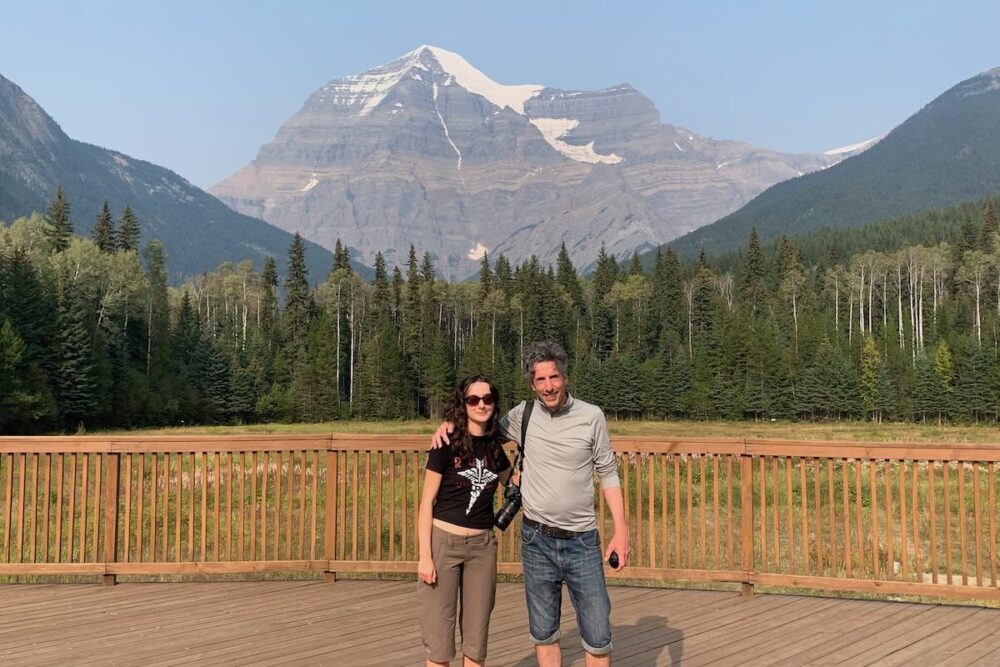
Following our trip to the Great Bear Rainforest we headed east to spend a week hiking in Jasper, the landscape of which had markedly changed following the wildfires of 2024. As per my normal 'glass half-full' attitude, I underestimated how long the trip to take. We ended up with an overnight stop part way, which afforded us an unexpected introduction to Mount Robson Provincial Park, somewhere that I plan to go back and explore.
The wildfires of 2024
Fire has shaped the forests and meadows in Jasper National Park for thousands of years. It is a natural process that we have learnt is an essential to renew the land and protect often delicate ecosystems. While many wildfires are allowed to burn sometimes intervention is needed. On the evening of July 22 2024 lightning sparked three wildfires. As a result of hot, dry and windy conditions the three fires joined, by the time they had come under control on the 7 September the wildfires had burned 32,722 hectares of land including part of Jasper Townsite.
Despite the magnitude of the fires, many forests and other areas of natural beauty remain. The most damaged areas included the campsites and the Edith-Cavell area, access to the latter was not possible during our trip in the summer of 25.

1. Miette Hot Springs and the Sulphur Skyline trail
A stunning 61km drive takes you from Jasper to the Miette Hot Springs parking lot that serves both the springs and various trails.
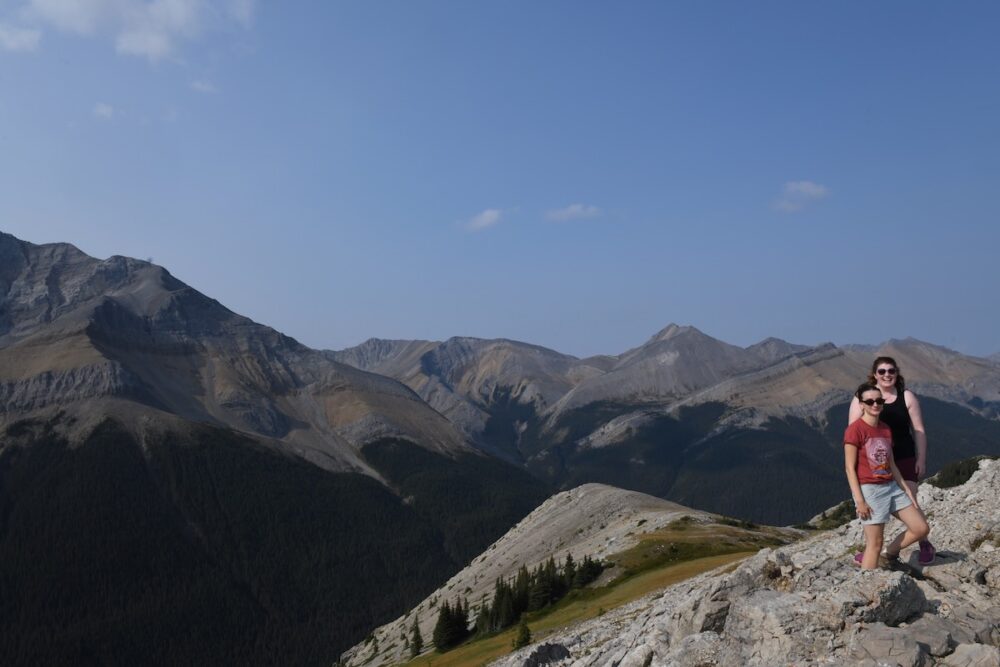
Our favourite hike in Jasper is the 8.8km Sulphur Skyline trail, this relatively steep half-day hike provides stunning views of Utopia Mountain, Fiddle Valley, and Ashlar Ridge. From the parking lot follow the pavement uphill and turn off left near the water storage tank, from here hike straight ahead on the trail. Further up you will ascend sharply to Shuey Pass where the hiking trail now divides, turn right towards the Sulphur Skyline or "Sulphur Ridge". Head up to where the hiking trail crests the ridge and continues up to the barren slopes of the Sulphur Skyline summit. The top bit of the trail is a loop, which eventually joins the same trail that you ascended.
Once at the base it is time to enjoy the natural thermal pools of the hot springs; at the time of writing a reservation was not needed. Miette are the hottest hot springs in the Canadian Rockies. The natural hot springs water flows from the mountain at 54°C (129°F), the water is then cooled to a comfortable temperature of 40°C (104°F) as it enters the hot springs pool.
2. Maligne lake
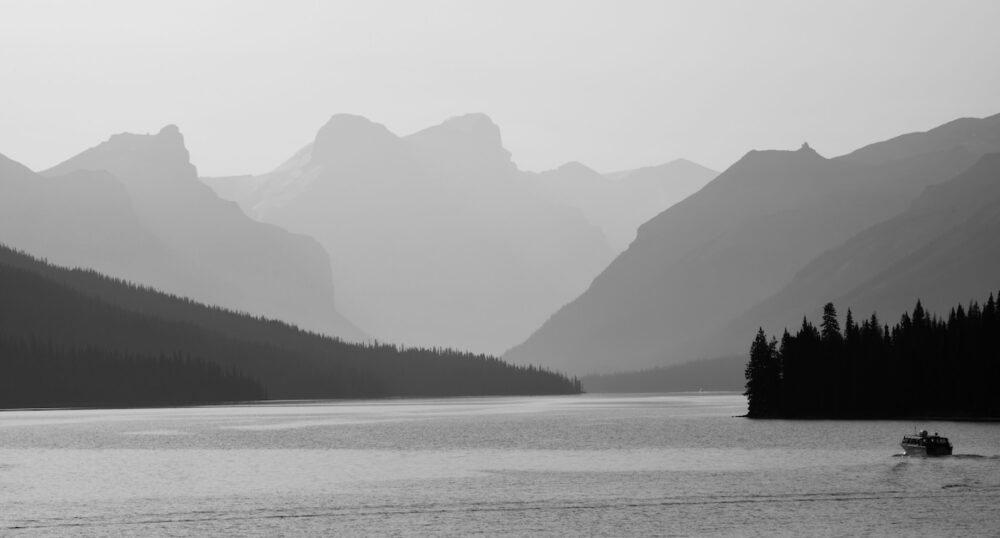
Maligne Lake is the largest natural lake in the Canadian Rockies. Ringed by snow-and-ice-capped mountains, the 22 km long lake stretches to the melt-water channels of Coronet Glacier. An open forest of lodgepole pine and spruce provide a rich habitat for mammals, we have seen Moose on several occasions.
Hikes in the area range from the Maligne Lake Viewpoint trail, the Bald Hills loop and the Maligne Lake Viewpoint trail, and the more challenging Opal Hills/Peak trail.
A popular excursion is the boat trip up to a scenic viewpoint overlooking Spirit island, one of Canada’s most photographed locations, alternatively you can take a canoe on the lake.
The drive to Maligne Lake takes you past Medicine Lake. During the summer, glacier melt waters flood the lake. In fall and winter the lake disappears as the water drains out through sinkholes in the bottom. While in the area we were fortunate to see two baby bald eagles. Also en route is the Maligne Canyon, which at the time of writing was closed as a result of the forest fires.

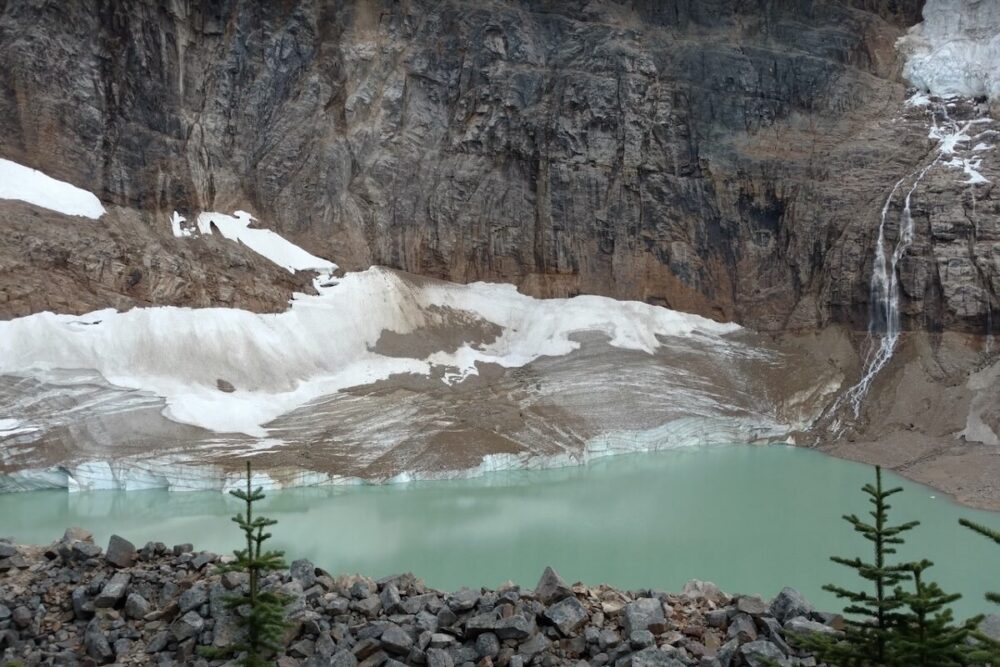
3. Mount Edith Cavell
The mountain was named after Edith Cavell, a British nurse who saved the lives of hundreds of soldiers during World War I before she was executed by a German firing squad.
At the time of writing this area was closed due to the forest fires. Having previously visited the area the most impressive aspect of this 8.5 km circuit was the alpine meadows; the humid environment around the mountain creates an abundant amount of wildflowers that are at their best in late July and early August
At the far end of the hike is the Angel Glacier, which remains in steady retreat. When open, hikers should stay on the trails and away from the cliffs and glacier due to falling boulders and avalanches of snow and occasionally house-sized blocks of ice.
4. Pyramid Lake, including pyramid island
Just 8 km from Jasper townsite are Patricia Lake, and then at the end of the road, Pyramid Lake. While both are beautiful, the latter is the main destination.
Pyramid lake has small areas of sandy beaches on which are picnic tables. On a hot day you can have a cool down in the very refreshing glacial lake, in which we spent at least 60 seconds! A more common past time appeared to be that of canoeing.
There are several short walks through the forests between Pyramid and Patricia lake, with a fair chance of seeing wildlife, especially mule deer.
While at the lake, walk across the bridge to Pyramid Island, which at night is great for stargazing. In 2011 Jasper was designated as a Dark Sky Preserve by the Royal Astronomical Society of Canada.
Rising high above the far end of Pyramid Lake is the majestic Pyramid Mountain, underneath which the forest is a protected wildlife area for important species such as bears and wolves; access if forbidden. It is just nice to know that they are there.

5. Other swimming and hiking – Lake’s Annette and Edith
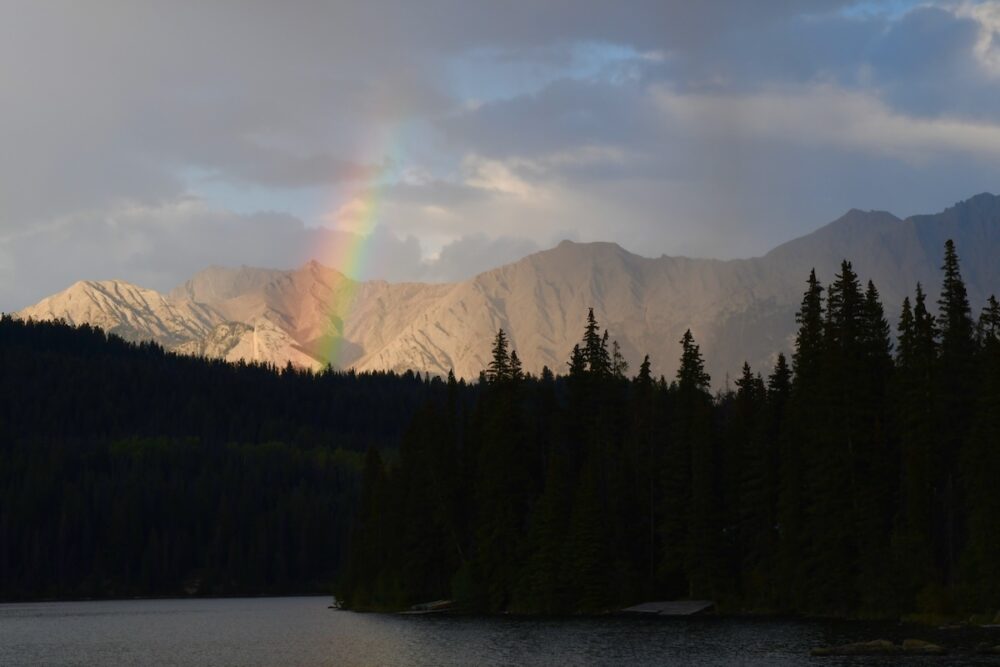
These two adjacent lakes have turquoise green water, sandy beaches, cooking shelters and a playground. Lake Annette includes a 2.4km paved trail around the lake shore.
Even on a warm summer's day at Pyramid Lake, the glacial water was colder than other glacial lakes we have swam in; Lake Annette and Edith were a little more inviting. The surface water temperature in summer at Lake Annette is often around 18 degrees celsius, the sort of temperature that once submerged for a few minutes feels very comfortable. It is said that the shallower Lake Edith is a little warmer, especially as the summer goes on.
This area is also popular for some gentle cycling.

6. Other activities – canoeing, rafting, cycling
As already highlighted there are several lakes where canoeing is permissible.
Most ''whitewater'' rafting close to Jasper is fairly tame; Grade 2 (Athabasca area) and Grade 3 (Sunwapta area). While suitable for most of the family, these rivers are not regarded as thrill seeking. Some companies offer day trips to raft the Fraser River, stretches of which can be very exhilarating.
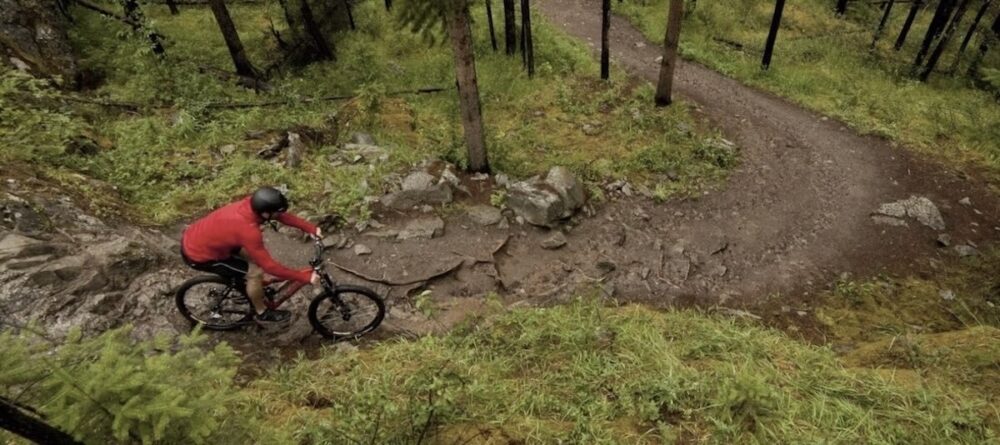
With over 200 km of mountain biking trails and numerous road biking options, Jasper National Park is a cyclist’s oasis for exploration. Some of the most popular mountain biking trails in Jasper are said to be Overlander, Saturday Night Loop, and the Signal Mountain Fire Lookout.
7. Valley of the Five Lakes Trial
Unfortunately, this was one of the other main areas closed as a result of the fires; however, I am told this should be in the top 10.
This easy 4.9 km trail makes a loop passing by five lakes. Each lake has a unique hue of blue-green coloured water resulting from their different depths. The trailhead to the Valley Of The Five Lakes is five kilometers south of Jasper.
While swimming is possible in the warmer months, some lakes have difficult access, with the most popular being the Fifth Lake. If you are lucky you might spot beavers in the area.

8. Wildlife viewing
Jasper National Park is home to 53 species of mammals, which rely on a variety of habitats.
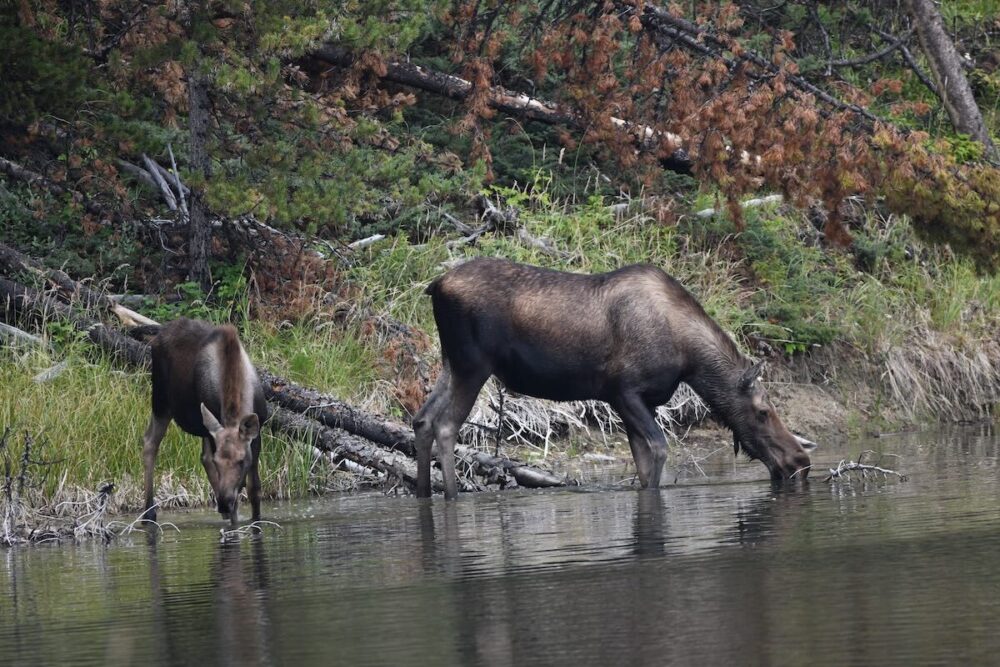
Some of the larger mammals include both black and grizzly bears, elk, moose, two species of deer (mule and white tailed deer), bighorn sheep, mountain goats, coyotes, wolves and woodland caribou, the chances of seeing the latter two are very slim.
Both grizzly bears and black bears can be dangerous, especially the former. Grizzly bears, which can be brown or black have a distinctive shoulder hump between the front shoulders that is absent in black bears. From side on grizzly bears typically have a concave or dish-shaped facial profile that extends between its eyes and the end of its nose. Black bears normally have a long, relatively straight facial profile from the forehead to the nasal tip. Always be bear aware and carry pepper spray.
Sadly, the world is a shrinking place for wildlife, national parks are one of the few safe places where wild animals are protected from hunting and other forms of persecution. This is there land; please treat it as such and never approach wild animals.

9. Jasper Townsite
Jasper is a relatively small townsite, mainly consisting of lovely cafes and restaurants, gift shops, and galleries. Even the launderette has its own coffee shop inside, still I didn't feel the need to do any washing; I am not sure that my daugther and niece, sharing the same campervan, agreed.
The townsite was originally a fur trading post established by the Hudson's Bay Company around 1813; the town was named after fur trader Jasper Hawes. The town grew significantly in the early 1900s due to the construction of a railway, it was officially renamed Jasper in 1913.
In the the heart of Jasper townsite is a log and stone building, a classic example of rustic architecture found in many Canadian national parks. Here, in the Jasper Park Information Centre, park experts offer insights on front and backcountry exploring, hiking trails, camping, paddling and wildlife viewing. The Friends of Jasper Gift Shop and Tourism Jasper are also on site, making the Info Centre a one-stop destination to plan your adventure.

10. Icefields Parkway, northern highlights
The Icefields Parkway is a scenic 232 km (144 mile) highway in the Canadian Rockies that connects Jasper National Park and Banff National Park. Also known as Highway 93, it is renowned as one of the world's most beautiful drives, offering views of mountain peaks, glaciers, turquoise lakes, and wildlife. The route is open year-round.
The most impressive sights close to Jasper include Athabasca and Sunwapta falls, Wilcox Pass (our favourite), and the Parker Ridge trail. For more information see my blog The Icefields Parkway | Top 10 Things to See and Do.
For more information on this area the Jasper National Park website is a superb resource.