Swiss Alps | what to see and do in the Jungfrau region
Switzerland is a landlocked country, bordered by Austria, France, Germany, Italy, and Lichtenstein. My first attempt at this blog began with me describing the practicalities of our trip. I then realised how unique Switzerland is in terms of 70% of the country being mountainous and having a transport system that actually runs on time. My subsequent rewrite provides you with a better understanding of how you can plan your own Swiss adventure.
Where (and when) should you go?
If you are coming to Switzerland for a holiday, or extended period, then consider your priorities in the order of mountains, lakes, and then cities. Into this, one needs to factor accommodation, transport, and the suitability/cost of outdoor activities, which may be partly dependent on any children.
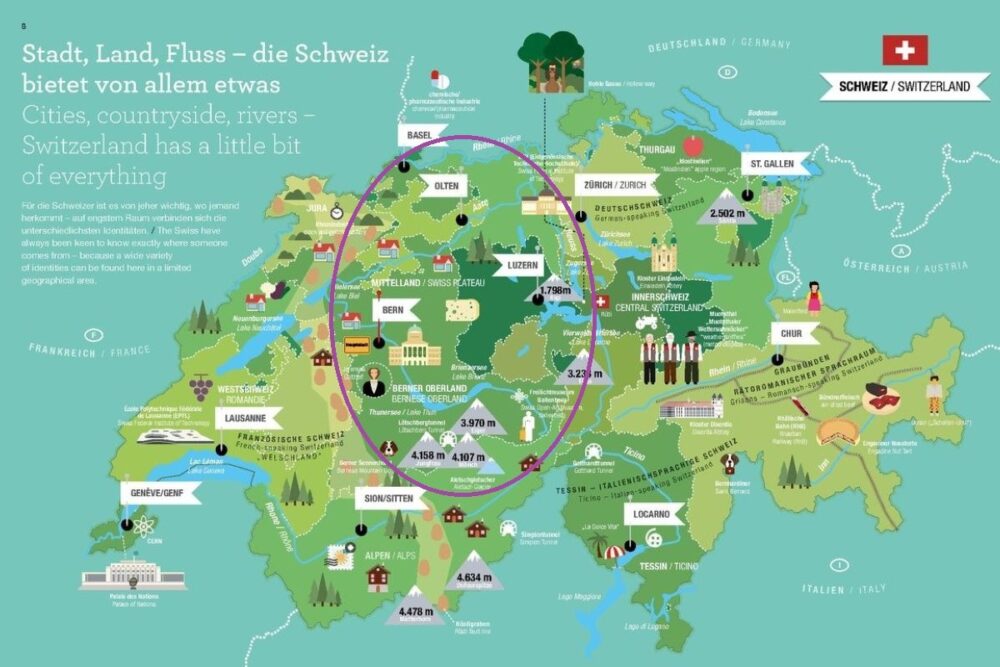
For our 12 day trip, we landed in Basal, then spent 3 nights in the town of Lucerne, followed by a week in the Jungfrau region of the Swiss Alps before heading back to Basal. I have circled our destinations on the map below. While there are many wonders in the Swiss Alps, one would be hard pushed to beat the itinerary described, even in the Canton of Valais with Zermatt and the iconic Matterhorn.
Unless you are skiing, the peak time to visit Switzerland is mid-June through late September, when almost all of the trails and mountain huts are open. If you want to climb the infamous North Face of the Eiger the best time is autumn and springtime .. such a shame we were there in August 😉.
Getting around Switzerland
With all the lakes and mountains, your mode of transport in Switzerland is of particular importance and may partly dictate your choice of destinations. We rented a car, which gave us freedom; however, there are many benefits of public transport, not just environmental.
The Swiss railway network is one of the best in the world. You can purchase a Swiss Travel Pass, which although not cheap, enables unlimited access by public train, bus, and boat. You can visit more than 41 cities, reach the Swiss Alps, and sail through beautiful lakes. Once you figure in the significant reductions that the pass affords in Alpine resorts, the Swiss Travel Pass may ultimately make your trip more affordable in a county that is far from cheap.
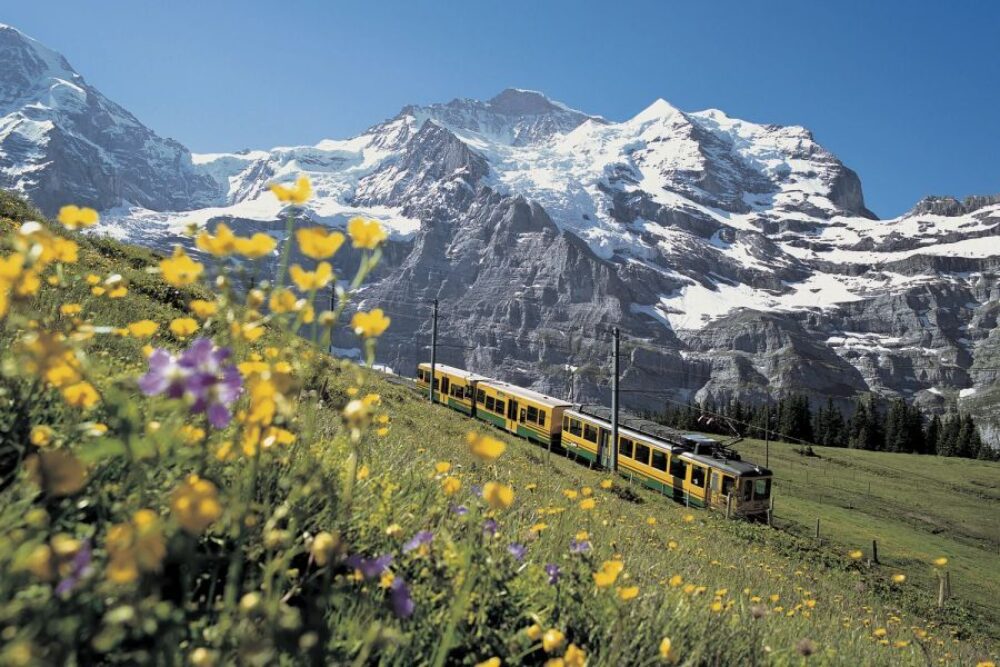
Staying in the Swiss Alps
In terms of accommodation, we booked a chalet in Grindelwald meaning we did not need to eat out at expensive restaurants. Camping in the Swiss Alps provides much cheaper accommodation.
Our food shopping was down the valley in the town of Interlaken; having added the shopping bags to the luggage we just about managed to get the family back in the car! Supermarkets in alpine resorts are more expensive.
If travelling by car check whether or not you resort is car free - Grindelwald is not, meaning we could park at the chalet. Zermatt and our neighbouring resort of Wengen are both car free. Many chalets provide a visitor's card enabling you to use the resort's bus system for free (an uncommon word in the Swiss Alps), as well as providing other benefits.
From hiking to paragliding - activities in the Alps
The Jungfrau region is supported by a website detailing the best things to see and do.
The main activities of sightseeing and hiking are greatly aided by efficient lift systems including trains, gondolas, and cable cars. The lifts enable visitors to travel greater distances, avoid steep uphill walks, get down mountains quickly in thunderstorms, and access other activities such as paragliding.
The main drawback of the Swiss Alps are the extortionate lift costs. Ultimately, this leaves most travellers carefully choosing which lifts to use. The Swiss Travel Pass usually results in a 50% reduction in lift prices. An alternative is a local/regional lift pass giving unlimited access; again this is not cheap.
Lucerne
Getting back to our trip, having landed in Basel (an easy airport to navigate), we headed 100 km south to the beautiful city of Lucerne.
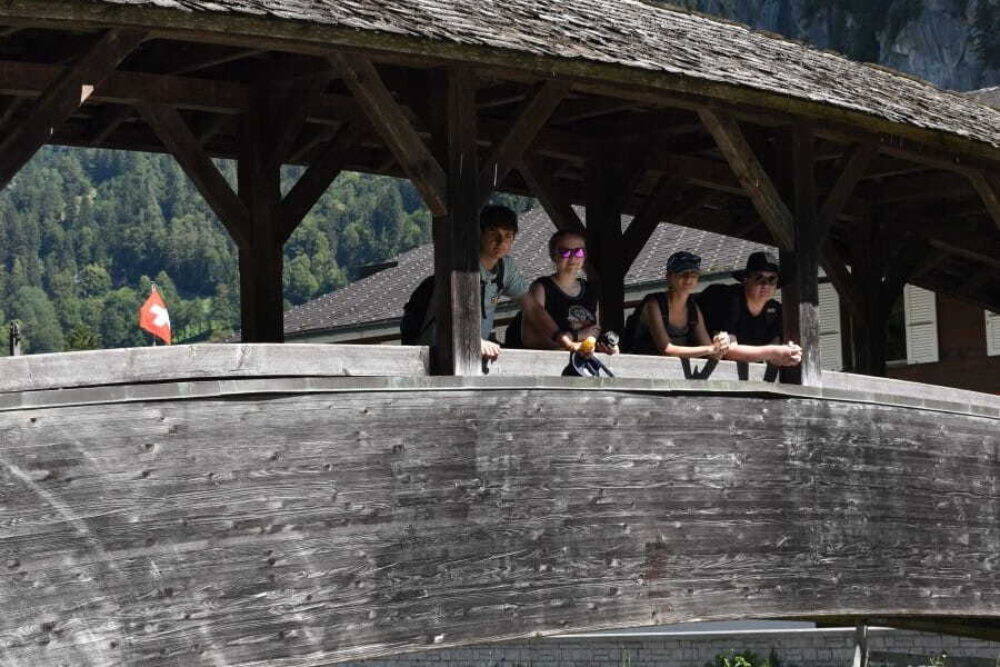
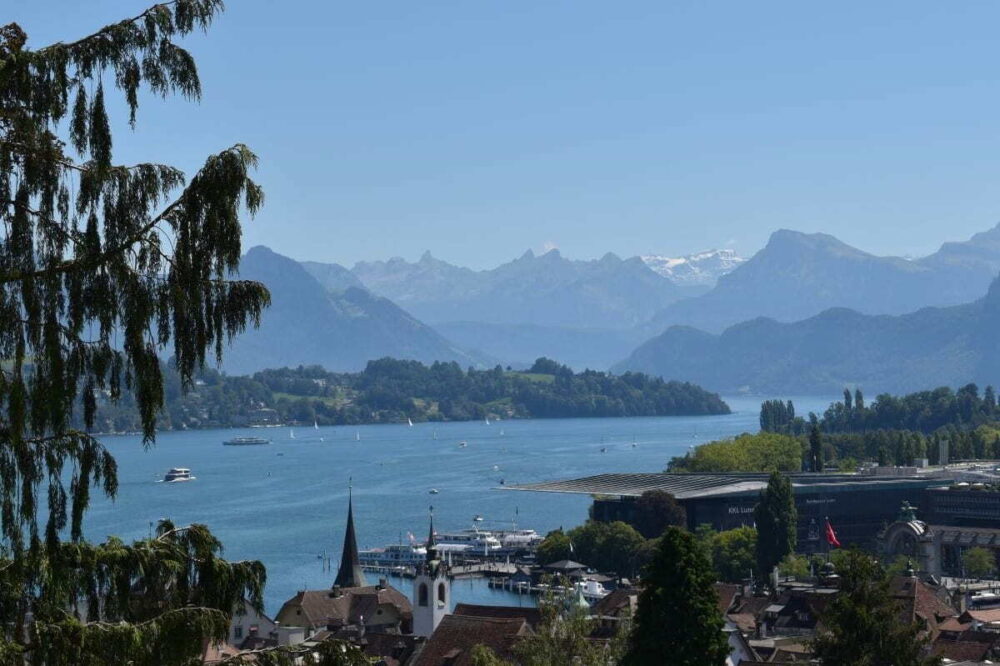
Lucerne, sitting amid snow-capped mountains on Lake Lucerne, is a compact city known for its preserved medieval architecture. The highlights of the old town are the Kapellbrücke (Chapel Bridge) and the Jesuit church of St Francis Xavier. I also recommend a walk along the Musegg Wall and its nine towers, providing lovely views.
Lake Lucerne (Vierwaldstaetter See) is Switzerland’s fourth-largest lake. Like everything in the Swiss Alps the lake is very clean; lovely for a swim and cool down on a warm summer's day. The price of a boat trip is reduced with the Swiss Travel Pass.
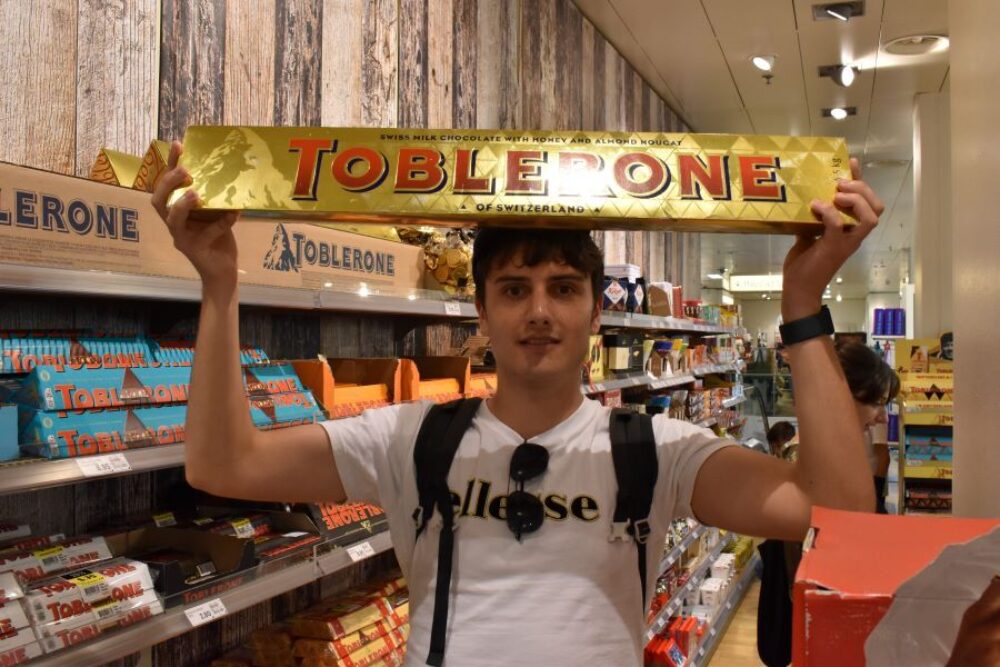
You won't find a cheap pizza in Lucerne; the only reasonably priced commodity is chocolate.

Pilatus Kulm
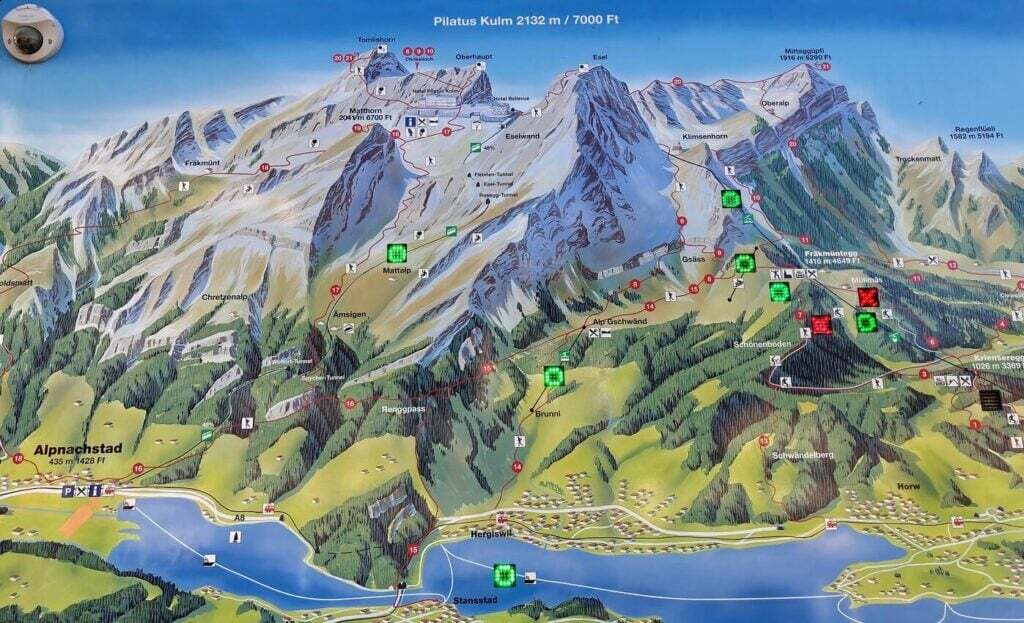
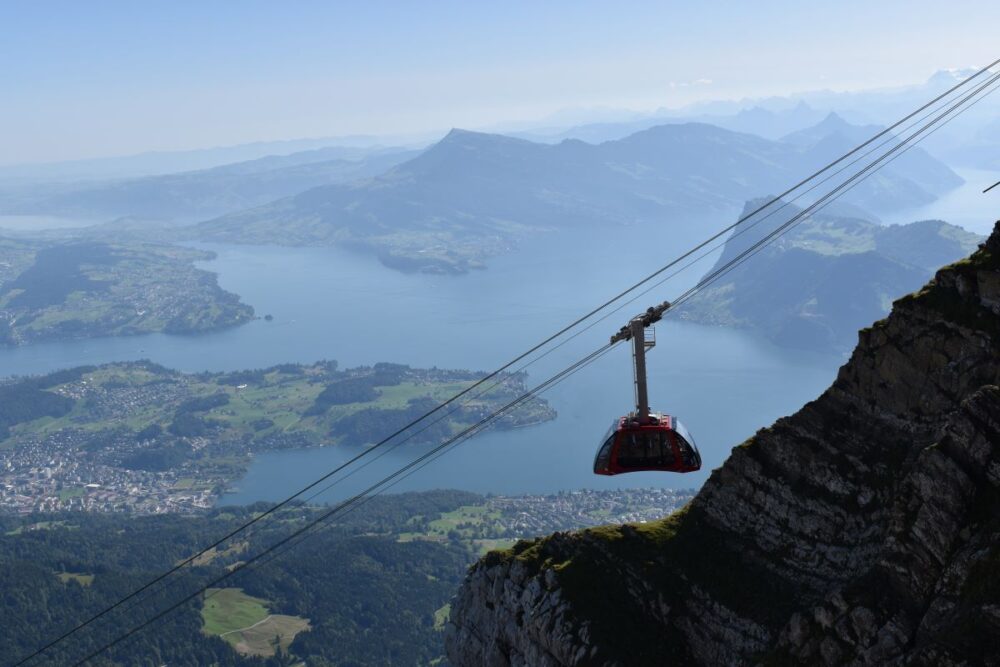
On our second day we headed to Pilatus Kulm; there are many good walking options close to Lucerne. It is a long steep hike of over 1500 metres (around 5000 feet) to reach the peak of Pilatus Kulm. There are more leisurely alternatives. Option one is to go to Alpnachstad and take the world's steepest cogwheel railway, option two is to take the cable car from Kriens - both get you up and down Pilatus Kulm.
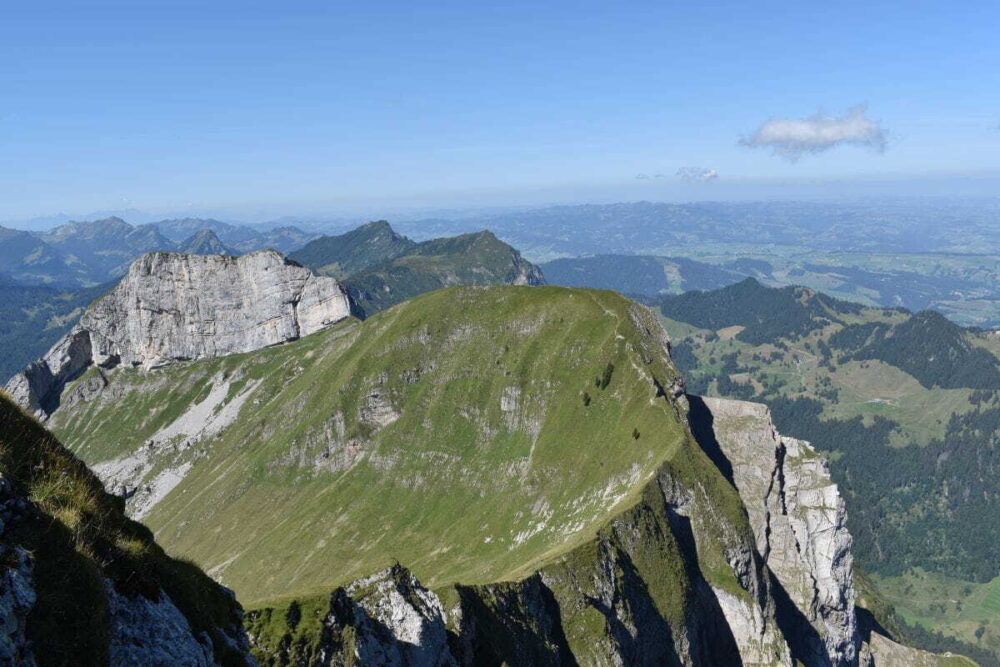
We opted to go up on the railway and hike down. After arriving at Pilatus Kulm we did a fabulous one-hour hike (there and back) to the Tomlishorn. Before setting off down we had a nice pit stop at the cafe; that was until 10 Swiss Francs suddenly appeared on our coffee and cake bill for simply being there. We hiked down trail 18, which avoids many of the switch backs. The walk took four hours; we were treated to great views and serenaded by cowbells!

The Bernese Oberland | the Jungfrau region
South of Lucerne lies the Bernese Oberland, the grand Alpine heart of the Swiss Alps - a spectacular region of high peaks, sheer valleys, and cool lakes. At the heart of the Bernese Oberland is the Jungfrau region, named after one of the many mountains in the region above 4000 metres. This map divides the Jungfrau into its various regions.

The best known resorts are Wengen, Murren, and Grindelwald. We choose to stay in the latter with a view of the imposing north face of the Eiger. With 1800 metres of vertical height, the Eiger-Nordwand is the biggest north face in the alps; world famous among climbers.
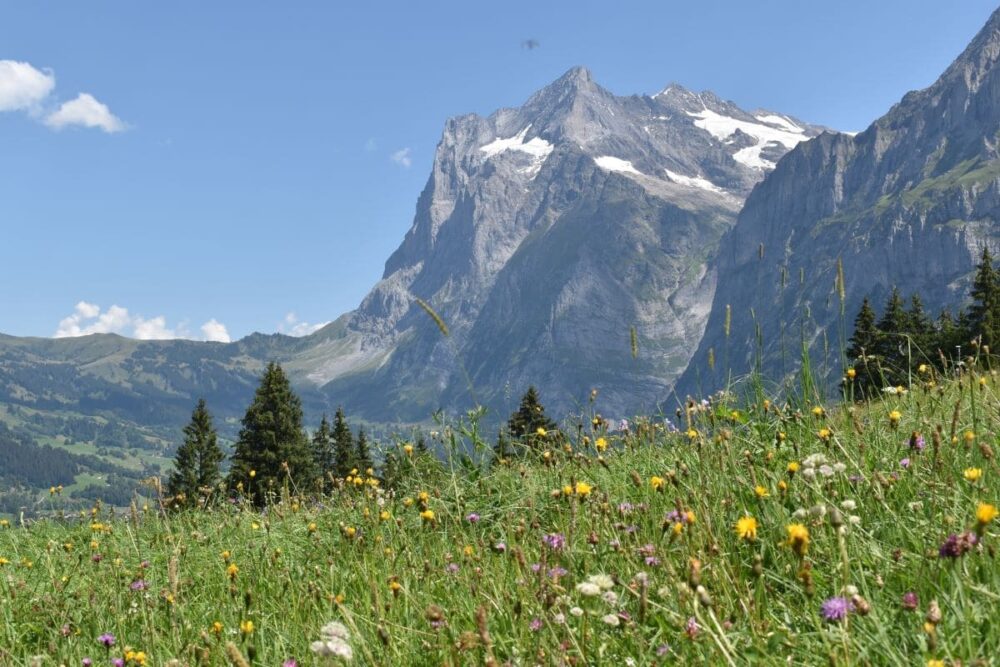
When I searched how best to describe Grindelwald the first thing Google came up with was vain, arrogant, narcissistic, and cruel; I soon realised was the Muggles' Guide to Harry Potter! Quite simply, Grindelwald is stunning; I will let my photos do the talking.


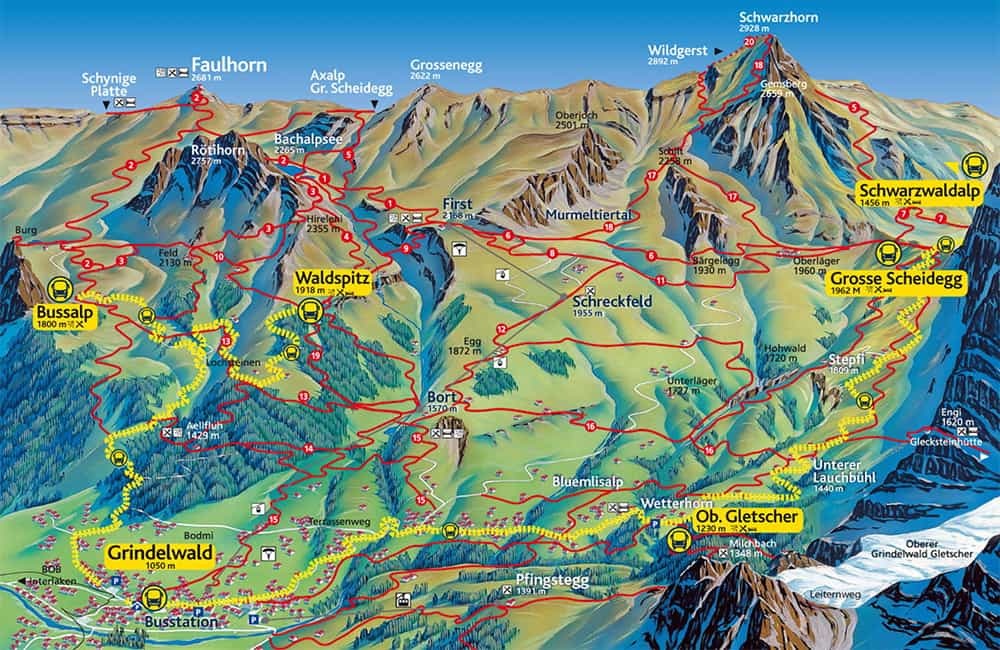
A trip up to First
First is a mountain location and minor summit on the slopes of the Schwarzhorn. The superlative views, and activities available, which can be incorporated into a lift ticket package, make this the most popular tourist destination in Grindelwald.
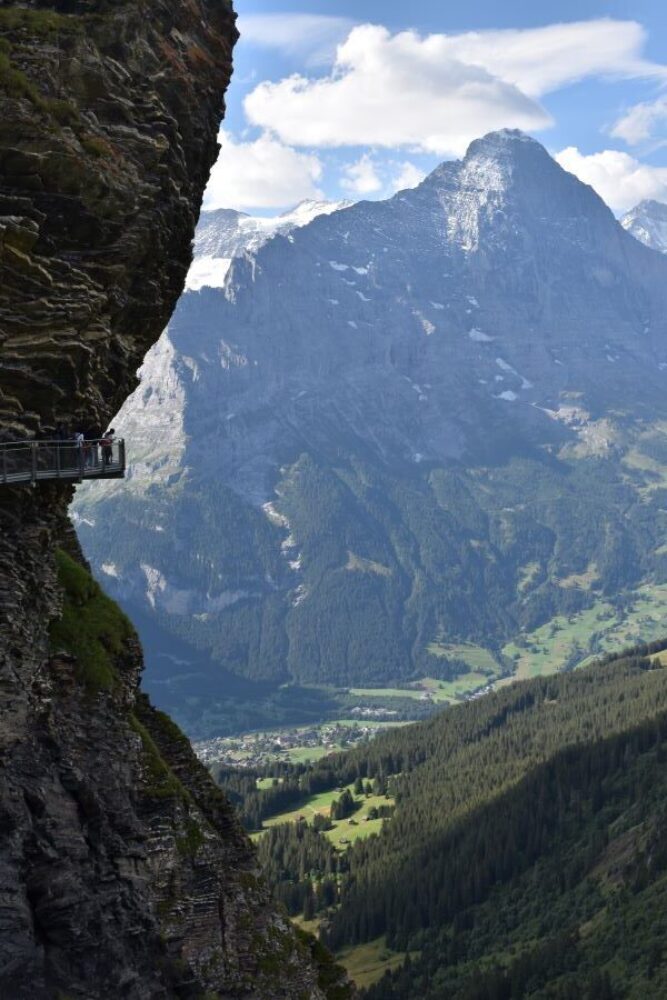
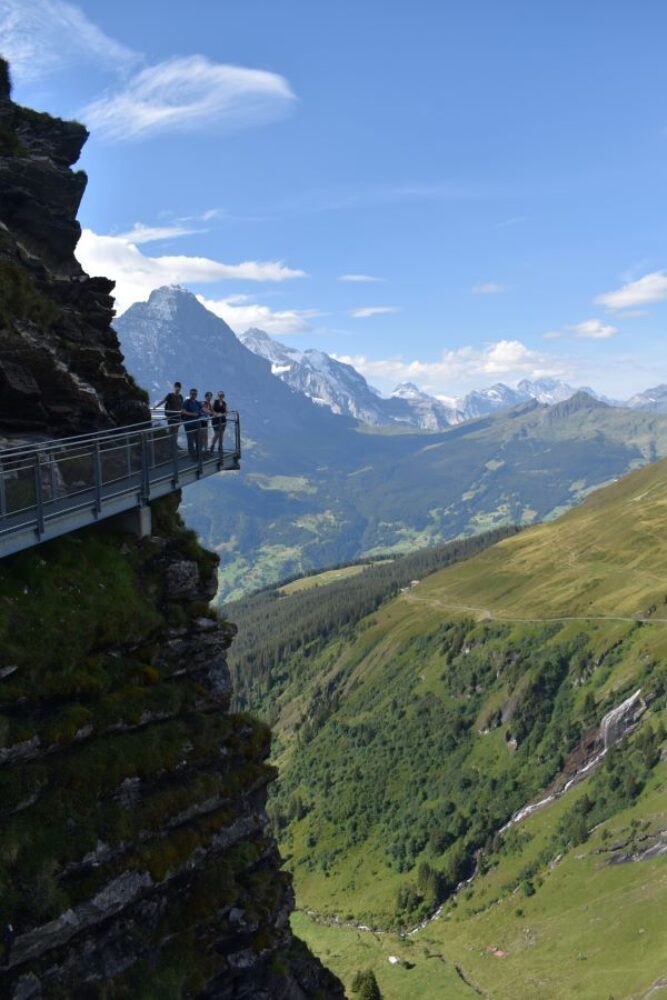
The two main 'natural' highlights are the cliff walk; a stone's throw from the restaurants at First, and the hike to Bachalpsee that takes approximately 50 minutes.
We decided to hike down from Bachalpsee to Grindelwald, affording fantastic vistas. I recommend taking a proper walking map as the standard summer hiking maps provided at the bottom of lift stations can be a little misleading. Watch the forecast as late afternoon thunderstorms are a common summer hazard.

Männlichen Panorama trail to Kleine Scheidegg
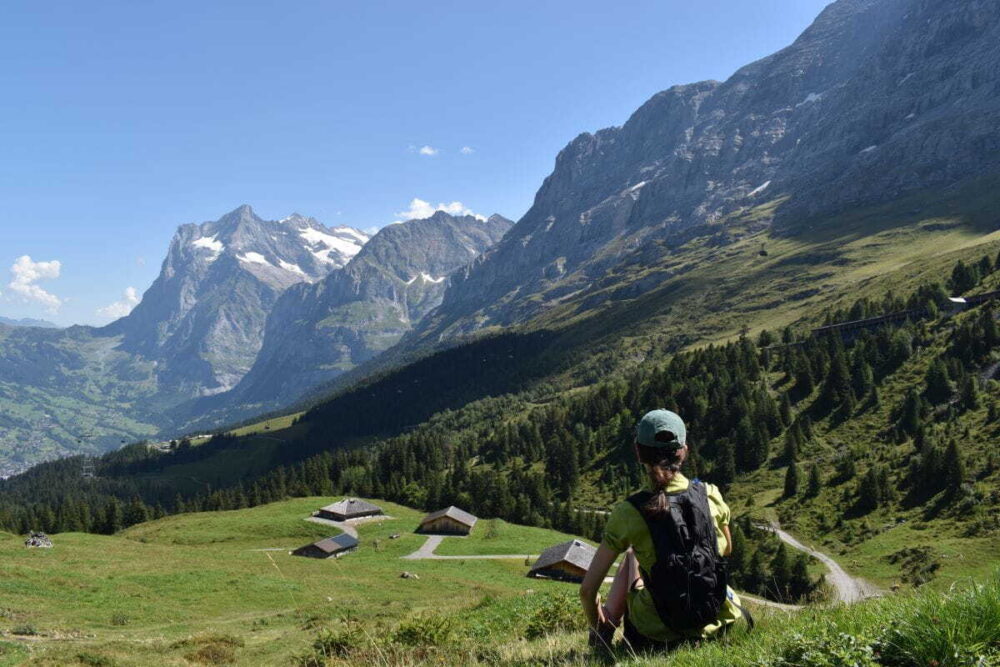
This hike is another must in Grindelwald; suitable for all age groups. While it is possible to hike up to Mannlichen, most people take the gondola from the Grindelwald terminal. Once at the top, the panorama trail takes you towards the imposing peaks of the Eiger, Monch, and Jungfrau; the trail is pushchair friendly.
Once at Kleine Scheidegg you can get the train back down to Grindelwald, hike some 3 hours back to town, or hike an extra hour upwards to get closer to the glaciers. From here you take the Eiger Express back to Grindelwald or hike, initially along the Eiger trial that requires good fitness and some technical ability.
A walk on the wild side
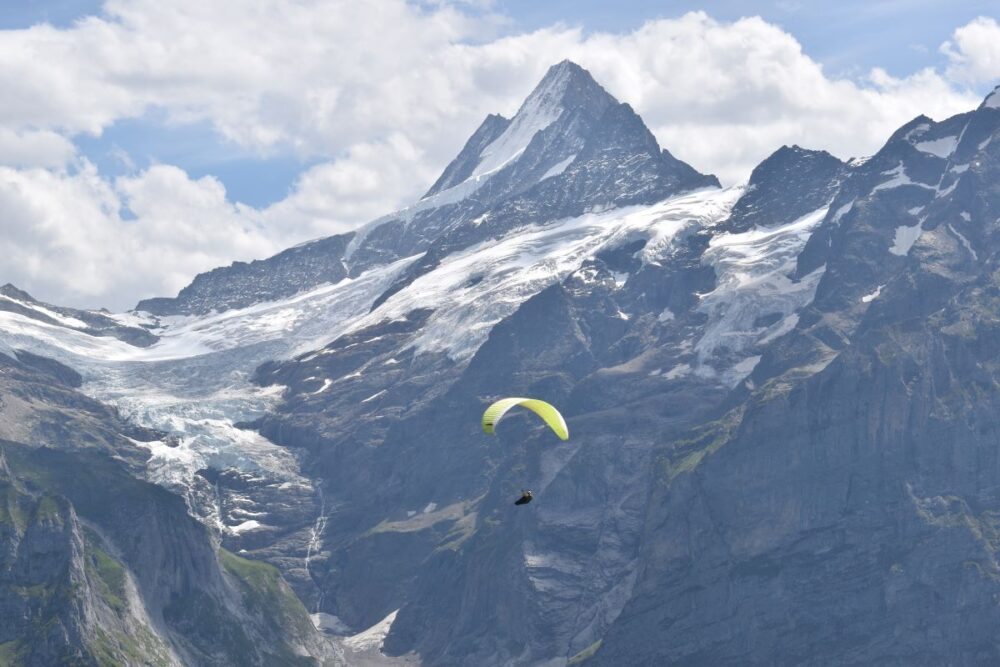
Two of the most memorable alpine activities are paragliding (parapenting) and whitewater rafting.
I have been skydiving and paragliding, the latter is more relaxing. In paragliding your feet don't leave the ground until the parachute is open, with skydiving you fall to earth from 15,000 feet waiting for the parachute to open!
Paragliding is from First or Interlaken. With a view of the Eiger the former is the obvious choice. Before booking check the forecast; aim for a sunny day. For a more relaxed flight the morning and late afternoon are perfect. For those craving more excitement the best thermal conditions are early afternoon. On the day, your guide will tell you all you need to know.
Whitewater rafting is on the Lütschine river, a relatively short but fun trip with grade 2-4 rapids (grade 5 is not allowed in Europe). Most companies operate from Interlaken. Others doing the rafting felt that the local canyoning trips provided more adrenaline.
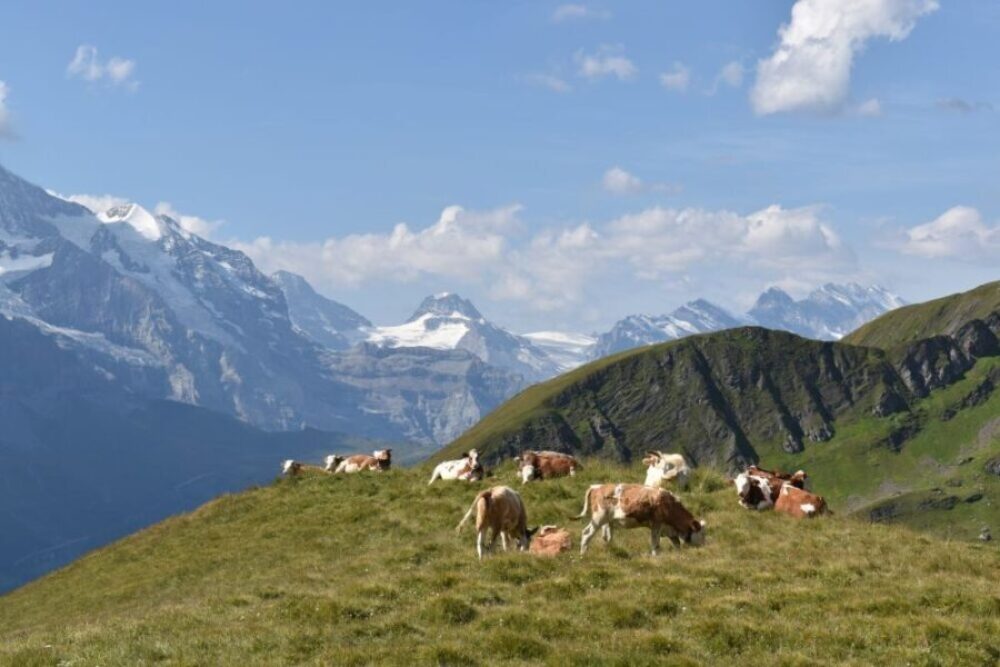
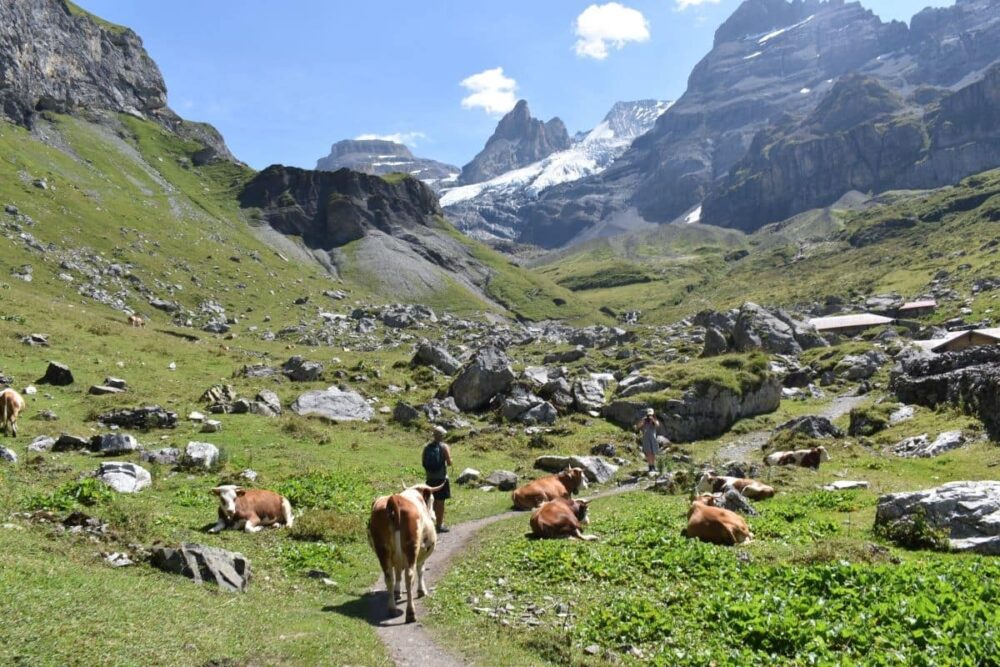
Cow watching can also be extreme with cows refusing to budge from hiking trails. I also quickly learnt that the wired fences are electrified!
Waterfalls in the Jungfrau region
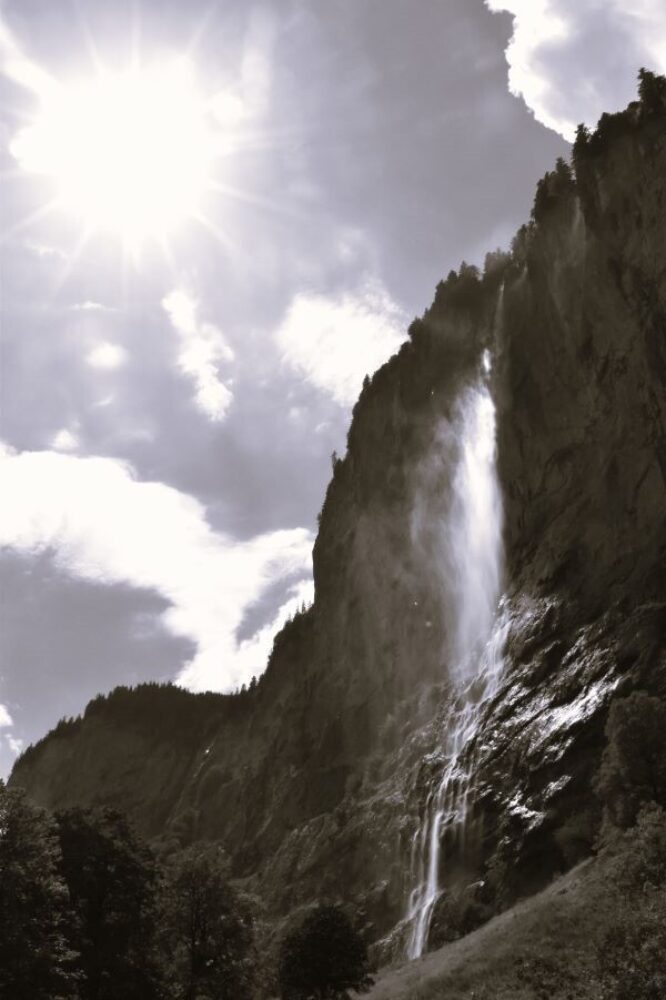
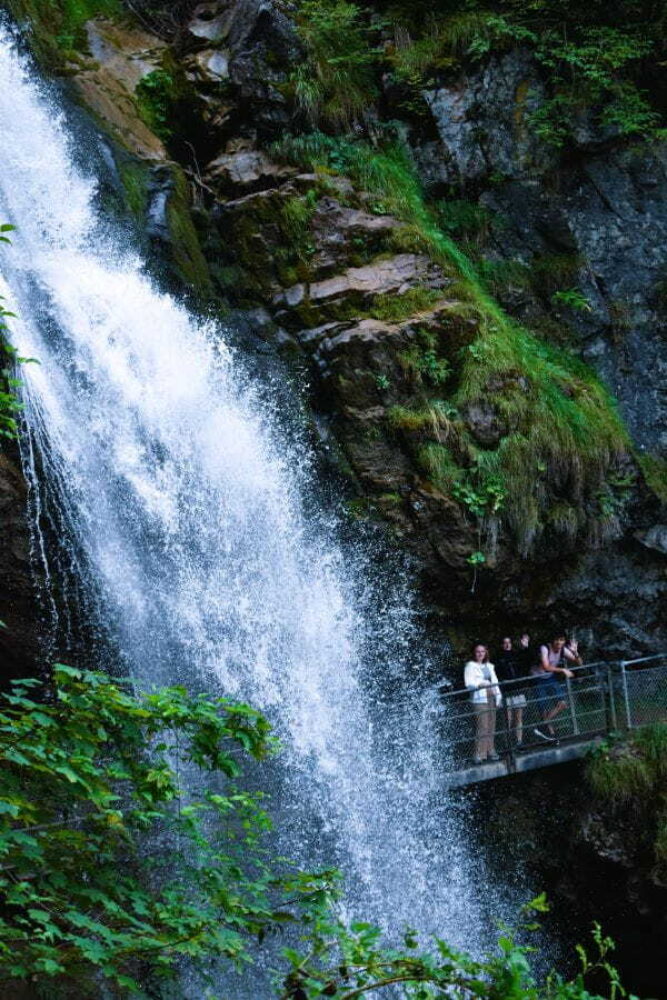
Our favourite waterfall was Giessbach Falls, which we stopped at on the way to Grindelwald. The falls can be found on the south side of Brienzersee (Lake Brienz). Tumbling over 14 steps, the Giessbach Falls thunder from a height of 400 m to join the turquoise waters of Lake Brienz. A car park is only a five-minute walk away; the fun bit is walking behind the falls. Two other waterfalls in the area are Erschwanden waterfall and Mülibach waterfall.
Just a 20-30 minute drive from Interlaken lies Lauterbrunnen, the Valley of the 72 Waterfalls (we definitely didn't find all 72!). The best way to explore the valley is to get a bus from Lauterbrunnen to Stechelberg village at end of the valley and then hike the 6 km back. The highlights are, in order:
- Schmadribachfall - a short walk beyond Stechelberg, this is the largest (not tallest) waterfall
- Mürrenbachfall - heading back down the valley, this is the highest waterfall in Switzerland (417 m); one of the few that you can walk to the bottom of
- Trümmelbachfalle - found on the other side of the valley, these ten glacial waterfalls represent the largest underground waterfalls in Europe. You must pay for this experience
- Staubbachfall - close to Lauterbrunnen, this spectacular waterfall cascades down a vertical cliff face at a height of 300 metres. A path leads up and behind the waterfall; during a dry period, the short walk isn't worth the effort (trust me)
Once back to Lauterbrunnen you might want to stop for food; this pretty village is typically touristy but affords lovely views of Staubbachfall and the valley beyond.


Saving the best until last - Oeschinen Lake (Oeschinensee)
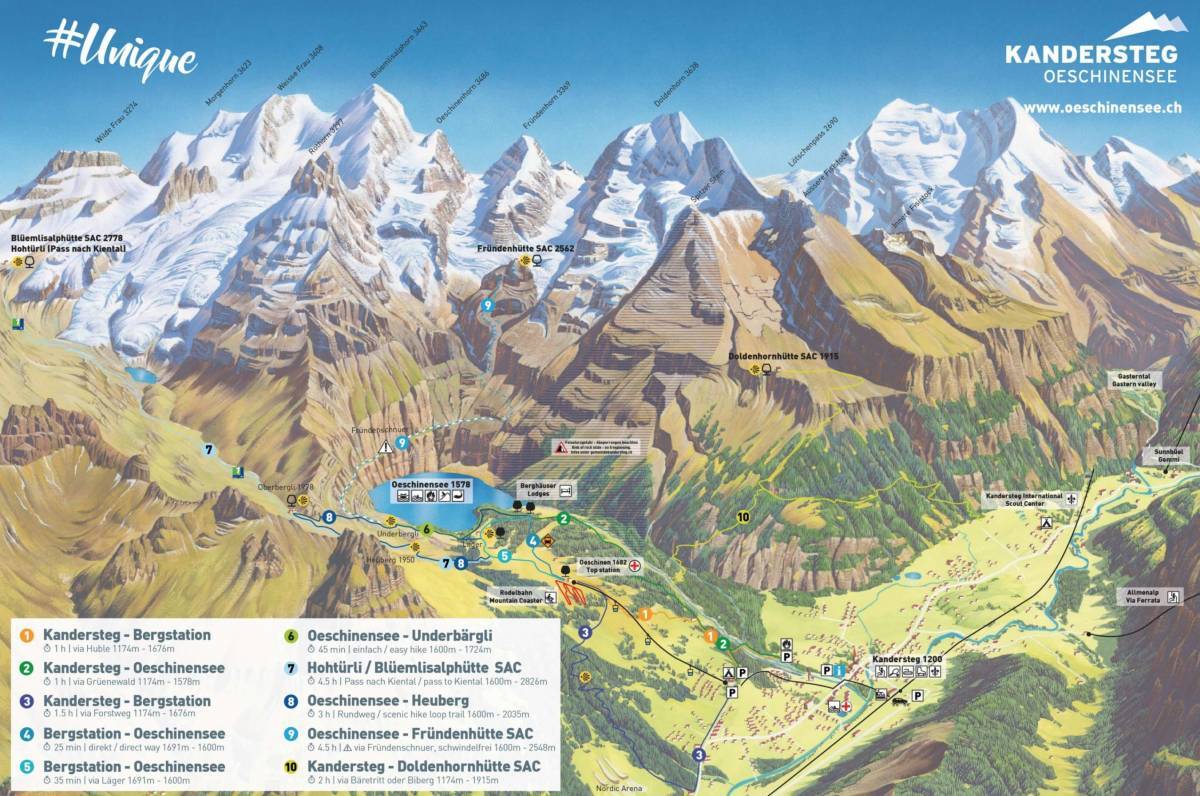
A 90-minute drive from Grindelwald is the small village of Kandersteg in the Oeschinen valley. From Kanderstag you can either hike up to Oeschinen Lake, which takes around 80 minutes, or pay for the gondola.
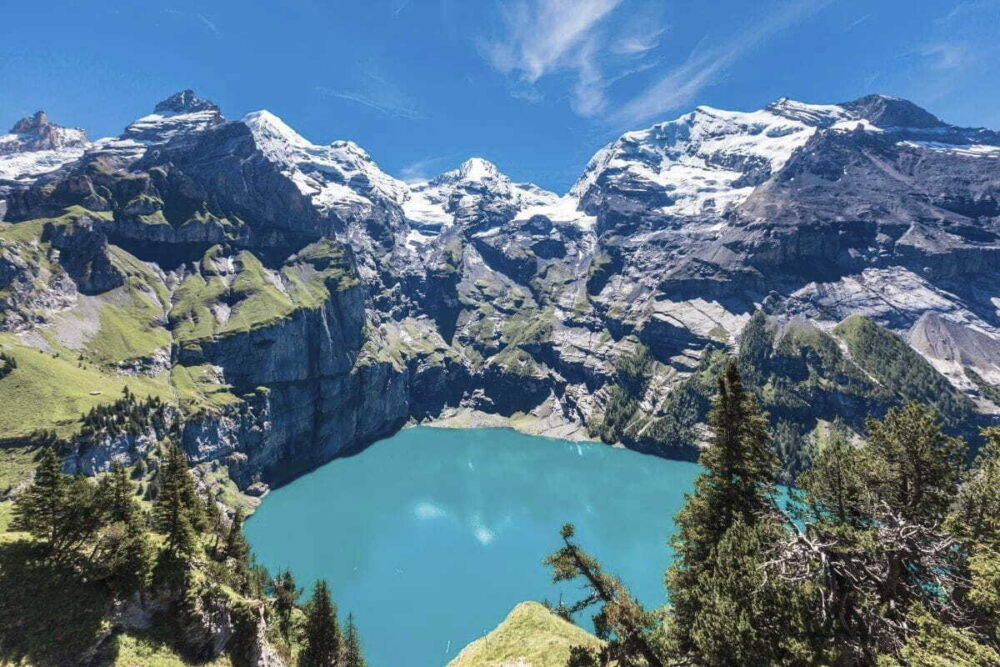
It is a short hike from the top of the gondola to the lake, at which you can simply chill out at one of the pebbly beaches, take a boat, or go for a hike - you guessed right, we did the latter. The best hike is number 8, a circular route to the left of the lake (if looking down the lake). We walked clockwise to get the steep climb out of the way; two cafes further along the walk provide a well-deserved rest. At the time of writing all the cafes around the lake only took cash. The views from the higher elevations are some of the best I have ever seen. If you don't fancy a proper hike, walking some 20 minutes along route 8 in an anticlockwise direction still affords great views.
At the end of a perfect day we went swimming in the glacial lake, which was 17.5 degrees Celsius - our submerged bodies soon adapted; we had one of the best swims of our lives.
We spent the last day of our trip in Basel; a story for another time.