<h1>Skiing - all you need to know </h1>
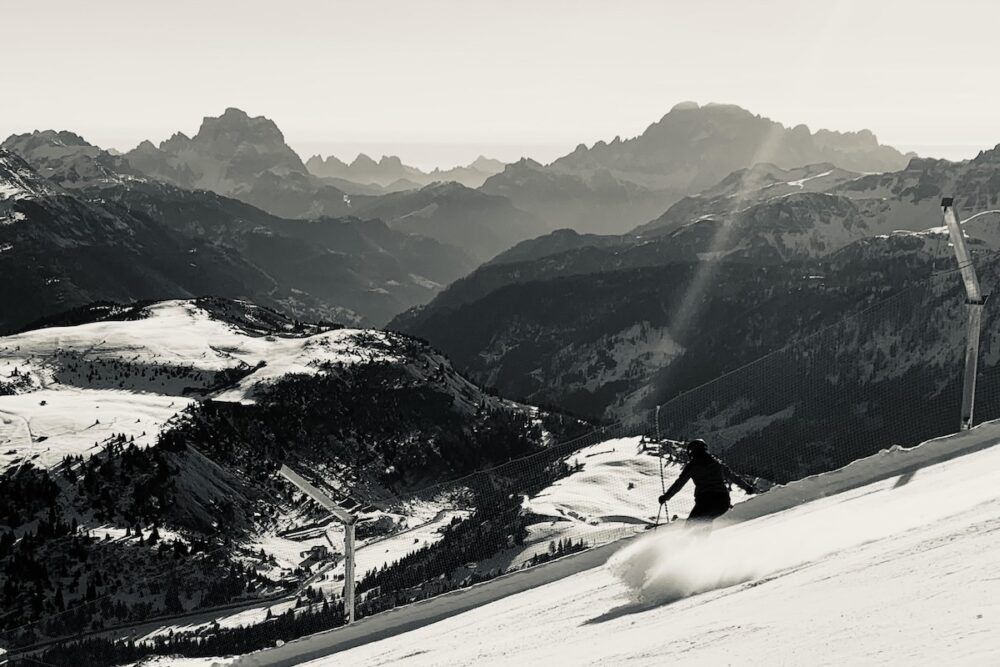
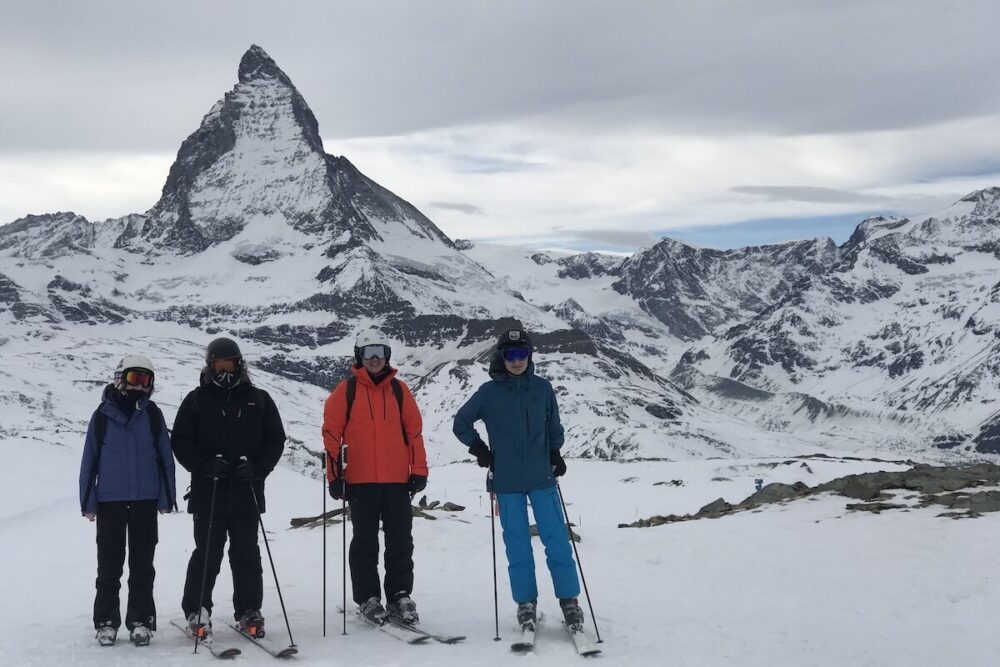
<h5>Skiing became one of my greatest passions from the day I skied down my first piste aged 13. Since that time I have been fortunate to experience the best of both worlds - piste skiing with the family, and freeriding. From short swings down the corduroy pistes of Zermatt, to deep powder through alpine foreast, skiing has afforded me an incredible journey.<br></h5>
<h3><strong>Where in the world</strong></h3>
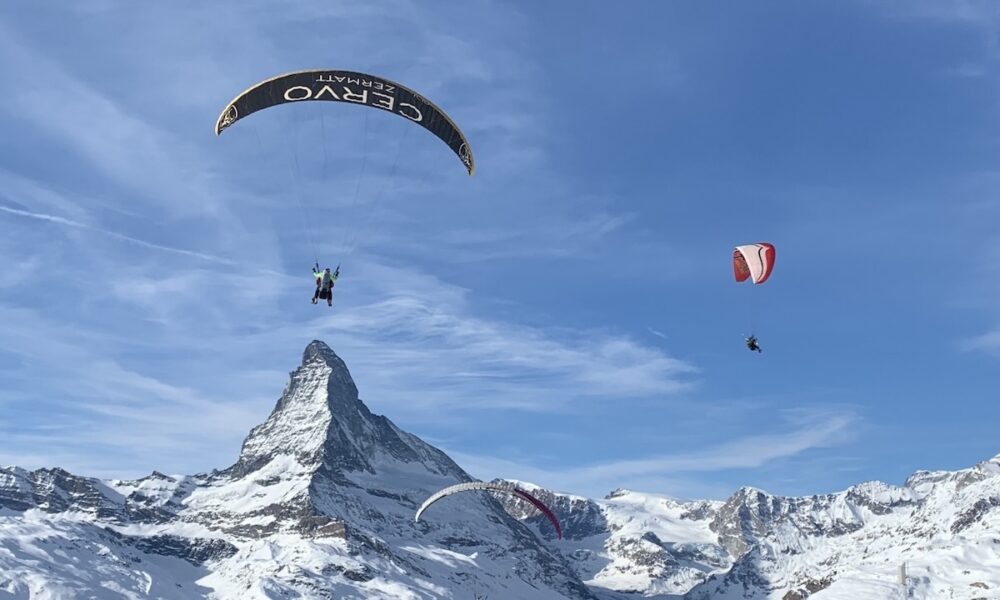
<p>In general, <strong>Europe </strong>has more variety, better scenery, and is much cheaper than North America. Historically, <strong>North America</strong> (the western resorts) gets more snow and arguably has better access to tree skiing (skiing within forests as opposed to tree-lined pistes) and so it can be viewed as providing better freeriding; however, with climate change conditions have become much less predicatable.<br><br>In terms of Asia, <strong>Japan </strong>has have some of the snowiest resorts in the world, but vertical heights tend to be much less and the expense greater; however, Japan remains on my ski bucket list.</p>
<h3><strong>When to go skiing</strong></h3>
<p>It goes without saying that <strong>school holiday periods</strong> are busier and more expensive. </p>
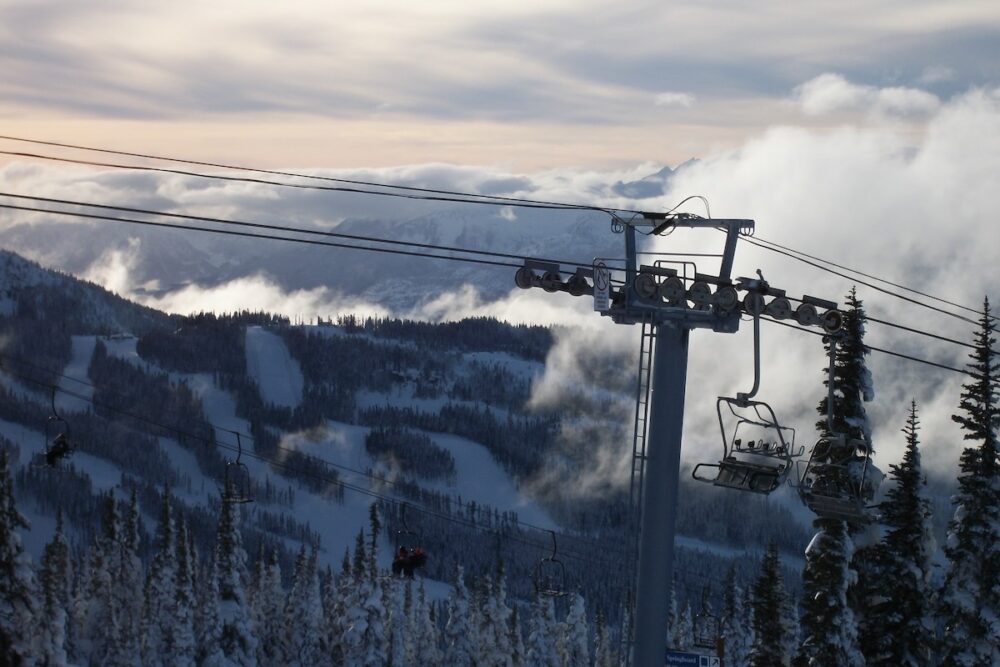
<p>North America tends to do better for <strong>early season snow</strong> whereas Europe can be very unpredictable at this time, accordingly I would think twice about booking a ski holiday in Europe over the Christmas period. Mid-January to mid-March is likely to provide the best conditions in Europe.</p>
<p>Late season skiing is referred to as <strong>spring skiing</strong>, while some like these warmer and sunnier periods, you need to consider snow quality. During periods of warm sunny weather the snow quality goes through a daily cycle - clear skies means the snow freezes overnight leading to icy slopes at the start of the day, as the morning warms up the snow starts to thaw leading to a few hours of nicer snow on which to ski, into the afternoon the snow becomes more slushy, leading to very heavy skiing.</p>
<ul></ul>
<h3><strong>Which resort - altitude and proximity to the ocean</strong></h3>
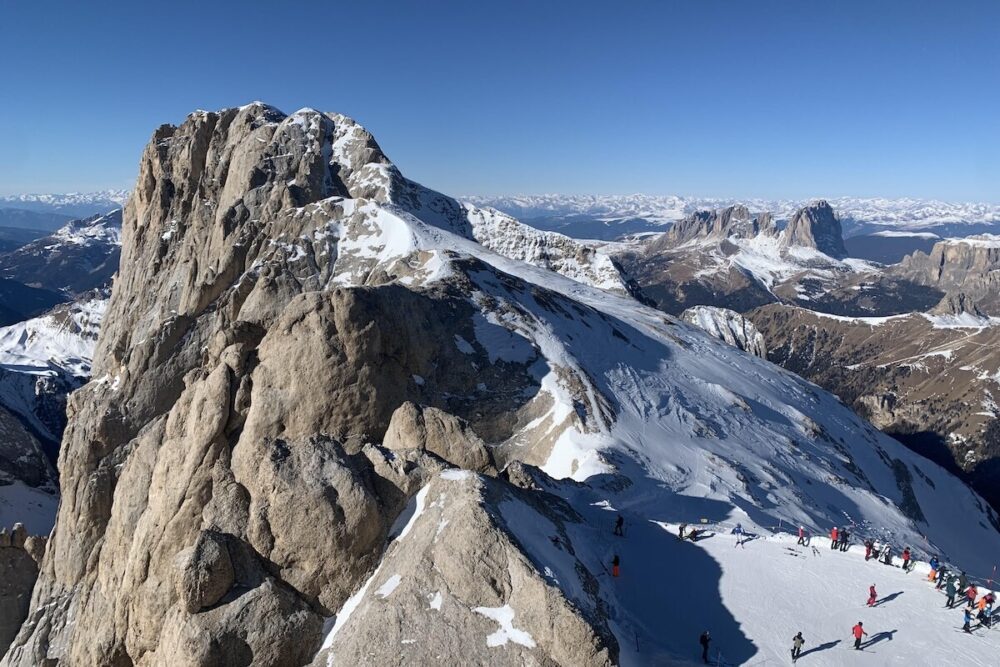
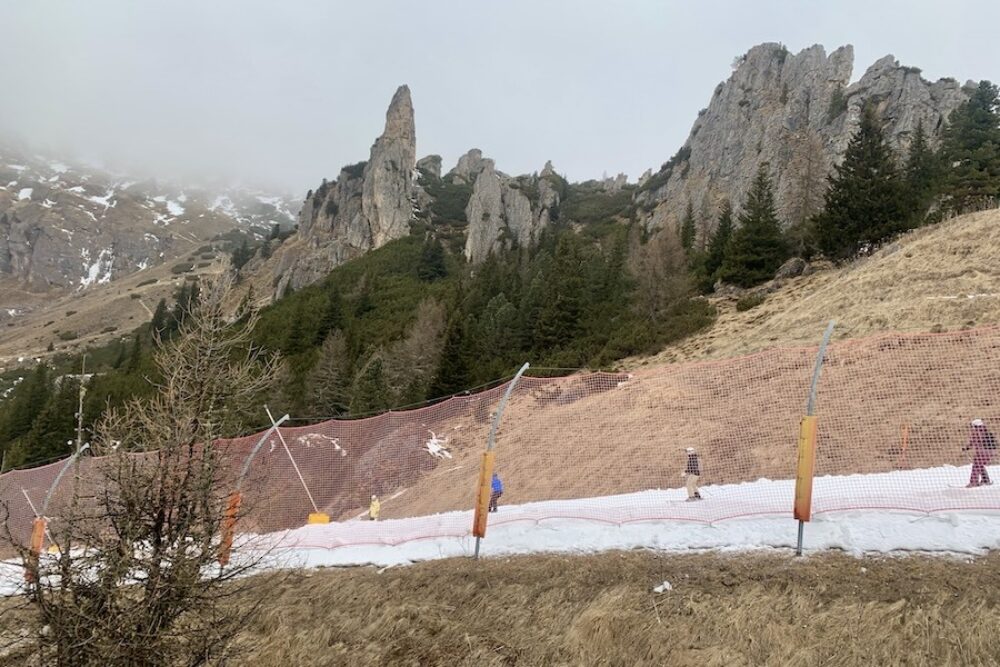
<p>In terms of where to ski <strong>the most important factor is altitude</strong>. Snow typically falls when air temperatures are at or below freezing (0°C or 32°F); however, snow can fall at surface temperatures as high as (2°C or 36°F), or even slightly higher, as snowflakes can fall through warmer air, particularly if the upper atmosphere is very cold. <br><br><strong>Lower altitude resorts are more susceptible to periods of rain and warmer temperatures</strong>, meaning at any one time the percentage of pistes open is likely to be lower then compared to higher resorts; skiing in rain or 'wet' snow is pretty miserable. The higher you go the colder it gets, meaning more of the preciptation will fall as snow; with every 100 metres the temperature drops by an average of 0.65°C.</p>
<p>Ultimatley <strong>higher resorts are most snowsure</strong>, and more likely to have favourable conditions. </p>
<p>Proximity to an ocean should also be a consideration. In the winter oceans are generally warmer than the land, consequently, at the same height, <strong>resorts closer to oceans are likely to be milder</strong> compared to those further inland. </p>

<h3><strong>Which resort - piste map</strong></h3>
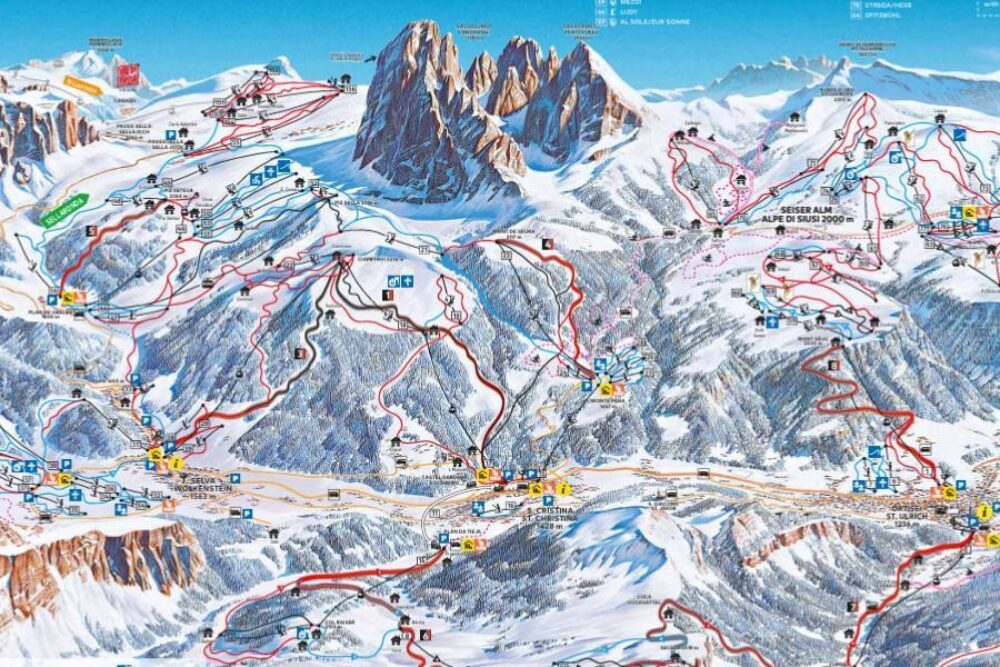
<p>Examing piste maps before you book your holiday is also important. Factors to consider include:</p>
<ul><li><strong>Size of ski area </strong>- smaller ski areas are unlikely to keep experienced skiers happy for long</li><li><strong>A mixture of tree-lined runs and higher alpine terrain (above the treeline) </strong>- tree-lined pistes are pretty and afford better visibility when snowing. High alpine areas give the best views and are more snowsure during periods of warmer weather </li><li><strong>Grade of pistes</strong> - in Europe green and blue pistes are easier; red and black are more challenging. In North America a double black diamond piste is equivalent to a black piste in Europe</li><li><strong>Focal points</strong> - if skiing in a group of mixed abilities, which is often the case in families with young children, look for ski areas in which multiple ski lifts / pistes come down to a focal point, which makes it much easier to meet up. Some resorts are much more spaced out. The maps below act as examples - the map of Meribel Mottaret (left) shows a focal point; ideal for mixed abilities, whereas the map of Selva Val Gardena (right) shows the area to be much more spread out making meeting up more difficult </li><li><strong>Direction of the slopes</strong> - in the northern hemisphere north-facing slopes are more sheltered from the sun and hold their snow better</li><li><strong>Snowparks </strong>- the place to be for jumps and other tricks </li></ul>
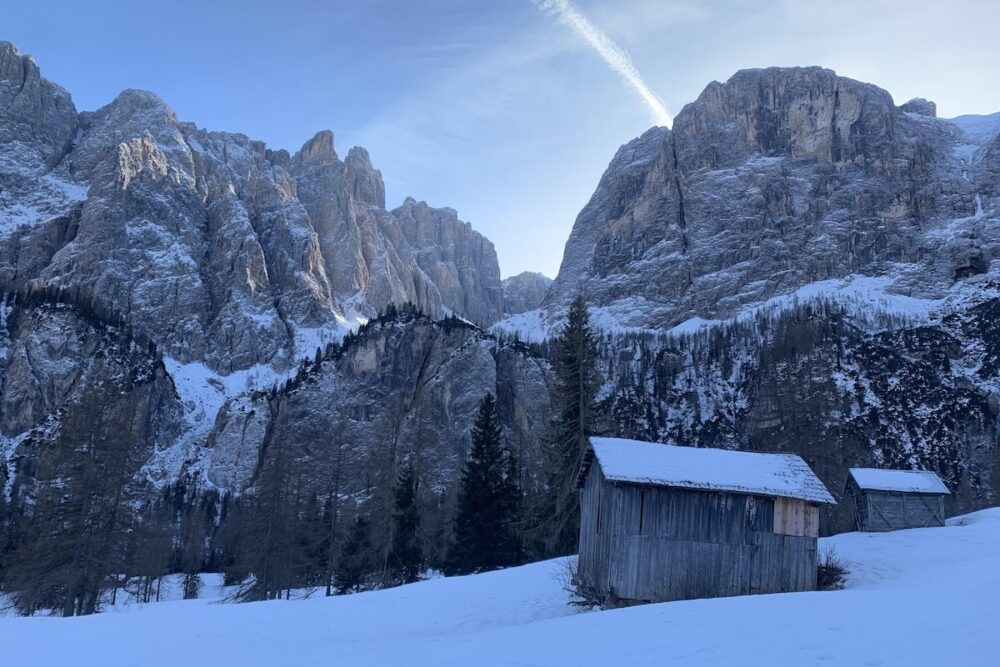
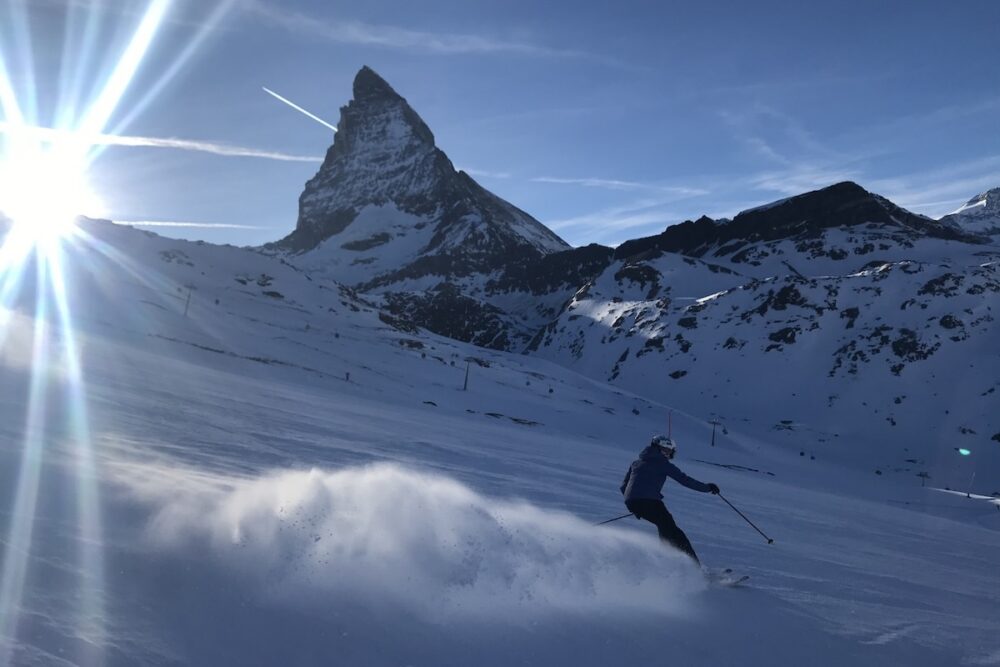
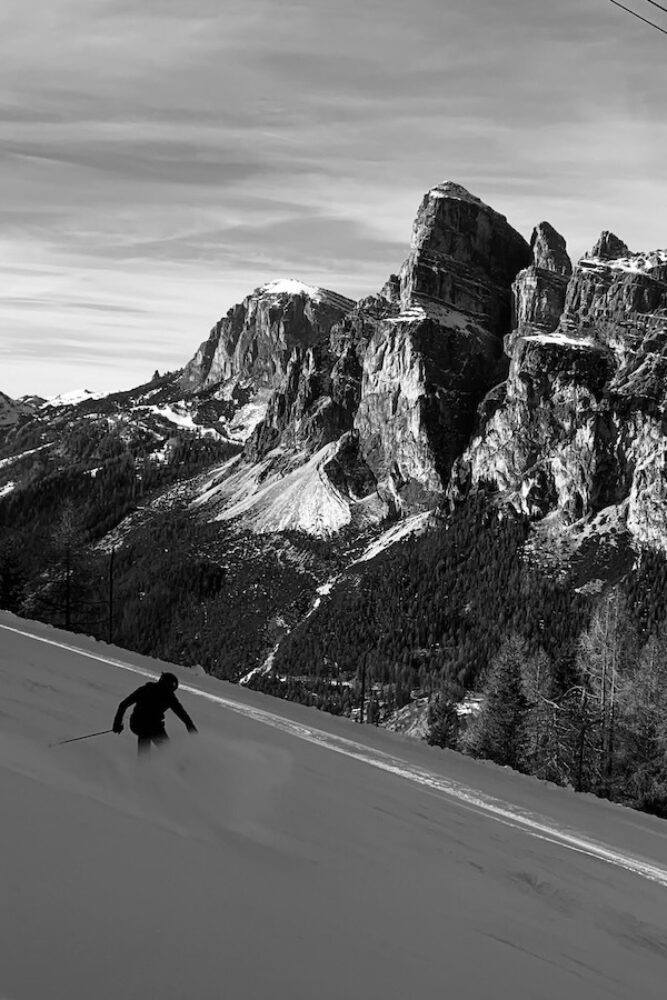
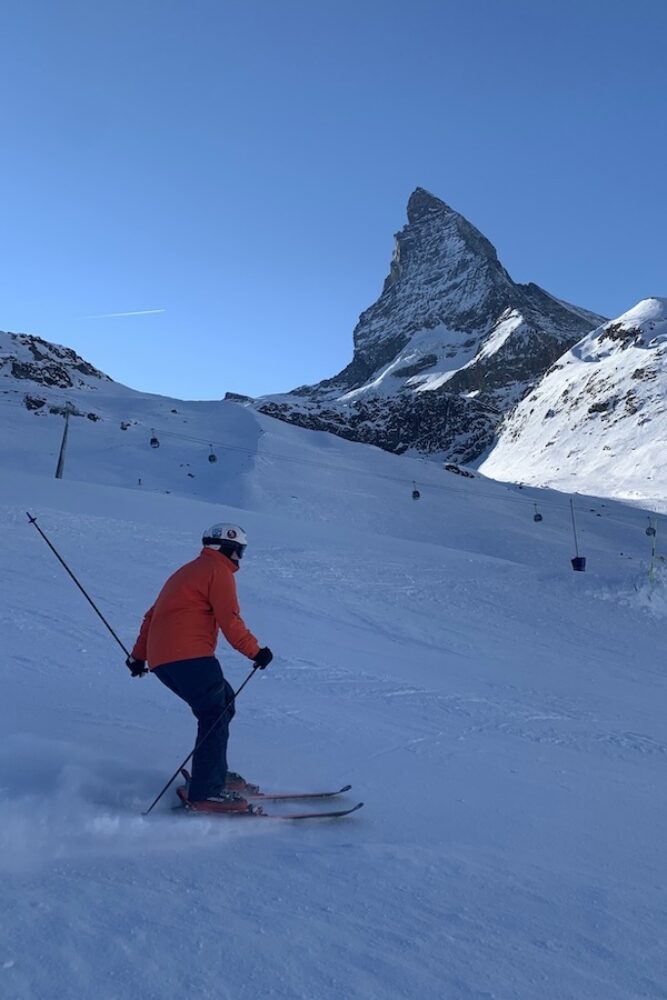
<p>The two most beautiful ski areas I have been are Zermatt and the Dolomites (you can probably guess that from the images I choose!).</p>

<h3><strong>Where to fly (and flight times)</strong></h3>
<ul></ul>
<p><strong><strong>Where to fly to in Europe </strong></strong>-<strong><strong><strong></strong> </strong></strong>It is very tempting to fly to one of the smaller airports closer to the ski resorts, a decision that usually pay off. On the flip side, alpine airports such as Salzburg, Innsbruck, and Chambéry are much more likely to close in bad weather; we once spent 20 hours in Chambéry airport, which wasn't a whole lot of fun. </p>
<p><strong><strong>Flying to North America </strong></strong>-<strong><strong> </strong></strong>if you need a connecting flight in the states allow a minimum of 3 hours between flights, in many American airports they don't assist those needing to get through passport control more quickly. I have witnessed numerous people miss flights while standing in long customs queues.</p>
<p><strong>Flight times</strong> - while getting up at 2 a.m. for a 6 a.m. flight doesn't fill most people with great excitement, it brings many benefits, especially on the outbound flights. Getting to the resort early means you have ample time to sort ski passes and rental equipment enabling you to get out on the slopes the next morning with limited fuss. Later flights are prone to more delays, matters that can be componded if poor weather lenghtens the journey between the airport and ski resort.</p>
<ul></ul>

<h3><strong>Age and group size</strong></h3>
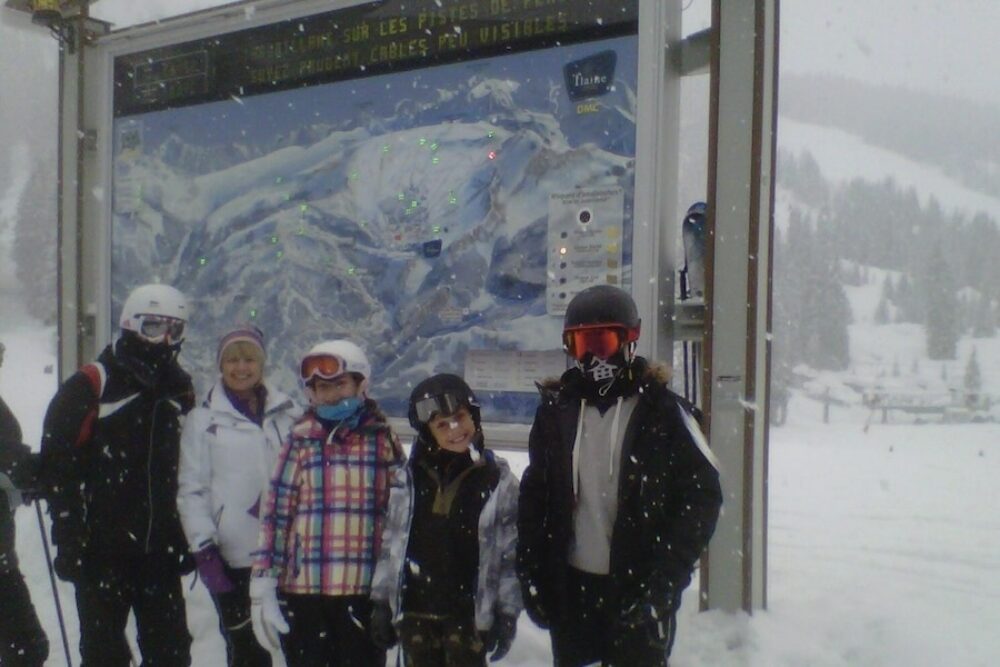
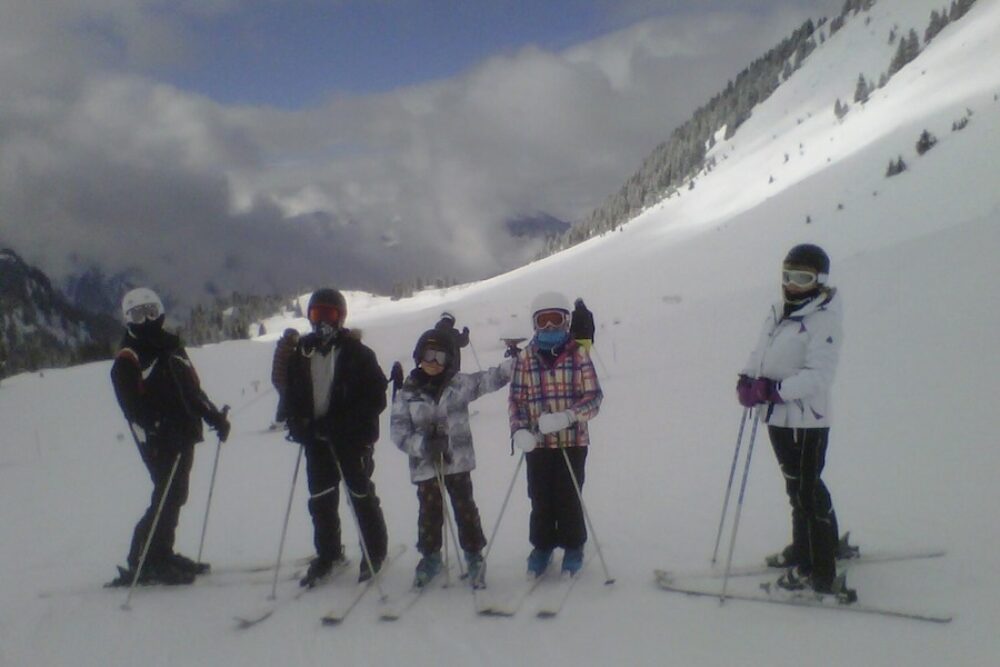
<p>When it comes to <strong>age</strong> there isn't a hard and fast rule. Children living close to mountains often start skiing at a very young age, but if you live in the UK or other countries where young children are not familiar with possible extremes of weather then it is worth considering starting a little older; leaving your child with an unfamiliar ski instructor can be a daunting prospect, made more so on a cold snowy day. Our children started at 4 and 7 years of age, 4 was perhaps a year too soon.</p>
<p>While travelling with a large group sounds fun, <strong>skiing with a lot of people</strong> can be very frustrating, there again waiting is not one of my virtues!</p>
<ul></ul>
<h3><strong>Where to stay</strong></h3>
<p>Options in ski resorts include half-board chalets, hotels, and apartments. Once you figure in the cost of eating (and drinking) out, we have found <strong>apartments are the best value for money.</strong></p>
<p>Whatever type of accomodation you choose, <strong>being close to a ski lift is a major consideration</strong>; lugging your skis (and your children's skis) any distance is hard work. Ski-in/ski-out accomodation suggests a location at the bottom of a piste - it is worth checking a map to make certain the claim is valid.</p>
<p>I have seen people stay in campervans, while very good value for money I am not sure this is something I would recommend in a ski resort in winter! </p>
<h3><strong>Ski equipment </strong></h3>
<p><strong><strong>Wear a good helmet, if not for you for your children</strong></strong>. The days are long gone when it used to look cool not to wear a helmet (not that it ever did). Head injuries often come as a result of something out of your control eg from a collision with another skier/snowboarder.</p>
<p>If renting <strong>ski boots</strong> make sure they are a good fit while in the shop, poor fitting boots can spoil your day. If you have foot problems, such as flat feet, one of your best investments will be custom fit ski boots that are molded to the shape of your feet. Unless skiing become a passion, renting good quality <strong>skis </strong>is more cost effective than having your own, especially given the cost of ski carriage on a plane. To avoid paying for carraige of large bags I once saw a group of 5 getting on the plane wearing their ski jackets, salopettes, and ski boots!</p>
<p>Looking after your equipment - skis get stolen, mainly outside of mountain restautants. The best way of avoiding this is when stopping at a restaurant to swap one of your skis with someone else, preferably someone you know!<br></p>
<p>An important purchase is a <strong>g</strong><strong>ood pair of ski googles </strong>with interchangable lens - some colours are much better for sunny weather, others for flat light (ie poor visibility).</p>
<ul></ul>
<h3><strong>Clothing</strong></h3>
<p>It is important to know what weather to expect, there are many places to look for ski forecasts, one of the most reliable is <a href="http://www.snow-forecast.com/" rel="noopener" target="_blank">snow forecast.com</a>.</p>
<p>If the forecast looks very cold you are going to need <strong>several layers</strong> under your ski jacket, a <strong>ski snood</strong> to protect your face and good gloves, or even better mittens. I suffer from Raynaud's, which causes my hands to become very painful and change colour in the cold, one of my best ever presents was <strong>heated mittens</strong>, a game changer (heated gloves are not as effective as the warmth is not transmitted down the fingers as well).</p>
<ul></ul>
<h3><strong>Filming</strong></h3>
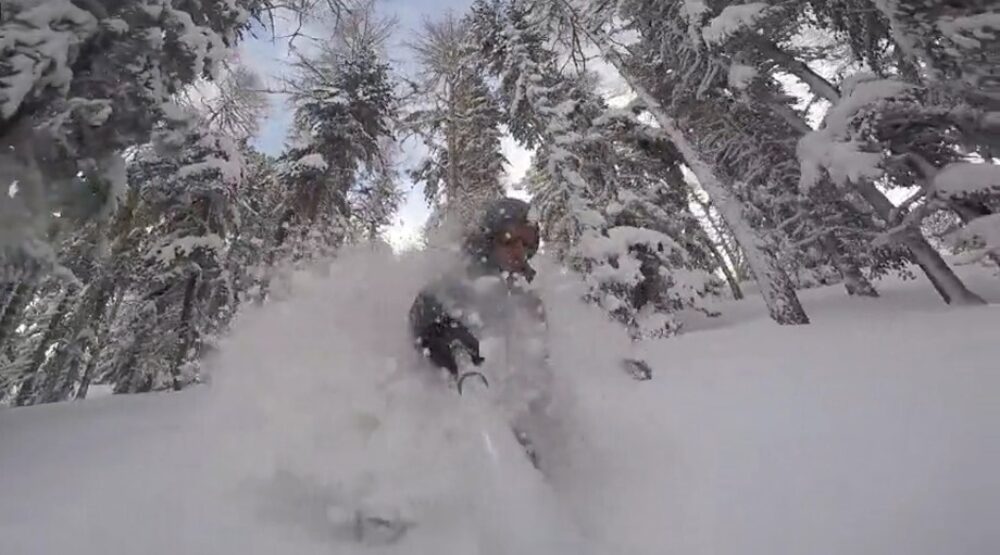
<p>One of the most essential pieces of ski equipment is something that enables you to make a good video. Historically the<strong> GoPro </strong>was the frontrunner; the choice for my ski videos. The GoPro can be mounted on a helmet, jacket, pole, or you can use your intuiton - over the last few years I mounted it on my back enabling me to film friends / family skiing behind.</p>
<p>In recent times the <strong>360 camera </strong>has come to the fore; footage is resource-intensive so requires a powerful laptop to process the information. <br></p>
<ul></ul>
<h3><strong>Avoiding injuries</strong></h3>
<p><strong>Knee injuries</strong> are relatively common in skiing, and can spoil your holiday as well as impacting your well-being in the longer-term. In order to reduce your risk of knee (and other) injuries:<br></p>
<ul><li><strong>Get fit </strong>before your hoilday, and keep your weight down. Do <strong>quad exercises</strong></li><li><strong>Ski lessons </strong>are important; your partner is not a ski instructor, even if he thinks is!</li><li><strong>Ski within your limits</strong></li><li>If you are starting to ski out of control consider sitting/falling down before you get too much speed up</li><li><strong>Would you drink and drive?</strong> I hope not, the same goes for skiing</li><li>Take particular care at the <strong>end of the day</strong>; most injuries happen when you may be mentally and physically tired, at the same time the pistes heading into the resort are busier</li><li>Beware in warmer weather; turning in <strong>slushy snow </strong>is a particular risk for your knees</li></ul>
<h3><strong>Checklist</strong></h3>
<p>Planning your holidays in good time, and in detail, enables you to get so much more out of your travels, as well as avoiding the pitfalls. The <strong>two lists attached below</strong> will help you with holiday planning, and will reduce your odds of leaving something important behind.<br></p>
<p>The lists are in word format so you can amend them to suit your needs, and then use again. As with anything on this website there is <strong>no financial gain; I hope that in return you visit the <strong><a href="{category:134834@1:url||https://www.aworldonthebrink.com/blogs/leave-for-others}">Conservation</a> </strong>section of the website. Thank you.</strong></p>
<ul><li><strong><a href="{entry:621@1:url||https://www.aworldonthebrink.com/blog/travel-tips}">Holiday planning</a><a href="{entry:621@1:url||https://www.aworldonthebrink.com/blog/travel-tips}"><br></a></strong></li><li><strong><a href="{entry:621@1:url||https://www.aworldonthebrink.com/blog/travel-tips}">Travel checklist</a></strong></li></ul>
<h3><strong>My ski destinations</strong></h3>
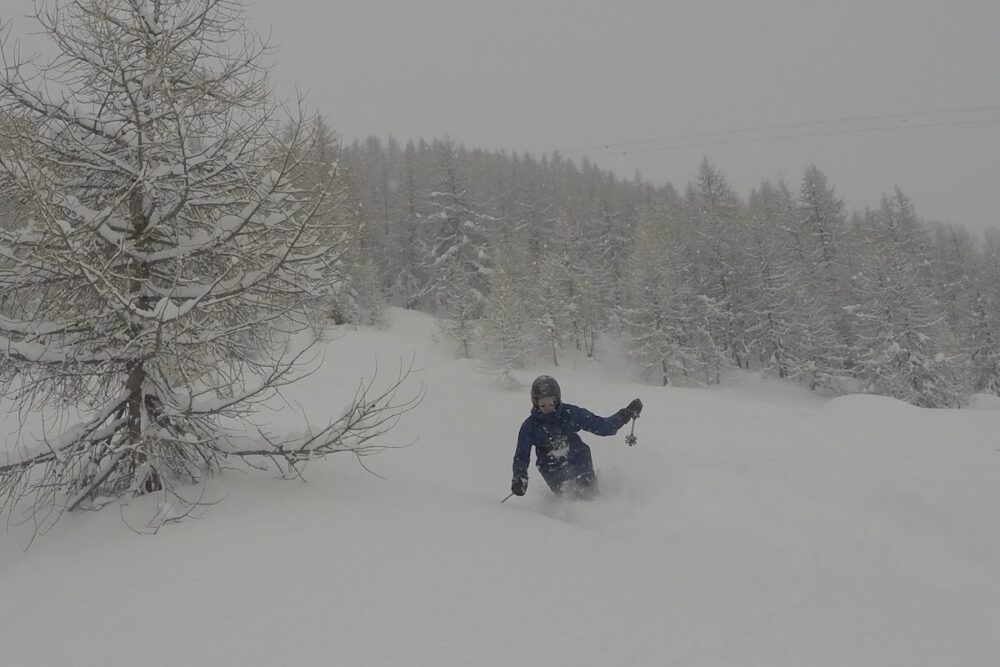
<p>I decided it would be fun to list below all the places I have skied, that is except for a few secret powder stashes ... some things are simply too good to share!<br></p>
<p><strong>England</strong></p>
<p>Harrogate dry ski slope - the place I leaned to ski</p>
<p><strong>Andorra</strong></p>
<p>Soldeu - the first time I skied on snow</p>
<p><strong>Austria </strong></p>
<p>Mayerhofen / Hintertux <br> Maria Alm<br> St Anton / Stuben / Lech / Zurs (4 times)<strong><br>A secret valley in the Tyrol ...</strong></p>
<p><strong>Canada</strong></p>
<p>Lake Louise<br> Panorama <br> Sunshine<br> Whistler (4 times)<br></p>
<p><strong>France</strong></p>
<p>Alpe d'Huez<br> Chamonix<br> Flaine (three times)<br> Les Arcs 1950 (twice)<br> La Plagna <br> La Rosière<br> Megeve<br> Serre Chevalier <br> The Three Valleys (four times) <br> Valmorel <br> Val d’Isère / Tignes (twice)</p>
<p><strong>Georgia</strong></p>
<p>Two resorts, and <strong>two more secrets </strong>(not a place I would normally choose to ski but I had 10 days away on my own and the forecast was for 4 foot of fresh powder, which delivered!).</p><ul></ul>
<p><strong>Italy</strong></p>
<p>Alagna / Gressoney / Champoluc<br> Cervinia (the piste conditions and views are much better on the Zermatt side)<br> La Thuile <br> The Dolomites - three times</p>
<p><strong>Switzerland</strong></p>
<p>Verbier - three times<br> Wengen / Grindelwald / Murren<br> Zermatt <strong><br>Another secret valley, overlooking the Rhône valley .....</strong></p>
<p><strong>USA</strong></p>
<p>Jackson Hole (four times)<br> Lake Tahoe - Alpine Meadows / Squaw Valley / Homewood<br> Snowbird / Alta<br><strong>A smaller resort out West, another great snow-stache</strong><br></p>