Scotland - Highlands and Islands
Scotland is a land of mountain wildernesses, interspersed with glacial glens (valleys) and lochs (lakes). Its major cities are Edinburgh, the capital, with its iconic hilltop castle, and Glasgow, famed for its vibrant cultural scene. The Highlands & Islands cover about 50% of Scotland's landmass and have the wildest and most dramatic scenery. There are 790 islands, of which only 130 are inhabited - the shortest scheduled flight in the world is one-and-a-half miles long from Westray to Papa Westray in the Orkney Islands taking 1 minute 14 seconds to complete.
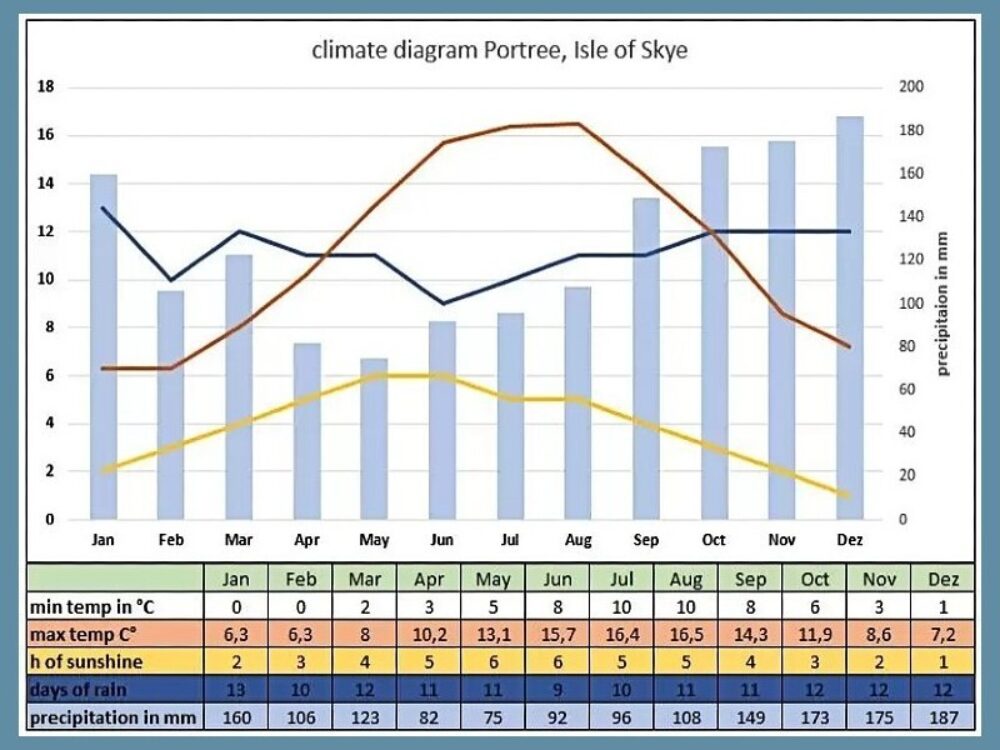
There are too many beautiful areas of Scotland to describe in a single blog so I am going to focus on just a few of my favourites - as a general rule some of the most stunning scenery is found in the west, both on the islands and inland. Although these regions of Scotland receive more than their fair share of rain, if Scotland had a sunny climate it would start to look like some of the tourist areas of the Mediterranean and loose much of its beauty .... and of course, the scenery can look at its most dramatic during a clearing storm.

Loch Lomond and the Trossachs National Park
Situated towards the southwest of Scotland, Loch Lomond and the Trossachs National Park (map - circle. Click on map to expand) is centred on Loch Lomond, and includes several hill ranges, and the Trossachs. In total there are 220 miles of mountains, glens, woodlands, and lochs with 21 of the mountains classified as Munros ie over 3000 feet. There are two forest parks: Argyll and Queen Elizabeth, and the area is home to 25% of the UK's threatened bird, animal, and plant species, including red squirrels, golden eagles, and otters.
At 24.5 miles long Loch Lomond is the largest freshwater loch in Scotland and has more than 30 islands. At Balmaha you can find the national park visitors centre, and from here you can take a boat to the lovely island of Inchcailloch, which is part of a nature reserve and affords lovely views over the loch. The loch is also a good place to canoe. In terms of local hikes, at 1174 metres Ben More is one of my favourites - on a clear day the summit affords excellent views from Ben Nevis to the Cairngorms. Benmore Botanic Gardens, west of Loch Lomond, is well worth a visit - with its magnificent mountainside setting visitors to the gardens are welcomed by an impressive avenue of Giant Redwoods and over 300 species of rhododendron.
Heading east from Loch Lomond takes you to the Queen Elizabeth Forest Park, which is a great place for a family bike ride, and then onwards to the Trossachs where an easy walk to the 454 metres summit of Ben A'an provides lovely views of Loch Katrine. If time allows I recommend a visit to the Lake of Menteith, where located on an island is Inchmahome Priory, although built in 1238 much of the 13th century building remains.
The Isle of Mull
Located west of Loch Lomond is the Isle of Mull (map - triangle), the second largest island of the Inner Hebrides. Mull is famously home to white tailed sea eagles and golden eagles, as well as otters, red deer, seals and porpoise. Local experts can show you the best places to look for the more elusive creatures, both on land and at sea.
Roads hug much of the Mull coastline allowing access to some beautiful bays and amazing vistas - the views are most impressive along the west coast including the Loch na Keal National Scenic Area, which embraces the coastline from Gribun cliffs to Ulva and Loch Tuath. In terms of beaches our favourites included Calgary Bay on the northwest of Mull, and Traigh Bhan na Sgurra on the south coast. While in the south, it is well worth a visit to Carsaig Arches, which are reached from Carsaig by a rugged four mile walk (each way) below towering cliffs - but go prepared for rough ground and any weather.

Puffins and caves
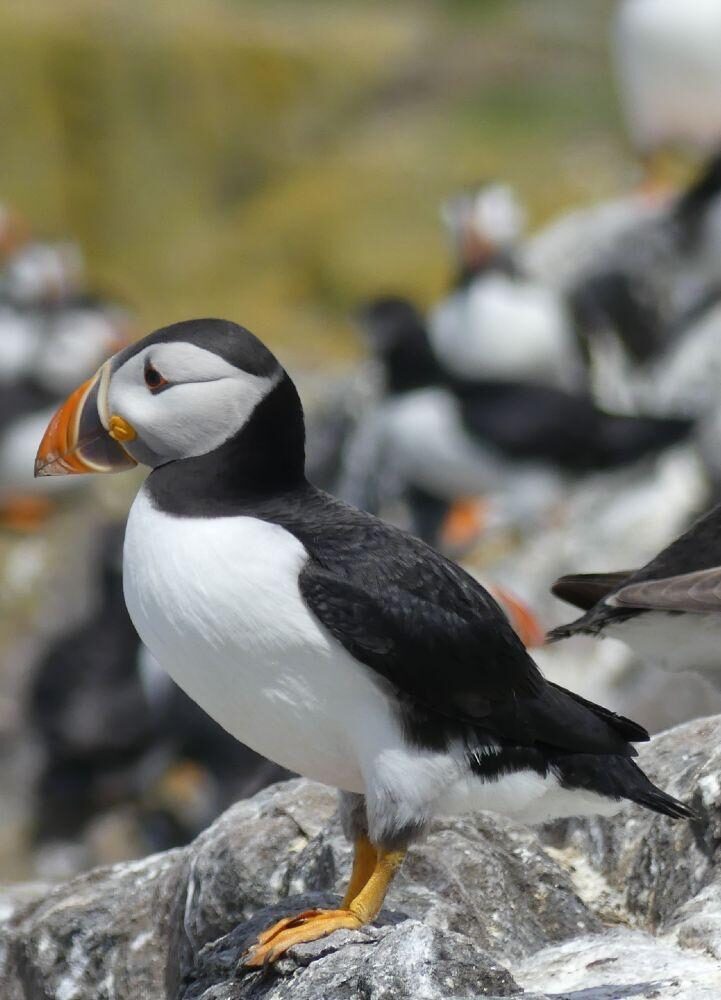
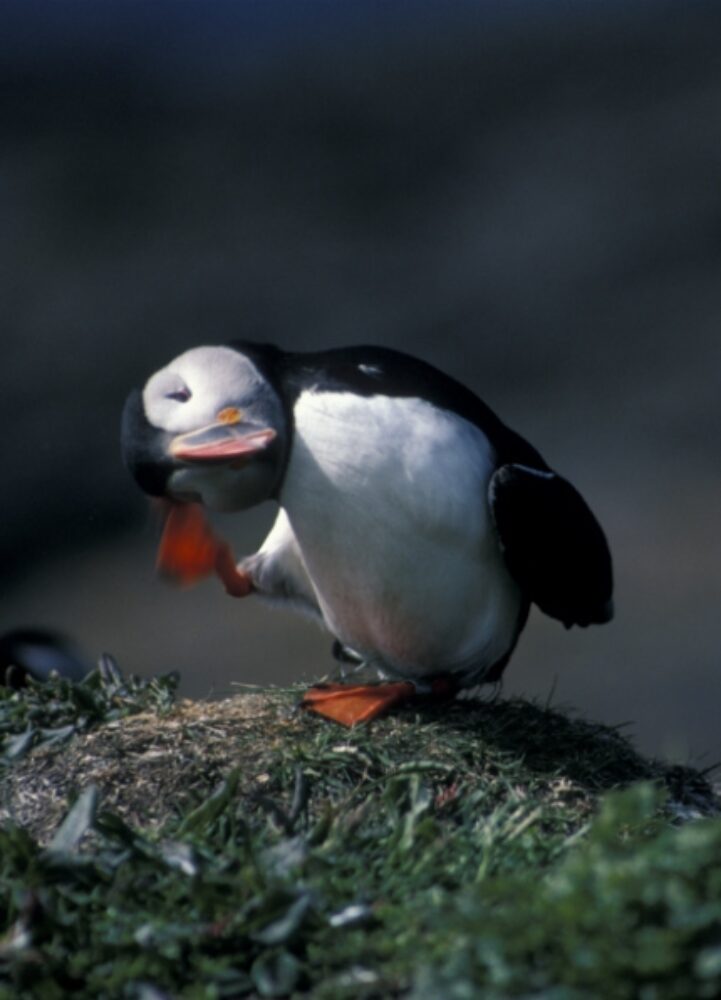
While in Mull you can take boat trips in search of minke whales, basking sharks and dolphins, and not to be missed is the boat trip from Ulva to Staffa and Lunga. Staffa means 'Pillar Island' in ancient Norse, which only begins to describe the breathtaking formations of columnar basalt. Staffa is an island of caves, of which the best known is Fingal’s Cave, a full 227 ft (69 m) deep and 66 ft (20 m) high. For a wildlife fanatic like me the Isle of Lunga, home to thousands of puffins and other seabirds, was even more impressive.
At the southwest tip of Mull is the gateway to another truly enchanting place - the Isle of Iona. Just a ten minute ferry crossing will transport you to this tranquil little island, known as the "Cradle of Christianity". Iona Abbey is an important destination for Christian pilgrims from all over the world, marking the foundation of the monastery by St Columba in 563. For people of all faiths and none, the surrounding white sands and clear ocean waters offer a sense of peace and restoration - a place to reflect.
If you are interested in history Mull has a choice of six castles, and on a wet day, the village of Tobermory (the capital of Mull) is home to an arts centre, a museum and an aquarium, as well as an array of shops and restaurants.
Glen Coe - made for movies
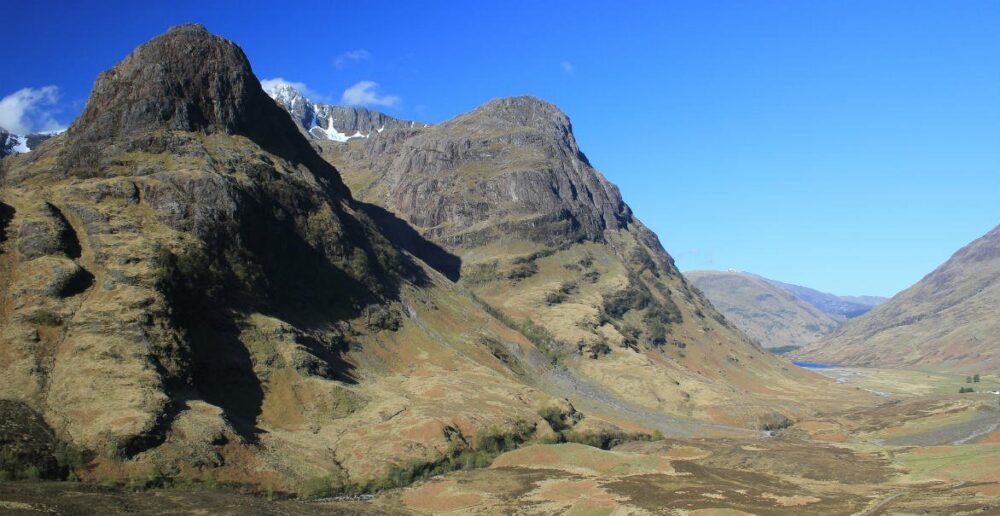
60 miles northwest of Loch Lomond is Glen Coe (map - heart), which is the most famous and perhaps most impressively dramatic of all Scottish glens, the perfect scenic match for its dark history of the Massacre of Glencoe during which, on the 13th February 1692, 34 men, two women and two children of the clan MacDonald were murdered in cold blood - perhaps more shocking was the fact that the attackers had been welcomed guests of the clan and received in the hospitable tradition of the Highlands.
It is fair to say that Glen Coe is a pretty peaceful place these days, and for keen walkers it is a true Mecca, epitomised by the famous pyramid of Buachaille Etive Mor, which along with Black Rock Cottage is one of the most photographed and easily recognisable locations in Scotland. The highest peak is the great multi-summited massif of Bidean nam Bian whose three great buttresses rise impressively above the road and are known as the 'Three Sisters', the north wall of the glen is the turreted and notorious ridge of the Aonach Eagach. The scenery is so dramatic that the glen has become the setting for numerous films including James Bond's Skyfall and several Harry Potter movies.
If two wheels and pedal power is more your thing then where there are mountains there is usually quality mountain biking, or if you prefer the road then the Sustrans cycle route No.78 runs from Oban all the way up to Fort William and has to be one of the most scenic of purpose built cycle routes in the country.
Just south of Glen Coe is the much quieter and secluded Glen Etive with its own range of impressive mountains and the Etive river, which is a favourite with more experienced paddlers. North and east of Glencoe is beautiful Loch Leven, which on a clear summer evening is a beautiful place for kayaking.
The West Highland Way and Railway
Within the regions of Scotland described above you will find the West Highland Railway Line and the West Highland Way.
The West Highland Railway Line is hailed as being one of the greatest rail journeys in the world. The first part of the trip is from Glasgow to Oban, then it's on to Fort William before taking the final part of the train line to the fishing port of Mallaig. During its journey the train crosses the Glenfinnan Viaduct, famous for being featured in the Harry Potter movies. Of course, it is possible to get on and off the train (when stopped!), as such the journey can be the start of a bigger island hopping adventure. Fom Mallaig you can sail to the Isle of Skye, the largest of the Inner Hebrides, or to the Small Isles, namely the islands of Muck, Eigg, Rum and Canna.
The West Highland Way was Scotland's first long distance route and remains by far the most popular. Stretching for 151 km from Milngavie on the edge of Glasgow to Fort William at the foot of Ben Nevis, the route offers a fabulous introduction to the Scottish Highlands. It offers tremendous variety, beginning in the pastoral landscapes beneath the Campsies, past the serene beauty of Loch Lomond, and on into increasingly rugged and majestic Highlands. It then crosses the vast awe-inspiring expanse of Rannoch Moor, with a glimpse down Glencoe, before crossing the hills to lovely Loch Leven. The route finally reaches Fort William via Glen Nevis. Well-waymarked throughout and avoiding summits, the route is within the capabilities of most walkers. If you don't have time to walk the full trail then focus on the more northerly sections - the scenery only turns Highland after Tyndrum.
A few tips about the West Highland Way:
- Spend wisely on waterproofs including good boots
- All good walking experiences start with good planning so get hold of a decent map – the Trailblazer guide is great and comes with a good waterproof map
- Don't underestimate how much food you’ll eat
- And don't misjudge the culicoides impunctatus .... aka the highland midge!

Eilean Donan Castle and on to the Isle of Skye
Approximately two hours' drive northwest from Glencoe is the Isle of Skye (map - star). Just before you reach Skye is Eilean Donan Castle (blog - front image) one of the most recognisable castles in Scotland. Although the island has been fortified since at least the Iron Age, the castle you see today was rebuilt between 1913 and 1932.
The Isle of Skye, voted the fourth best island in the world by National Geographic Magazine, is the largest and the furthest north of the islands in the Inner Hebrides. Skye is about 50 miles from north to south, and around 25 miles from west to east at its widest. The coastline is very irregular and indented by sea lochs, in all it is some 400 miles long and littered with bays, sea arches, stacks, caves, massive cliffs, waterfalls, fossils, and tidal islands.
The Isle of Skye website provides a comprehensive guide to the island, although my top picks are:
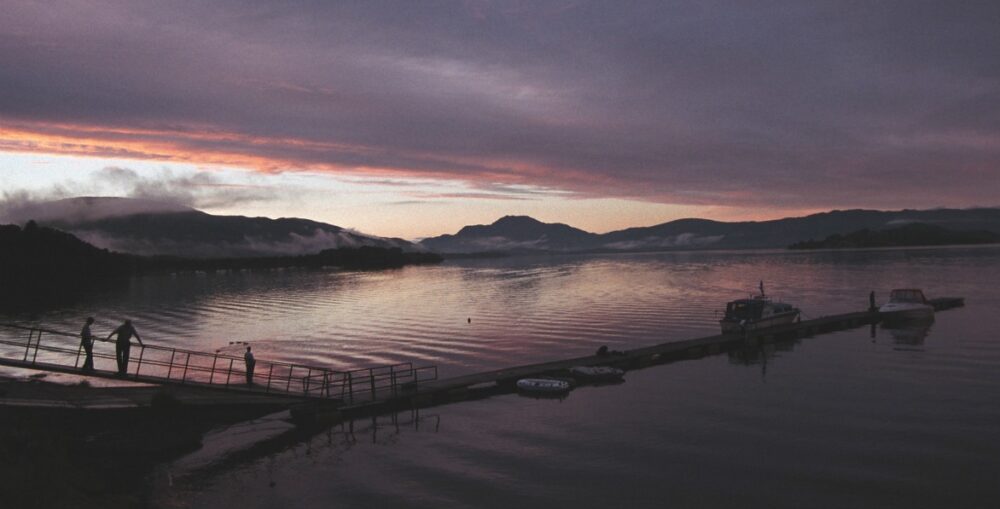
- For experienced walkers climbing a Cuillin summit is a must do. The Cuillins' are home to twelve Munros and offer the best walking and climbing in the UK. The photograph below was taken from Ord, a tiny community where we hired a cottage for the duration of our stay
- While in the region of the Cuillins' visit the Fairy Pools in Glen Brittle, deep-blue pools filled with crystal clear water. These pools have become popular for wild swimming. Are you brave enough to swim in these magical pools?
- Walk up the Old Man of Storr. This large pillar of rock dominates the landscape in the northeast of Skye, walking up the Old Man is not difficult and rewards you with some wonderful views
- The Quiraing, which is on the east coast of Trotternish is the largest landslip in the country - there is a spectacular looped walk for those more confident with heights
- A boat trip from Elgol to Loch Coruisk, a fresh water loch surrounded by the Cuillin Mountains, which is a truly spectacular location
- Dunvegan Castle is the oldest continuously inhabited castle in Scotland and is the ancestral home to the Clan MacLeod. Close by is the beautiful Coral Beach
- If you are feeling flush make a booking at the Three Chimneys, a world-renowned Scottish restaurant with 5-star accommodation situated in awe-inspiring surrounding

The Isles of Lewis and Harris
Also known as the Outer Hebrides, the Western Isles (map - diamond) form a 130 miles arc running from north to south off the north-western coast of Scotland. During our visit we took in Lewis and Harris, the largest of the Outer Hebrides - although usually referred to as separate islands, Lewis and Harris are part of the same landmass.
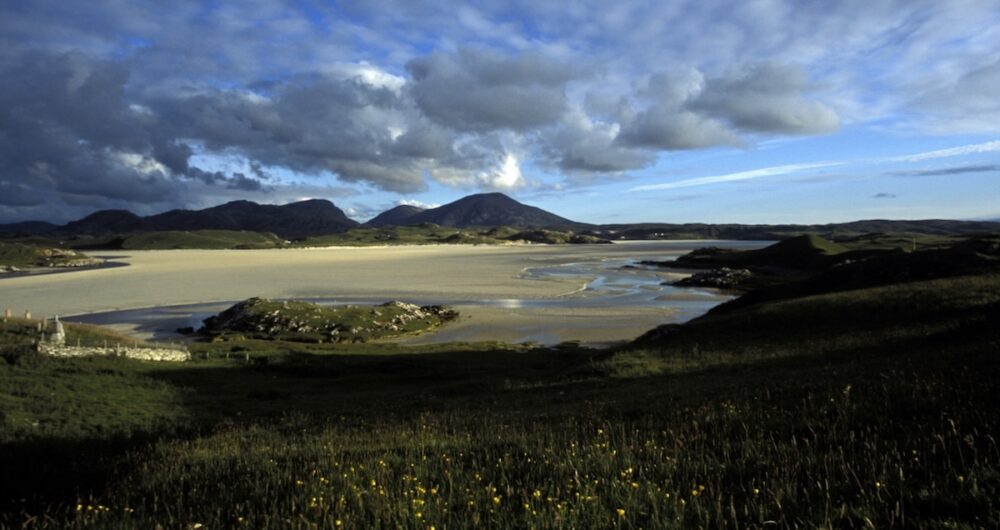
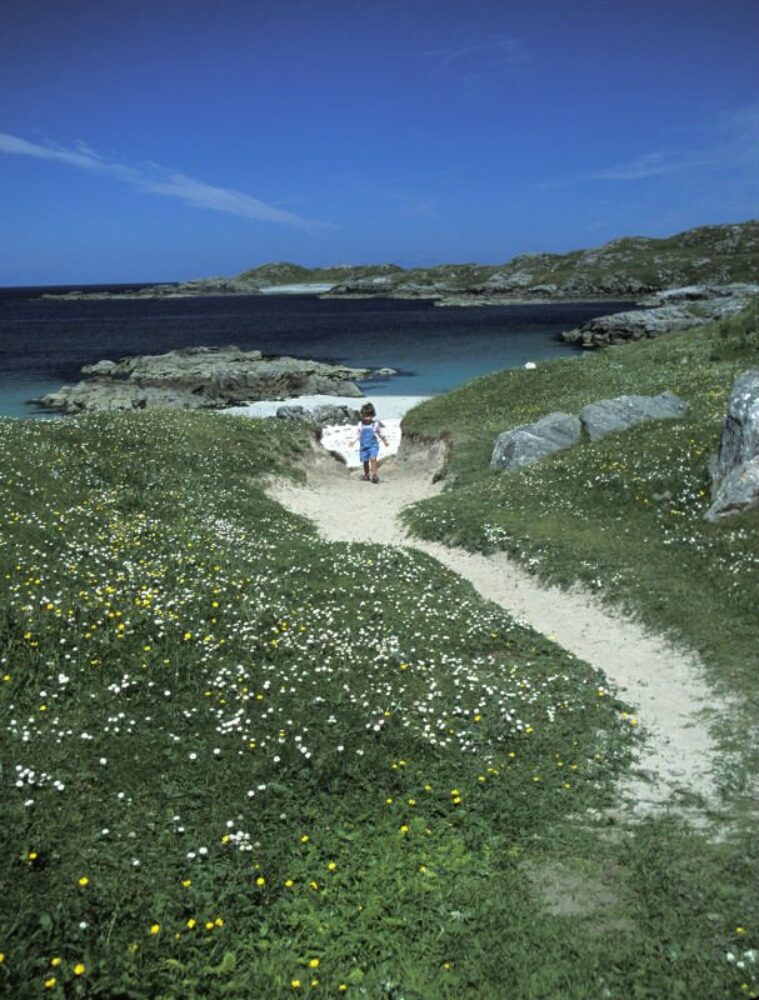
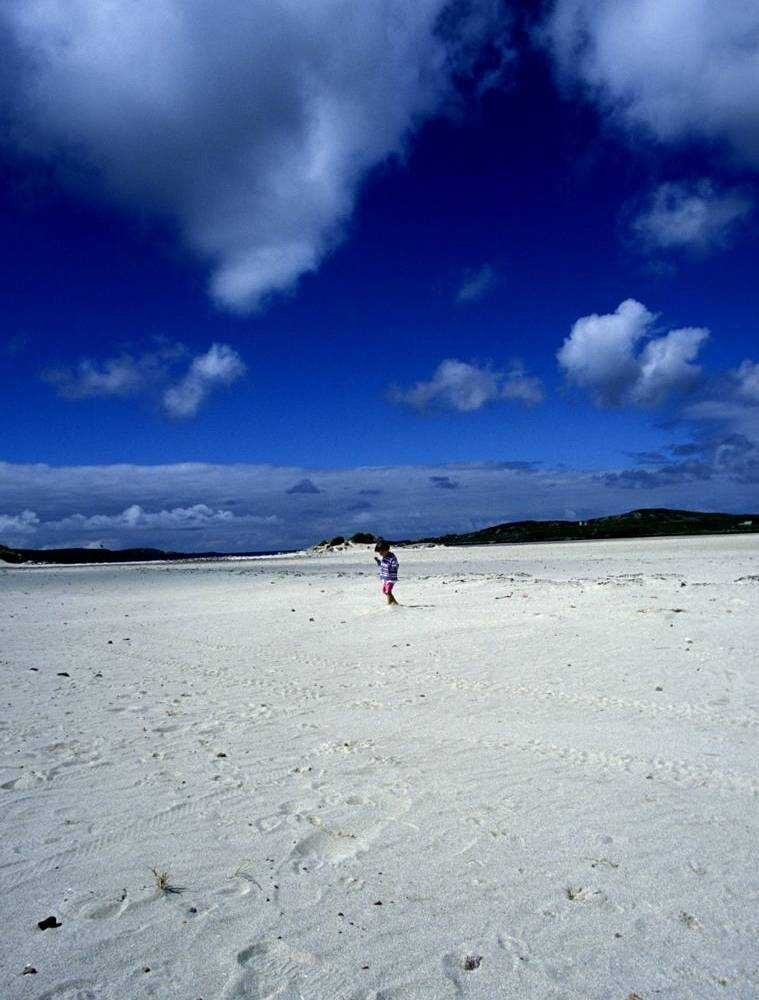
While much of the central aspect of Lewis is barren, it is the southwest coastline that provides the main reasons to visit. The B8011 road (and its unclassified extension, plus side turns) takes you across rocky moors, past scenic sea lochs and on to the beaches - with machair (wild flowers) running down on to white sandy beaches and turquoise water, it is hard to find a more beautiful coastline anywhere in the world. Our favourite beaches include Uig Bay, Bostadh Bay, and Mealasta. Other things to visit in Lewis includes the impressive Standing Stones of Callanis, and the Butt of Lewis, which at the far northerly tip of the island is home to many seabirds, and if lucky a good spot for watching whales, dolphins, and porpoises.
Moving south from Lewis is the Isle of Harris with a wide range of landscapes, all of which have their own charm and interest. On the west coast lie some spectacular beaches of which Britain's best beach Luskentyre (said to be in the top ten beaches in the world) is a must see. The north of Harris is rugged, mountainous and has a lunar feel to it, while the east coast has some of the oldest rocks in the world being dated at some 3000 million years old - this area is known as ‘The Bays’ because of the many inlets populated by small villages.
Perhaps more than anywhere in Scotland, your own experience in the Outer Hebrides may hinge on the weather - during our stay we were blessed with six beautiful warm sunny days, but when it rained on the last day there really was little else to do. In the Western Isles Sunday observance remains very strong, and while recent years have seen the commencement of Sunday ferry and air services, most shops, petrol stations, cafes, pubs, and visitor attractions remain closed.
Loch Ness - no monster to be seen
Moving east is Loch Ness (map - rectangle) and the surrounding areas with plenty of opportunity for water sports, the magnificent Urquhart castle, some excellent hiking opportunities, and quaint coastal villages.
The infamous Loch Ness at around 750 feet deep holds more water than in all of the lakes and rivers of England and Wales combined. Of course most people come for a boat trip to try and get a glimpse of the elusive Loch Ness Monster - the first recorded appearance of the monster occurred in 565 AD, when a " water beast " attacked one of St. Columba's followers in the loch. However, don't be too disappointed if you don't get to meet Nessie!
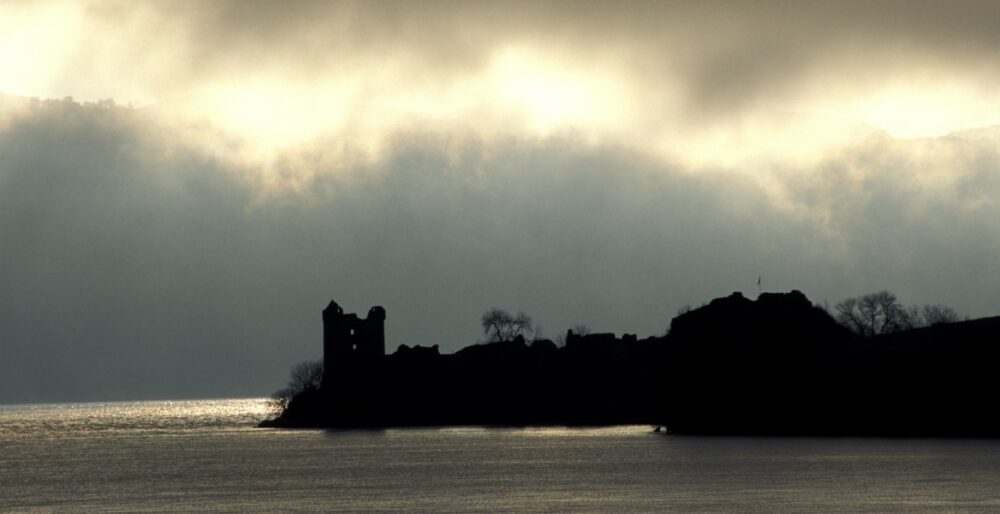
Along Loch Ness, about 2 miles southeast of the village Drumnadrochit and 15 miles south of Inverness, lay the spectacular ruins of Urquhart Castle. Seized after Edward I's invasion of Scotland, Urquhart castle was reclaimed by Robert the Bruce in the 14th century before being repeatedly attacked during the 15th and 16th centuries by the MacDonald Lords of the Isles.
Glen Affric and the Moray Firth
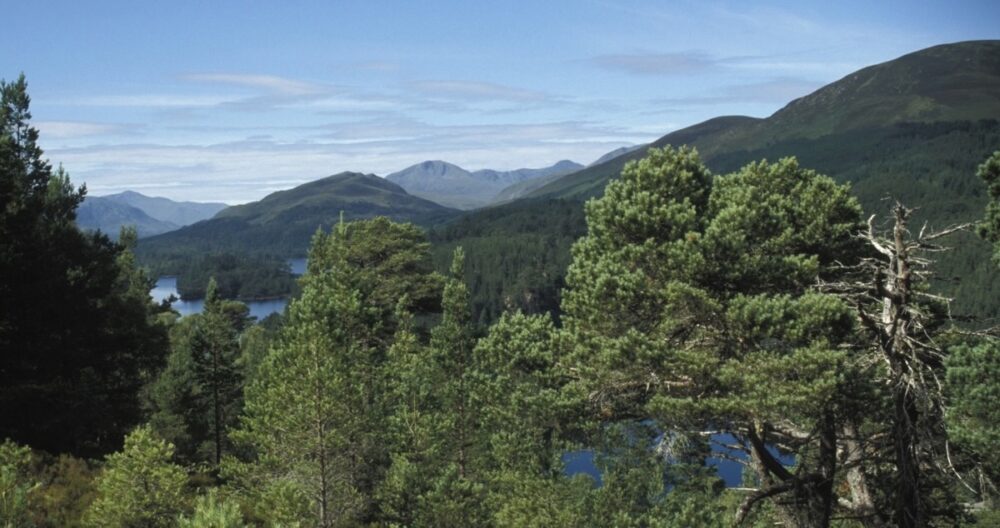
Some of the best hiking in the Loch Ness area is around Glen Affric, which is by common consent the finest of all Scotland's glens. It features a fabulous variety of scenery and is deservedly popular with walkers. The glen begins amongst the steep bare mountains of Kintail far in the west. Further downriver is beautiful Loch Affric, at the foot of the highest mountains north of the Great Glen. The middle part of the Glen is a National Nature Reserve, magnificently wooded with Scots Pine - one of the last remnants of the original Caledonian Forest. The 10 mile circular walk around Loch Affric starting at River Affric car park is a must. For more information on hiking in this and other areas of Scotland visit the Walkhighlands website.
East of Loch Ness the Moray Firth is home to the world’s most northerly population of bottlenose dolphins. To get up close you can join one of the Wild Scotland boat trips from Cromarty, Lossiemouth or Buckie - however, if you don't fancy a boat trip the dolphins come in close to shore and can often be spotted from Channonry Point (near Cromarty on the Black Isle). Worth a visit while in the area is the village of Cromarty, which poised on the tip of the Black Isle at the mouth of the Cromarty Firth is the Highlands' best preserved historic town.
Mountain biking, and a mystery symbol
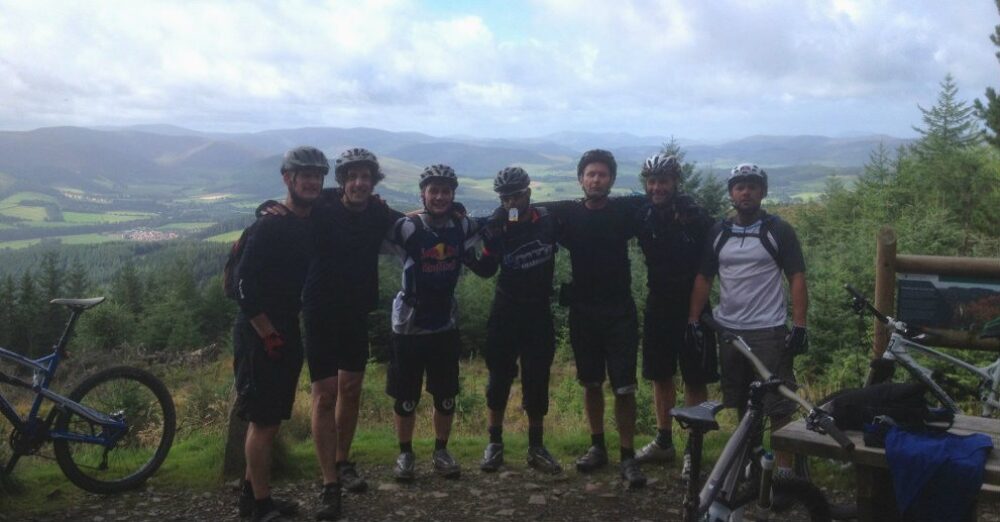
Scotland has great opportunities for mountain biking. The 7stanes are world-class mountain biking centres that span the south of Scotland. Their award-winning trails offer some of the best mountain biking in the country and attract riders from all over the UK and beyond. You don’t have to be an experienced mountain biker to enjoy these famous trails - there are a wide range of routes to suit beginners, families and experts. Plus, many of the centres also have skills areas for you to practice your technique.
My two favourite trail parks, situated not far south of Edinburgh, are Glentress and Innerleithen (map - arrow). Glentress is a mountain biking Mecca deep in the heart of the stunning Tweed Valley. The biking experience here includes green, blue, red, or black graded trails, as well as a magnificent multi-graded free-ride area. In the unlikely event that Glentress fails to meet your thirst for biking exhilaration, you are only a short hop from Innerleithen's famous Red Bull downhill and cross-country trails. Of course there is more to do here than just mountain biking, the area offers a rich variety of things to do with the small Borders towns of Peebles and Innerleithen, an ideal base for visitors.
In terms of the mystery symbol, the map contains a pentagon - in the northwest highlands sits the beautiful village of Ullapool, and in the surrounding region an array of uniquely shaped mountains including Suilven and Stac Pollaidh .... we were booked to stay in Ullapool, that was until the first Covid lockdown, but we will get there and once we do another blog will follow.