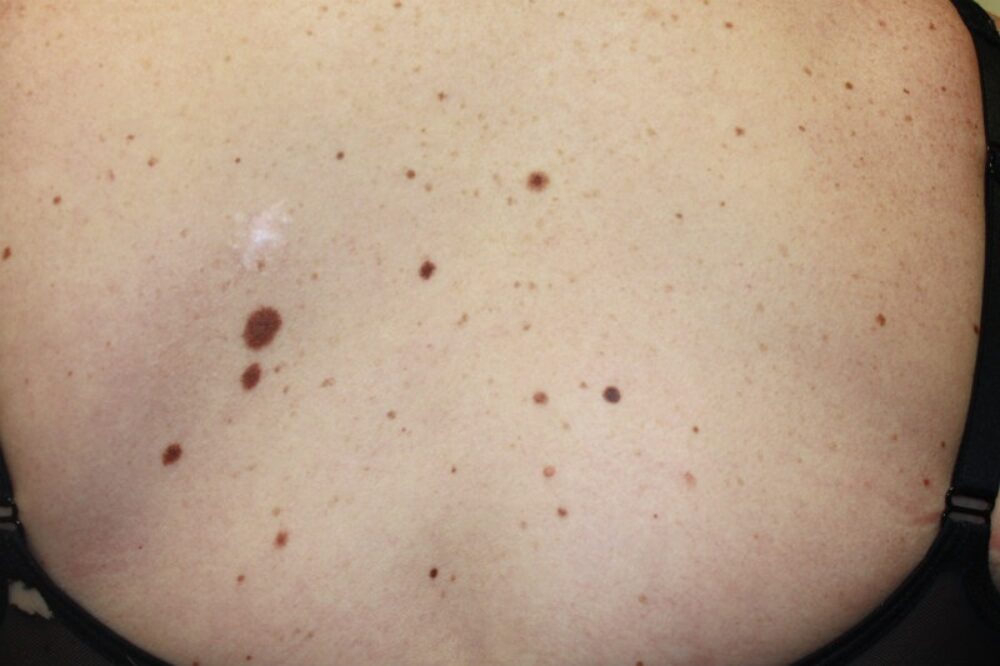
<p>When it comes to assessing melanocytic lesions we often talk about looking for the <strong>'ugly duckling'</strong> ie the one that looks different to the others. The same is true dermoscopically - lesions with similar patterns are very likely to be benign, but one looking very different to the rest should be treated with caution. Below are dermoscopic images of several of the melanocytic naevi seen on this patient's back. </p>

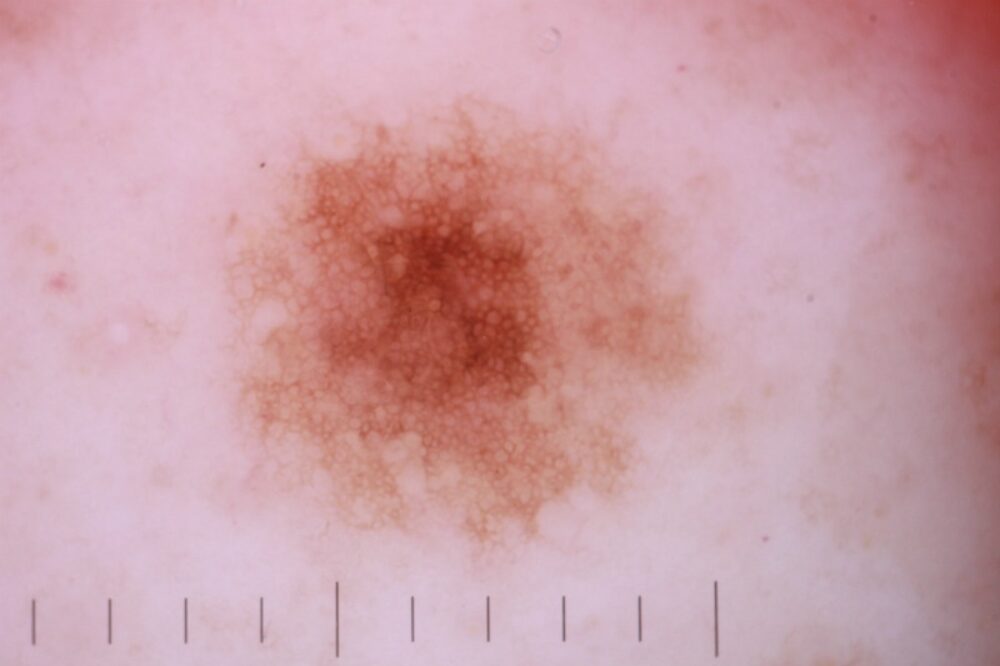
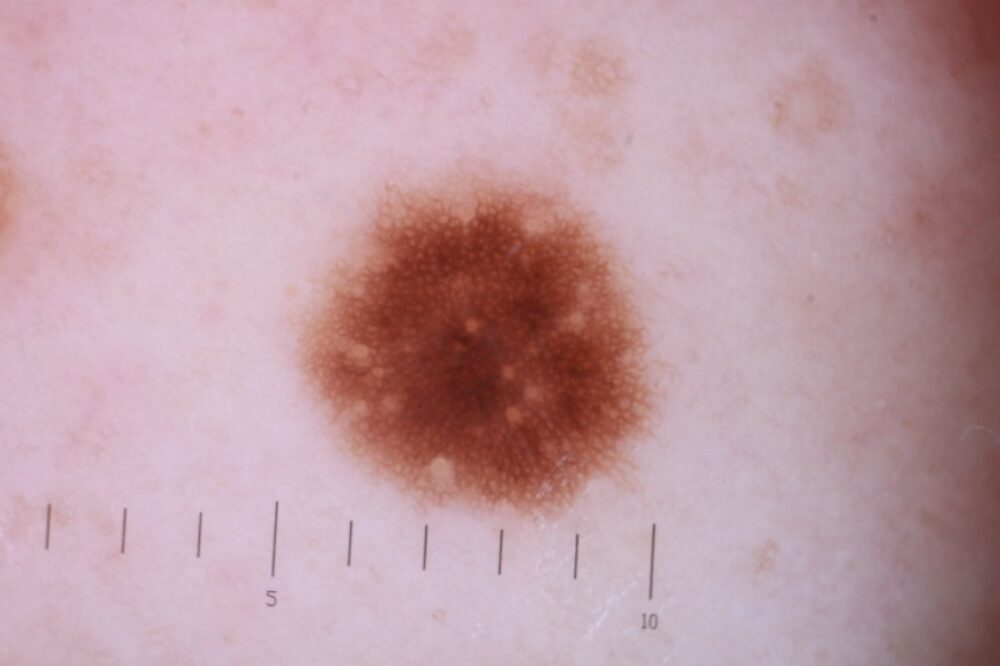
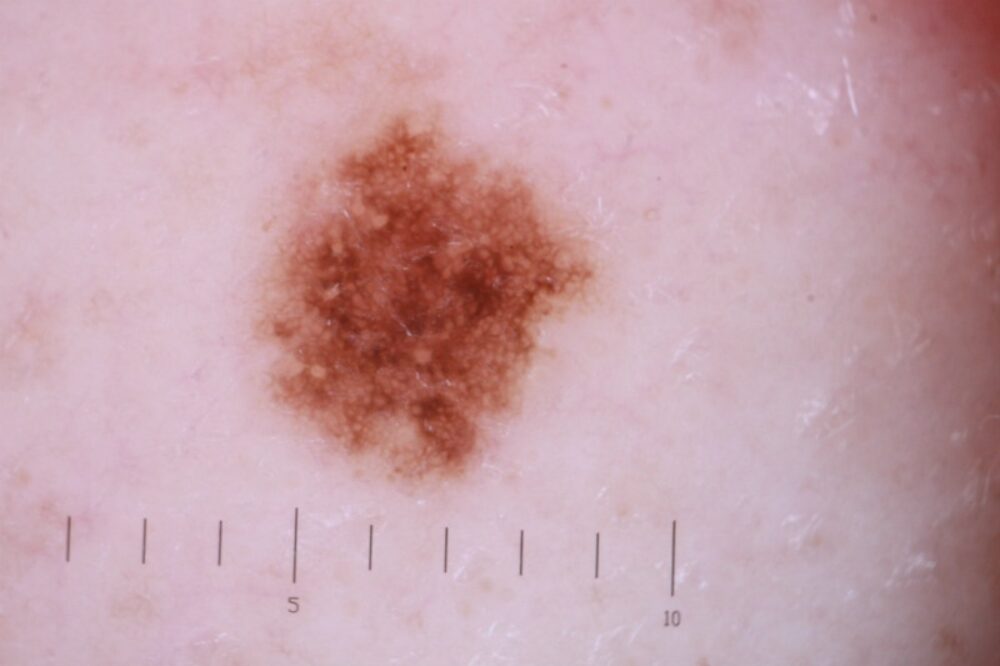
<p>All four lesions above were dermoscopically symmetrical with a typical brown pigment network in keeping with benign melanocytic naevi. <br></p>
<p><strong>Although there will always be some dermoscopic variation</strong> from one lesion to another, the pattern seen in a suspicious lesion is often significantly different when compared to the patterns seen in the patient's other lesions, and usually with a greater degree of asymmetry. </p>