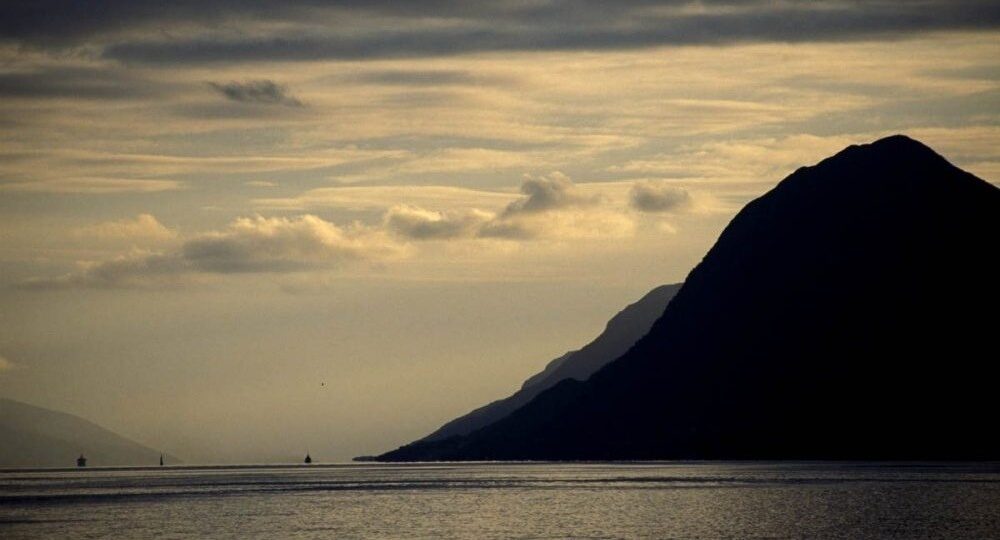
Norway's Western Fjords
Norway is Europe's northernmost country with a population of 4.5 million and a landmass of 385,155 sq. Km, of which 3% is cultivable and 25% covered by forests. The coastline of Norway is 2,650 Km long, but if you take in to account all the fjords this figure can be multiplied by 10.
Given the size of the county, the time it can take to get around, and our timescale, our trip focused on the western fjords. Our two-week adventure started in Bergen, before heading north through several of Norway's spectacular fjords until we reached the coastal town of Ålesund where we boarded the famous Hurtigruten costal liner to sail back down to Bergen.

The geography of the Norweigan fjords
Fjords are found in locations where current or past glaciation extended below current sea level. A fjord is formed when a glacier retreats, after carving its typical U-shaped valley, and the sea fills the resulting valley floor.
In Norway, the fjord-dominated landscape runs like a strip all around the coast. There are well over 1000 named fjords in Norway. In western and northern Norway, where fjords cut deep into the land, this strip is more than 200 km wide.
During the months of June, July, and August, the days are long and the nights short, however, rainfall is greater. Spring is cooler but drier, the waterfalls are at their best, and in May the fjords are in full bloom (ps - if you are not familiar with my blogs, clicking on the figures below expands them, while clicking on any images will reveal the location).

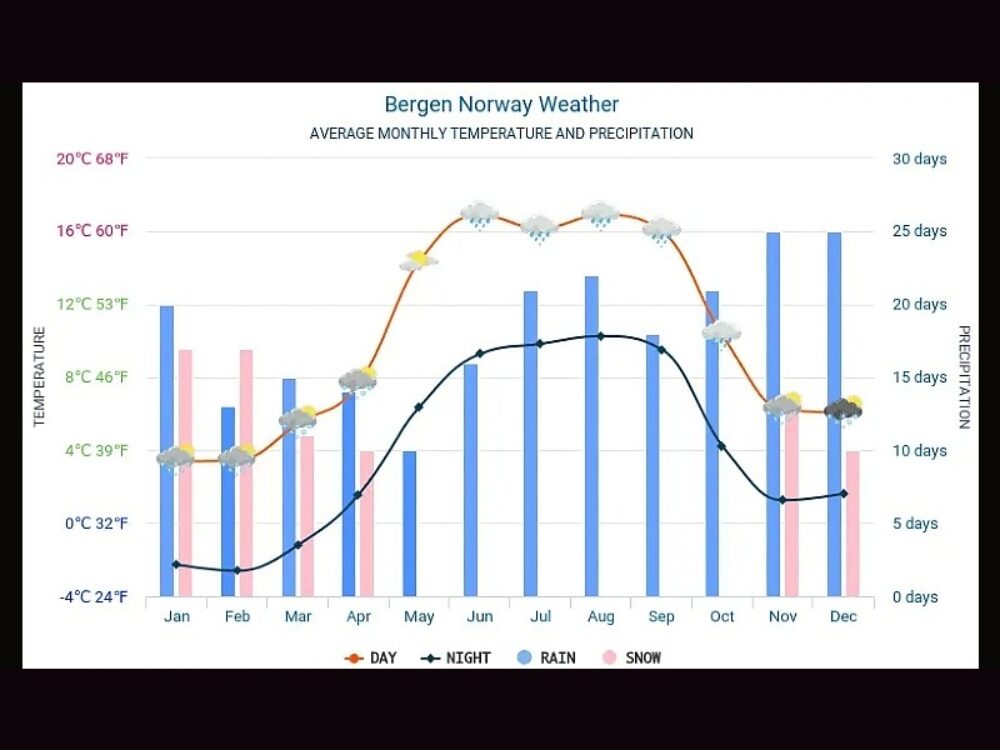
Bergen
We travelled to Norway by car taking the overnight ferry from the UK to Bergen. Norway is expensive and as such we packed as much food as we could into the car.
Bergen on the south-western coast is Norway's second largest city and is surrounded by mountains and fjords, including Sognefjord. One of the highlights of Bergen is the Bryggen waterfront (image - top of page), with its colourful wooden houses that host many of the city’s restaurants, pubs, craft shops and museums. To get a panoramic view of Bergen take the Fløibanen funicular, which takes you up from the town to 320 metres above sea level on Mount Fløyen in 8 minutes. Other things to see in Bergen include the Bergen Aquarium, which has one of the most extensive collections of marine fauna in Europe, and the old Fantoft stave church.
If you visit Bergen in spring, you may catch one of Norway's biggest cultural events, the Bergen International Festival.

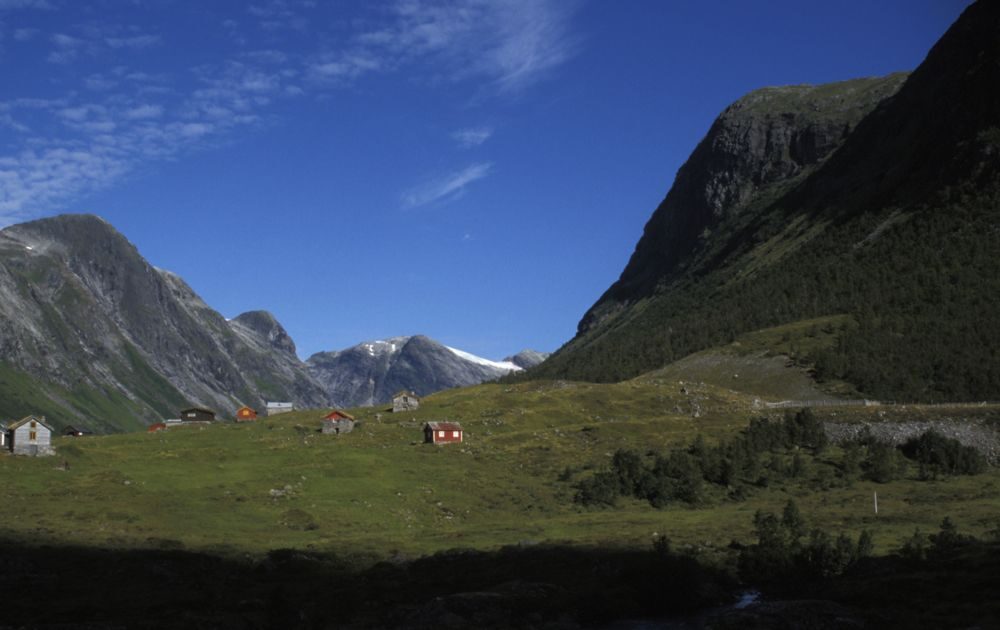
Norway in a Nutshell
From Bergen we headed east to the small town of Voss, which is a good base for all year round outdoor adventure, although we mainly used it as a base for the Norway in a Nutshell ® tour, and to visit Hardangerfjord.
If you have the choice to do only one thing in Norway then it has to be 'Norway in a Nutshell', which takes you through some of Norway's most beautiful fjord scenery. The tour can be started from Oslo, Bergen, Voss, or Flam. We started our tour from Voss, which began on a bus that passed though charming villages and scenic nature landscapes, towards Gudvangen. From May-September the bus travels down the steep hairpin bends of Stalheimskleiva.
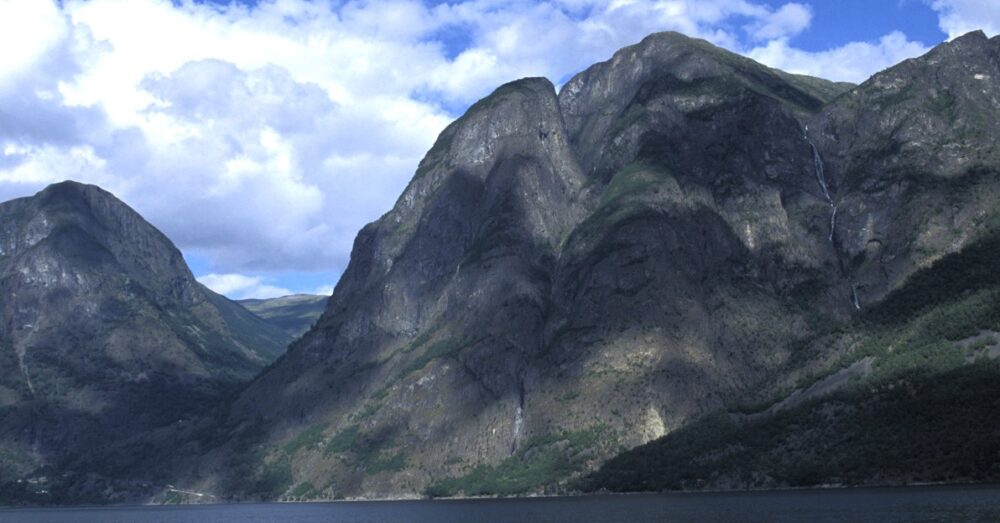
At Gudvangen the tour continued with a fjord cruise along the narrow Nærøyfjord and the magnificent Aurlandsfjord. The Aurlandsfjord is a picturesque fjord that offers stunning views, while the Nærøyfjord is a dramatic fjord surrounded by high mountains. Nærøyfjorden is one of the narrowest fjords in Europe and is included on UNESCO's World Heritage List. It is important to wrap up well, even in summer the cruise along the fjords can be chilly.
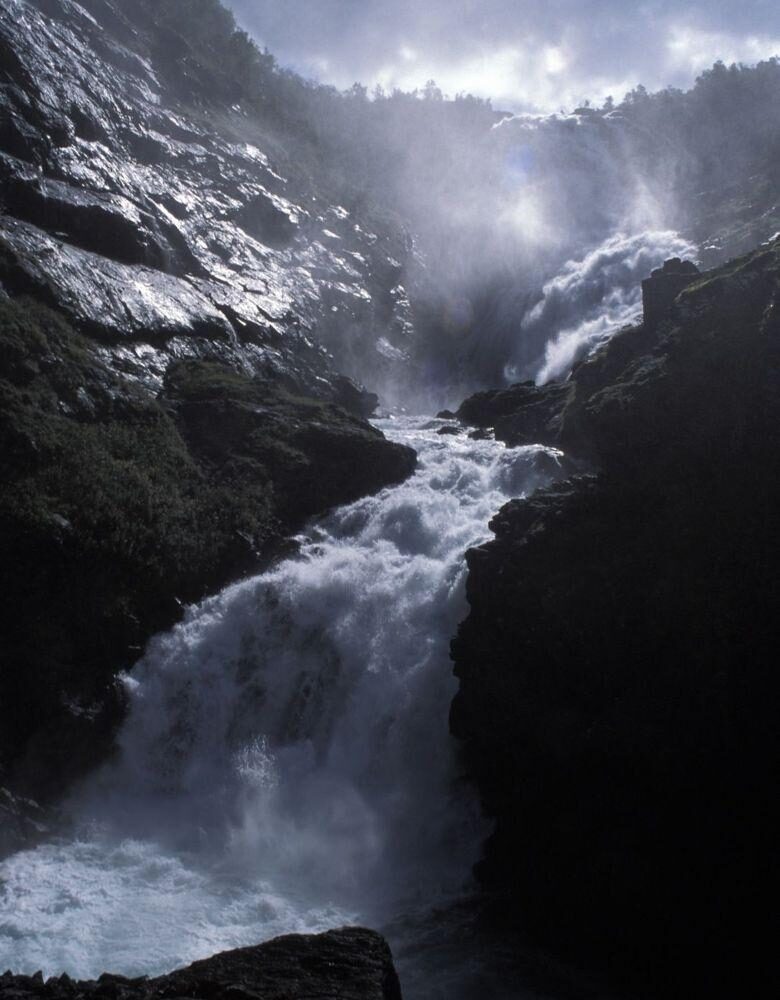
The cruise took us to the small village of Flåm, nestled in the innermost part of the Aurlandsfjord, where we boarded the legendary Flåm Railway. The Flåm Railway offers spectacular panoramic views across some of the wildest fjord landscape, including a brief stop at Kjosfossen waterfall, one of Norway's most visited tourist attractions. The Flåm Railway stops at Myrdal, where we changed trains to the Bergen railway and headed back to Voss.

Voss to Hardangerfjord
The most scenic route from Voss to Hardangerfjord takes in the old road, which begins approximately 22 km along the main road from Voss to Ulvik.
Ulvik is a traditional Norwegian village set on the banks of the Hardangerfjord. It is a fruit-growing region. Close by is the Ulvikpollen wetlands, which are home to over 80 species of bird including the Golden Plover. On the other side of the Hardangerfjord is the village of Eidfjord, which is near the Hardangervidda Nature Centre, and the most famous waterfall in Norway, the Voringfossen.
When travelling across the western fjords it is important to give yourself plenty of time, sometimes the only practical route is to take your car across a fjord by boat as opposed to navigating around it.

Jostedalsbreen National Park
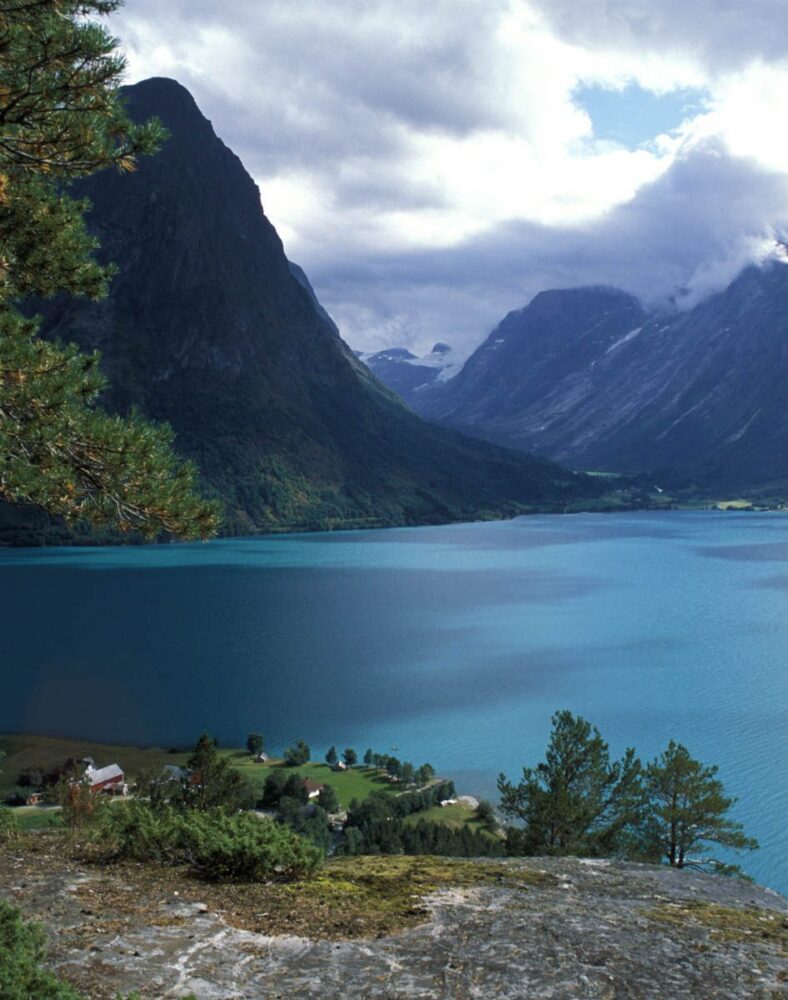
Travelling north from the Sognefjord brings you to the Jostedalsbreen National Park, which affords good hiking opportunities. The main accommodation in this area are the towns of Skei and Stryn, but there many small villages offering much more scenic stays. My own favourite is a tiny hamlet called Glomnus, a short but steep hike from here offers spectacular views of Lake Strynsvatn and the surrounding mountains.
As with many other places on our trip we stayed in Norwegian cabins, known locally as ‘Hytte’. These cabins are inexpensive, of decent quality, and more importantly enable you to eat in. Eating out in Norway is not recommended as food and wine is extortionate - eating out is not something that even locals appear to make a habit of.
On the other side of the lake is the Jostedalsbreen National Park Centre, which can be reached by a short drive, or far better a gentle row from one the boats that can be used if you stay in the holiday cottages in Glomnus.
Close to Lake Strynsvatn are several places worth a visit. From the small town of Olden on Nordfjord a scenic road takes you to the glacial tongues of Brenndalsbreen and Briksdalsbreen. Not far from Olden lies the lovely glacial lake of Lovatnet, which can be accessed either by road or by boat from Sande. At the end of the lake it is possible to take an easy 2 km walk to the glacier face.

Geriangerfjord and the Severn Sisters
We headed northeast towards Geriangerfjord and Andalsnes. En route can be found the Stryn Sommerskisenter, which provides Norway’s most extensive summer ski area. Geriangerfjord is one of Norway’s most famous fjords. A boat trip along the 20 km fjord boat trip enables close up views of its famous waterfalls such as ‘The Severn Sisters’, and abandoned cliff side farms. There is some excellent hiking to be found around Geriangerfjord.
If time allows, a trip heading north along the Trollstigen towards Andalsnes is thoroughly recommended. The Trollstigen is an immense road with 11 hairpin bends that takes you past the Stigfossen waterfall to the Trollveggen summit.

North to Ålesund
Heading north again we set off for Ålesund, one of Norway's most pleasant coastal towns. Much of the town was rebuilt in ‘Art Nouveau’ style following a fire in the early twentieth century. A splendid view of the town can be gained from climbing the 418 steps up the Aksla hill to the Kniven overlook. Close to Alesund is the Atlanterhavsparken with its aquarium, coastal hikes, and a good chance of seal spotting. There are several small islands in this area, which offer some fine beaches - my favourite was Blindheimssanden, situated on the northwest of Vigra.
Not to be missed is the Atlantic Road (in Norwegian called Atlanterhavsveien or Atlanterhavsvegen). Close to the cities of Molde and Kristiansund the road is ranked first on The Guardian's list of the world's best road trips.

Hurtigruten Coastal Steamer
Our journey back to Bergen was on board one of the Hurtigruten ships. The Hurtigruten Coastal Steamer is one of the most famous cruises in the world and offers an alternative way of exploring the fjords.
It is the scale of the Hurtigruten operation that provides a grasp of Norway's geography. Unfeasibly long and thin, on its eastern landlocked side it borders Sweden, Finland, and a slither of Russia. The trip takes in 34 stops including the Lofoten Islands and Geriangerford, and from Kirkenes in the Arctic Circle, Hurtigruten’s northern terminus, to Oslo is 1,550 miles – halfway to Rome. Of course you don’t have to travel the entire route and we sampled the journey by putting our car on at Kristiansund and sailing south to Bergen.