<h1>Glacier National Park, Montana | best things to do in 7 days </h1>
<h5>Glacier, a beloved park in the U.S<a href="https://www.newworldencyclopedia.org/entry/U.S." class="mw-redirect" title="U.S.">.</a> state of Montana, bordering the Canadian provinces of Alberta and British Columbia, takes its name from the many glaciers and glacial forces that shaped its rugged topography over two million years. While the park is still home to numerous glaciers, even more impressive are the massive U-shaped valleys and hulking granite peaks. Joined together in 1932 with Watertown Lakes National Park in Alberta this region is known as the “Crown of the Continent”. Glacier had been on my ''must visit'' list for years, and it didn't disappoint. </h5>

<h3><strong>Geography of Glacier National Park</strong></h3>
<p>Set in Rocky Mountain wilderness, Glacier National Park straddles the Continental Divide encompassing more than 1 million acres with two mountain ranges, over 130 named lakes, more than 1,000 different species of plants, and hundreds of species of animals. </p>
<p>While Glacier is divided into 8 regions we focused on the <strong>Lake McDonald to St Mary</strong> areas, joined by the <strong>Going-to-the-Sun Road </strong>(marked below)<strong>,</strong> <strong>Many Glacier</strong> and <strong>Two Medicine</strong>. The best time of year to visit Glacier National Park is during the warm summer months of <strong>J</strong><strong>uly, August, and September</strong>. June and October can also be lovely times to go, but the higher elevations of the Going-to-the-Sun Road may be blocked by snow. </p>

<h3><strong>Staying in and around the park</strong></h3>
<p>There is a lot of <strong>accommodation</strong> west of the park, if you plan to stay in the park or east of the park, I suggest doing a big supermarket shop beforehand - once you head east food becomes very expensive. The park has several campgrounds, and a limited numbers of lodges and cabins that need to booked well in advance. Good information on Glacier can be found at the following websites: the <a href="http://www.nationalparks.org/explore-parks/glacier-national-park" style="background-color: initial;"><strong>National Park Foundation</strong></a>, <strong><a href="http://www.visitmt.com/glacier.html?utm_source=google&utm_medium=cpc&utm_campaign=montanatourism&gclid=Cj0KCQjwzozsBRCNARIsAEM9kBP3_wwjj4c_E63JuOgtoKYh8WAOyFp8YHVyt5QvX3MXIahfeuqFP7AaApcVEALw_wcB">Visit Montana</a></strong><a>. </a>To get a better understanding of the U.S. National Parks please read by blog on <strong><a href="{entry:186446@1:url||http://www.aworldonthebrink.com/blog/national-parks-of-the-us-overview}">National Parks of the United States - an Overview</a></strong>. </p>
<p>If you <strong>click on any image on this website</strong> it provides details of where the image was taken.<br></p>

<h3><strong>Going to the Sun road</strong></h3>
<p>The <a href="http://www.nps.gov/glac/learn/photosmultimedia/podcasts_gtsr4.htm" style="background-color: initial;"><strong>Going to the Sun Road</strong></a> is a 50-mile route from Lake McDonald in the west to Lake St. Mary in the east. The road bisects the park offering beautiful mountain scenery. </p>
<p>The road is in good state but narrow with blind corners and tight hairpin turns. It has been called the “don’t look down road.” Sections of the road skirt along the cliffside where there are sharp drop offs to the valley far below. The beautiful scenery can be admired from several pull-outs and viewpoints along the route .... I was encouraged to stop at these rather than viewing the scenery while driving!</p>
<p>The Continental Divide splits the road at the 6,646-foot-high<strong> Logan Pass</strong>, with a visitor centre and beautiful 2.6 miles trail (round trip) to Hidden Lake Overlook. Even though the parking lot is large it can become full by 10 am on a summer day. The following link provides good detail about the <a href="http://www.hikinginglacier.com/glacier-going-to-the-sun-road.htm"><strong>road and its hiking trails.</strong></a></p>


<h3><strong>Hiking in Glacier</strong></h3>
<p><strong>Short hikes and full day</strong> <strong>hikes</strong> are plentiful, as are <a href="https://www.nps.gov/glac/planyourvisit/ranger-led-activities.htm">ranger led hikes</a><strong></strong>. If planning to camp overnight in the <strong>backcountry</strong> stop at the Agpar Backcountry Office, St. Mary Visitor Center, or other ranger stations to obtain a backcountry permit. In my blogs I normally list my favourite places, but Glacier is an exception ... its best kept secrets should remain that way to protect the ecosystem. What I will do instead is provide some hiking tips: </p>
<ul><li>Don't weigh yourself down with water - most trails in Glacier are close to water, just dunk your bottle and fill up </li><li>Dress appropriately - the weather in the mountains can change quickly</li><li>To avoid crowds start the trails early</li><li>Buy hiking boots that are 1/2 size larger than your size. Your feet will swell while hiking on the trail and become uncomfortable. If you buy new shoes break them in a bit before you arrive </li><li>Be aware that mobile phones are unlikely to get reception </li></ul>


<h3><strong>Bears and huckleberries</strong></h3>
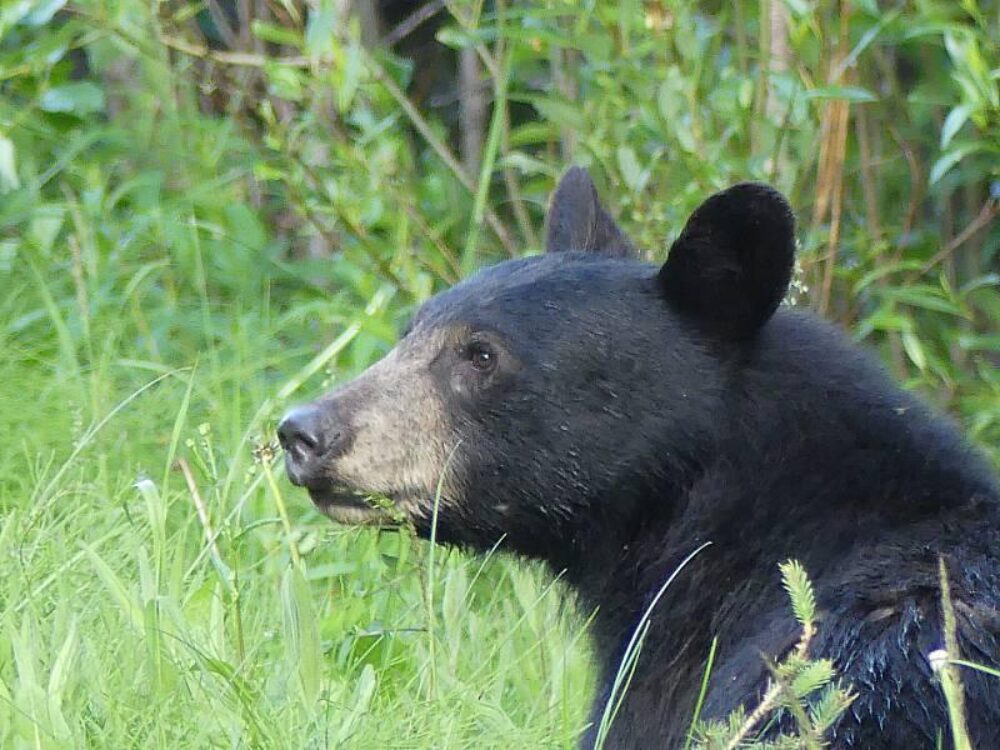
<p><strong>Huckleberries</strong> comprise up to 15% of a bear's diet and I can see why - huckleberry pie is delicious and one of my guilty pleasures while in Glacier. We came across a Grizzly cub on a trail, but did not stick around as his mother would have been very close by ... standing 8 feet tall on their back legs grizzlies can reach weights of up to 1,500 pounds and run at 35 miles per hour. We saw 4 adult grizzlies, all from a safe distance.</p>
<p><strong>Glacier is bear country</strong> with both the black and grizzly variety, and is one of the only places I have carried bear spray. It's important to remember that we share the land with wild animals, many bears travel the forests and trails of Glacier Country, especially in the late summer when the berries ripen. You are very unlikely to have a negative wildlife experience if you hike in groups, and when hiking in areas that are bushy, have tall grass, are crowded with trees or have blind corners take extra precautions and talk in a loud voice.</p>


<h3><strong>Moose - I just love these creatures </strong></h3>
<p>Glacier is also a good place to see <strong>Moose, </strong>but as with other wildlife they should be viewed from a distance, to protect the well-being of the animal as well as for self-preservation. If you want a good picture invest in a good camera - bridge cameras enable good long-distance photos without the long lens. Back to the moose - a full grown bull moose (male) is taller than a horse, can weigh over 1300lbs, has antlers with a 5-foot span and can run up to 56 km per hour. Moose are excellent swimmers and can dive up to 5 metres. </p>


<h3><strong>Other flora and fauna</strong></h3>
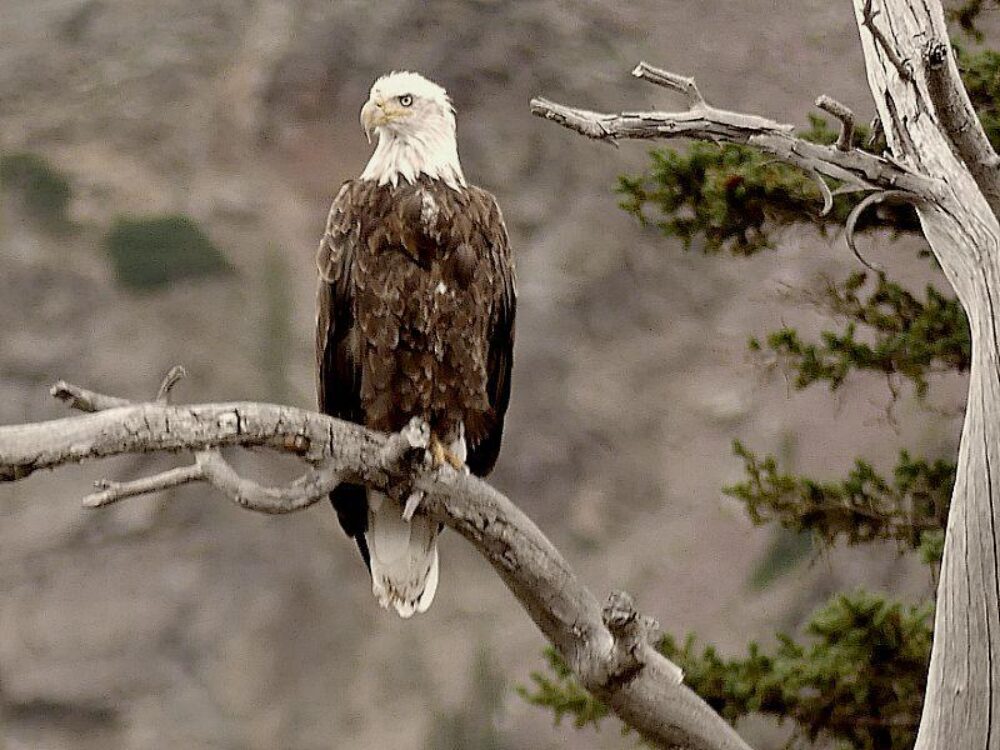
<p>Glacier is home to <strong>71 species of mammals</strong>. Presently, four species within Glacier are Federally listed as threatened species: bald eagle, grizzly bear, lynx, and bull trout. The gray wolf is still listed as endangered.<br></p>
<p>It is a remarkable feat that the <strong>native plants</strong> you see in Glacier today were all present when European settlers first arrived in the area. That means it is one of the few places in the US considered closest to a pristine landscape.</p>

<h3><strong>Native Americans</strong></h3>
<p>Wherever I travel I like to try and <strong>get the under the surface</strong>, only by doing this can we start to understand what has gone before and how we can try and shape the future for the better. Glacier’s east side is bounded by the <a href="http://blackfeetnation.com/" target="_blank"><strong>Blackfeet Nation</strong></a>, of which 86% of the population are <strong>Native Americans</strong>. The Blackfeet nation is a confederation of several distinct tribes and at its prime their land covered 28 million acres. The mountainous region of Two-Medicine was a place where the <a href="https://newsmaven.io/indiancountrytoday/archive/10-things-you-should-know-about-the-blackfeet-nation-yp18fvBzJEWXBDtP7oFQ5Q/">Blackfeet</a> undertook sacred rites of passage, and massive herds of buffalo roamed the land. The people lived in harmony with the land and only took what they needed. Then in <strong>1887 the Dawes Act</strong> was signed by US President Grover Cleveland authorising the confiscation and redistribution of tribal lands in America's West thereby destroying the social cohesion of Indian tribes. Only by disavowing their own traditions, it was believed, could the Indians ever become truly “American.''</p>
<p>During our stay my daughter contracted the spreading rash of <a href="http://www.pcds.org.uk/clinical-guidance/lyme-disease">Lyme disease</a> acquired from a tick bite, which required treatment and so we drove to the local hospital of the Blackfeet Nation where we were well received and promptly treated despite of not being Native American. Driving back through the reservation the <strong>plight of the Native Americans</strong> was plain to see, what used to be 28 million acres is now 1.5 million, and this is not the Montana of fancy log homes and western-style resorts, but an area of visible poverty resulting from the state’s highest unemployment rate. As for the plains, the trackers and traders that spilled into the area had long since degraded the ecosystem, including the bison, leaving the plains to this day almost bare. However, there remains immense beauty in the gentle green hills that roll softly into the distance, bison have been reintroduced on the plains and the area remains <a href="http://www.blog.glaciermt.com/category/moiese/">rich in culture</a>. <br></p>


<h3><strong>Climate change</strong></h3>
<p>Back in Glacier the effects of human ''progress' including <strong>global warming</strong> are all too visible. When President Taft created Glacier National Park in 1910 there were <strong>150 glaciers, only 25 remain</strong>. The state is seeing warmer and drier summers turning places like Glacier into a tinderbox, over the last few years the park has seen <strong>huge forest fire</strong><strong>s</strong>, most apparent in the Lake McDonald and Lake St Mary areas. </p>


<h3><strong>A chorus of howls</strong></h3>
<p>On our final night in the park we drove out into the wilderness, parked up, sat on top of the car and witnessed an amazing show of nature - <strong>Montana</strong> is not called <strong>''Big Sky'' </strong>without a reason, with no light pollution the moment we turned off the car lights we were faced with the most incredible star-studded night sky, and then out of the blue a lone coyote barked, followed by a chorus of coyote and wolves, <strong>one of the most memorable moments of our lives. </strong></p>