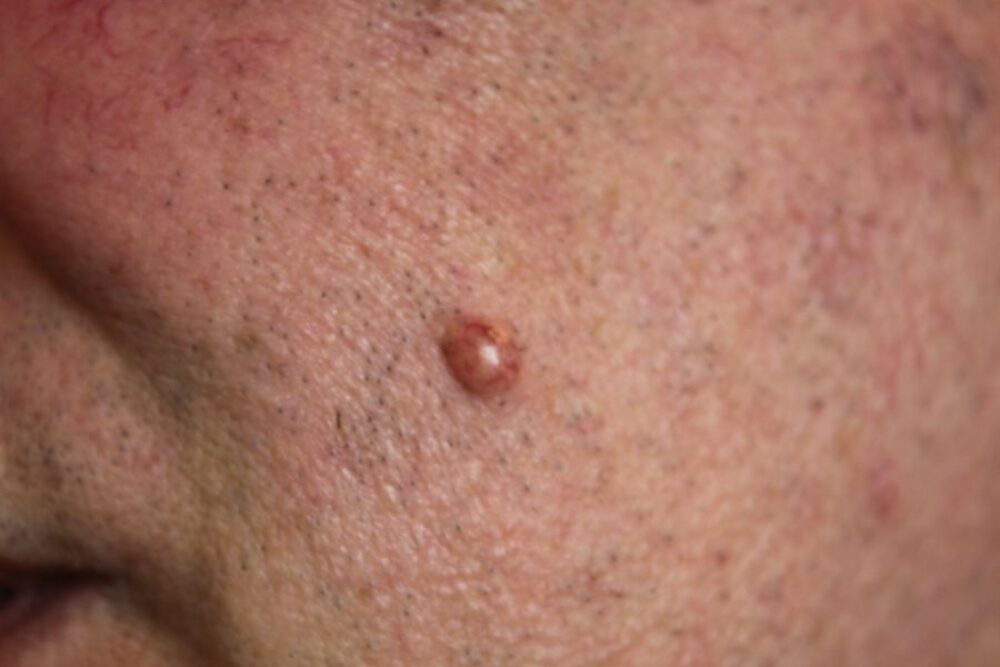
<p>This 67 year old gentleman has a firm slightly shiny lesion on his cheek. What is dermoscopy going to tell us?</p>
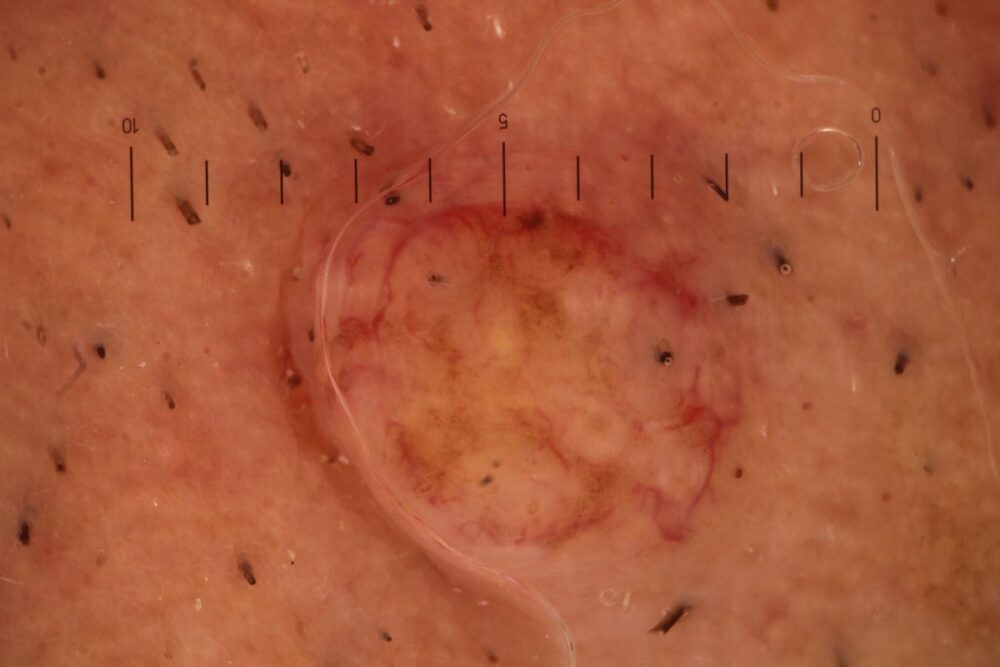
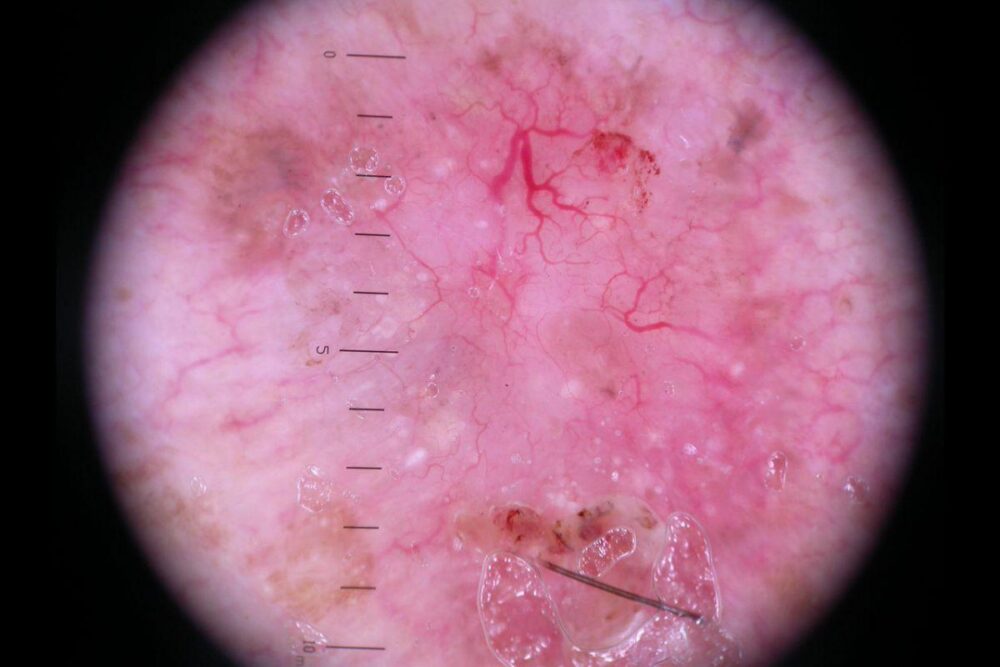
<p>The image above is the dermoscopic appearance of the lesion in question. There is scattered brown pigmentation and some vessels of moderate thickness, which vary in focus. The features are characteristic of a <strong>benign melanocytic dermal naevus.</strong></p>
<p>The lesion above is a <strong>basal cell carcinoma</strong>. The arborising (branching vessels) of a BCC sometimes cause confusion with those seen in proud dermal naevi of the face, however, in BCC the vessels are more branching, are often thinner and are <strong>sharply in-focus. </strong></p>
<p>Some people are able to recognise dermoscopic structures/patterns better than others (such individuals are born that way). But even without a dermatoscope a <strong>good history is invaluable</strong>. The naevus (above left) is long-term, has not grown, does not bleed (unless secondary to trauma such as shaving) and if anything will have become lighter. In contrast, the BCC above will have grown gradually (3-4 mm a year) and may bleed/crust from time-to-time. </p>
<p>Images copyright of South Tees Foundation Trust. </p>