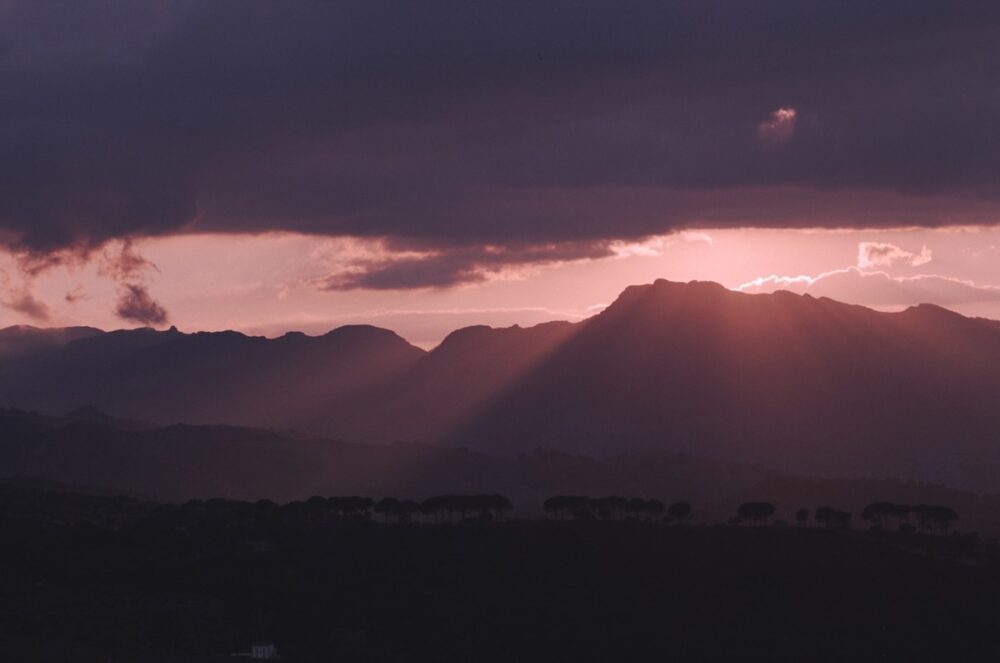
<h2>Andalusia highlights | with a focus on Seville and Granada</h2><h5>The autonomous province of Andalusia provides a wonderful kaleidoscope of experiences including beguiling cities, stunning architectures, flamenco and festivals, coastline, and mountain hideaways in the Sierra Nevada.</h5>
<h5>One to two weeks is the minimum time needed to explore the area properly. Having landed in Malaga we did a circular route that took us to Granada, Cordoba, Seville, Gibraltar (obviously not part of Andalusia) and Rhonda. If, like me, you are a cultural Neanderthal, then Cordoba and Seville appear to have similar attractions, as such you could consider swapping the former with a coastal such as Almería or Cadiz, or a mountainous retreat.</h5>
<h3><strong>Practicalities </strong></h3>
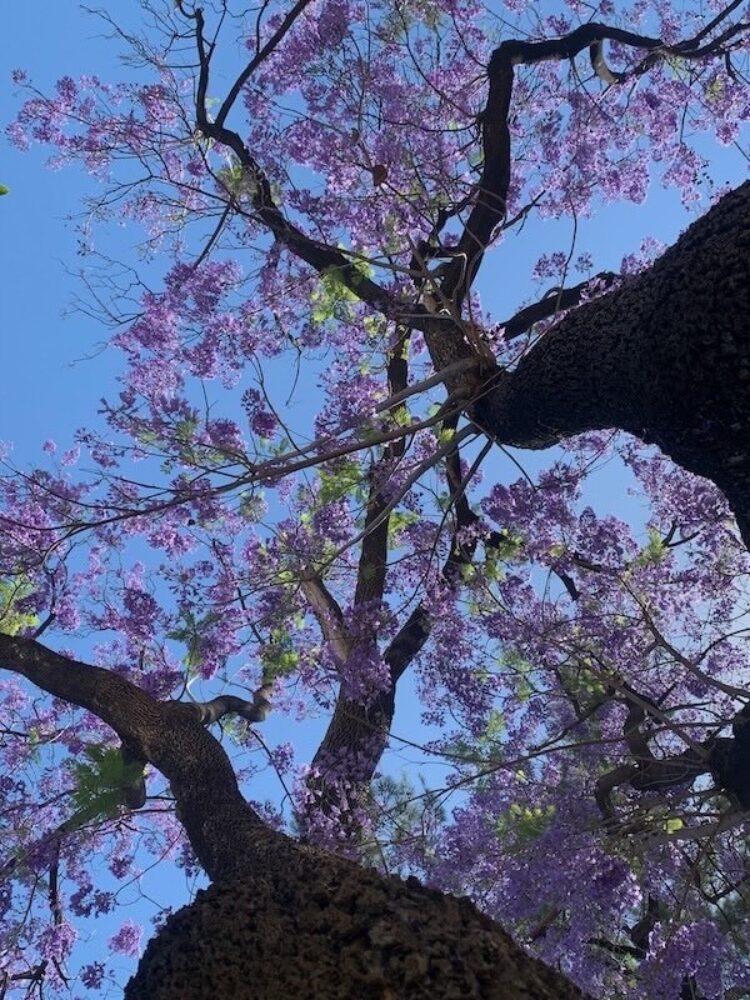
<p>The <strong>best time to visit is mid-late May for the Jacaranda trees and climate</strong>, with plenty of sunshine and a temperate that is warm to hot; usually not too hot. I avoid the Mediterranean over the summer, with climate change it has become uncomfortably hot. If you want to see the famous <strong>Seville oranges</strong> at their best then this would be between late December and early March.</p>
<p>The Jacaranda (Jacaranda mimosifolia) is a tree native to South America, that blossoms with beautiful purple foliage in Seville and some other parts of Andalusia across May and June.</p>
<p>In terms of <strong>distances,</strong> <strong>no where is too far</strong>:</p>
<p><strong>Malaga</strong> - Granada 125 km (77 miles) <br><strong>Granada </strong>- Cordoba 200 km (124 miles)<br><strong>Cordoba</strong> - Seville 145 km (90 miles)<br><strong>Seville </strong>- Gibraltar 200 km (124 miles)<br><strong>Gibraltar</strong> - Rhonda 104 km (65 miles)<br><strong>Rhonda</strong> - Malaga 100 km (62 miles)</p>
<p>Another great reason for visiting this area is that compared to the UK, it is <strong>inexpensive</strong>. A particular bonus was car hire, which at 141 euros for 7 days was a good price, that was until I realised I booked the car in my wife’s name, who did not have her driving license with her - the upshot was we had to cancel the booking for which we were fully refunded (remarkably, thank you Ryan Air) and rent another car on the day, which cost 41 euros for the entire week, resulting in a saving of euros 100, a true Yorkshire man’s dream. </p>
<h3><strong>A brief history - but not too much (I don't do history)</strong></h3>
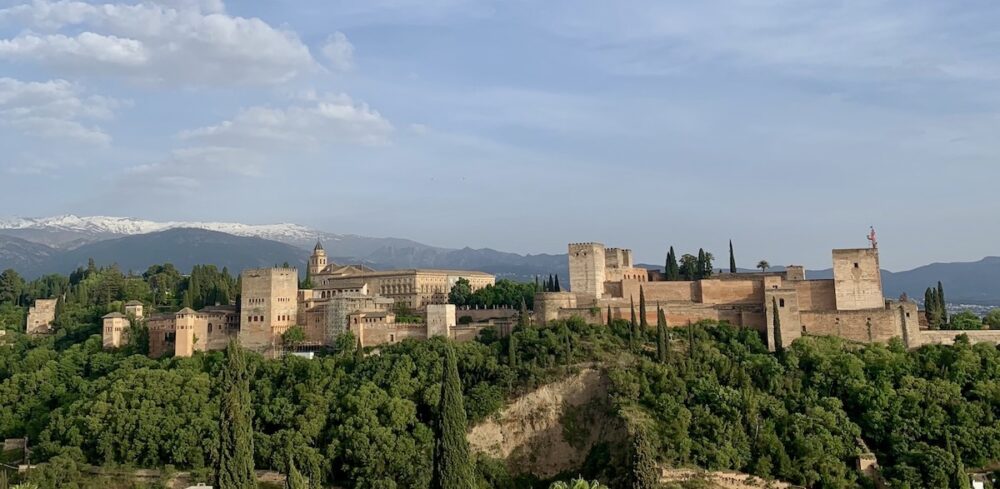
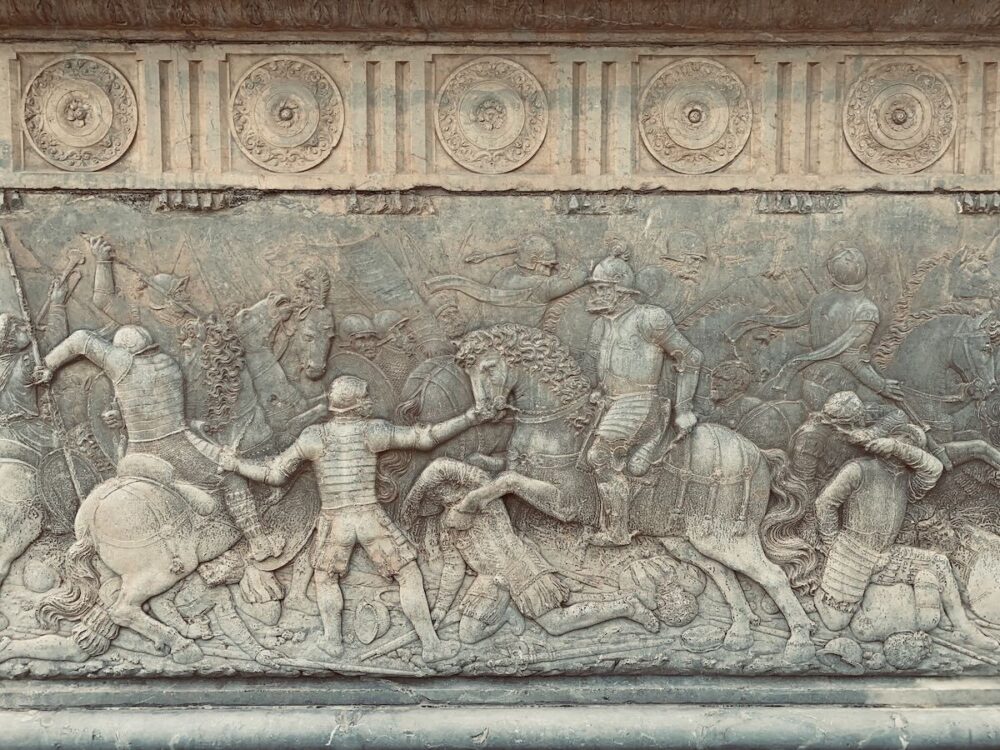
<p>The most unique feature of this enchanting region are the remnants of its Moorish past. The <strong>Moors were a mixture of Berbers and Arabs </strong>who crossed into Spain from North Africa, occupying the peninsula for more than seven centuries, dating from 710, following which the area returned prominently to Christianity. The most spectacular remains from this time is, undoubtedly, <strong>Granada's Alhambra palace</strong>. The region was further enriched contribution by the contribution of the Andalusian Jewish community during its Golden Age either under Muslim or Christian rule.</p>
<h3><strong>First stop, Granda </strong></h3>
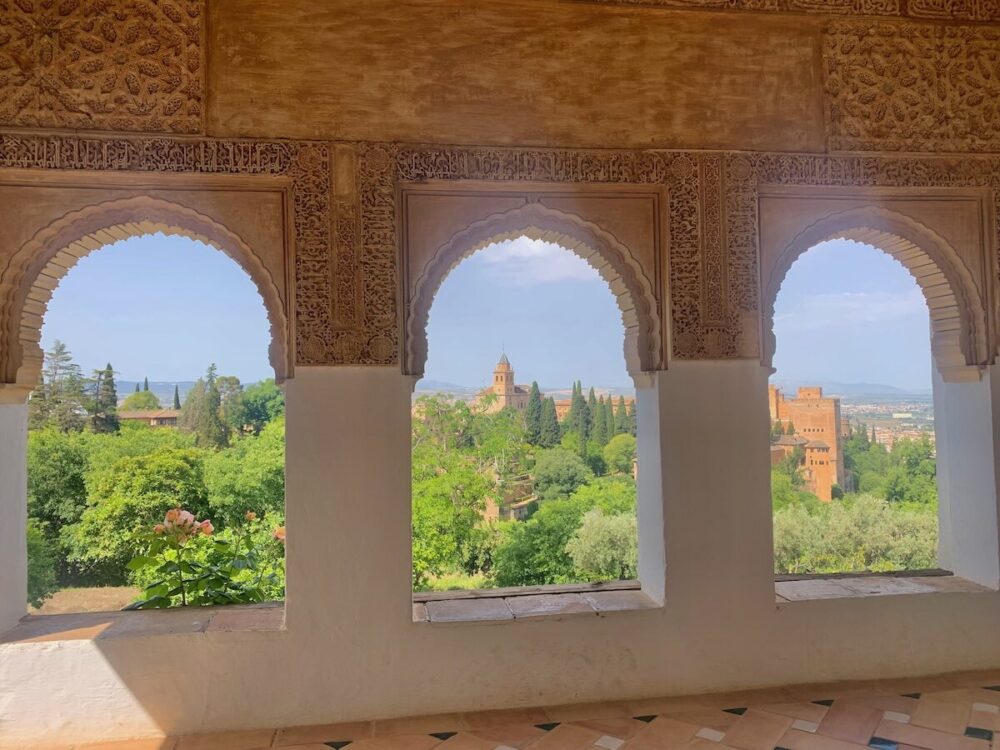
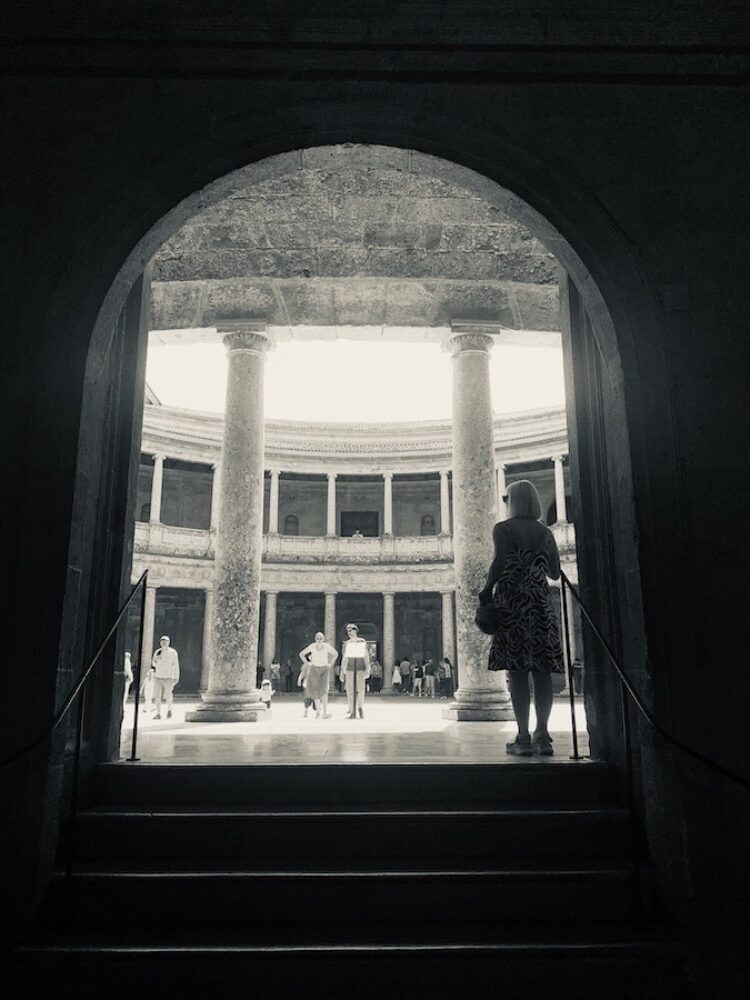
<p>Rising above the modern lower town of Granda, where we choose to stay, the Alhambra forms the medieval part of Granada. With its continuous occupation over time, the Alhambra is the only preserved palatine city of the Islamic period. You can choose to walk up the hill to the Alhambra, hop on one of the regular buses, or get an inexpensive taxi.</p>
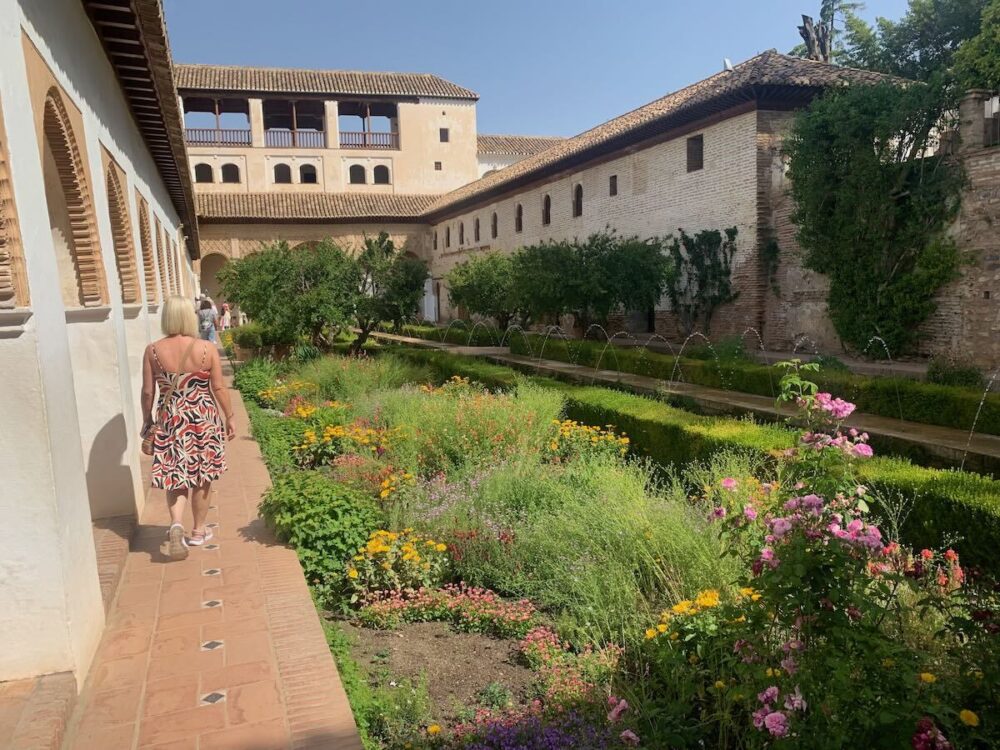
<p>Allow at least half a day to explore the <strong>Alhambra fortress and the magnificent gardens of the Generalife</strong>. I recommend buying tickets in advance and <strong>don’t forget</strong> either your passport of driving license, photographic ID is required for entrance. </p>
<p>While in Granada take time to visit the <strong>Albayzín,</strong> an historic neighbourhood is known for its unique Arab architecture and cultural heritage. The cobbled streets form a labyrinth of whitewashed houses, walled gardens and little squares lined with bars and restaurants. The Albayzin is located on a hill overlooking the Alhambra, the <strong>view at sunset from </strong><strong>Mirador San Nicholas</strong> was breathtaking.</p>
<h3><strong>Next stop, Cordoba</strong></h3>
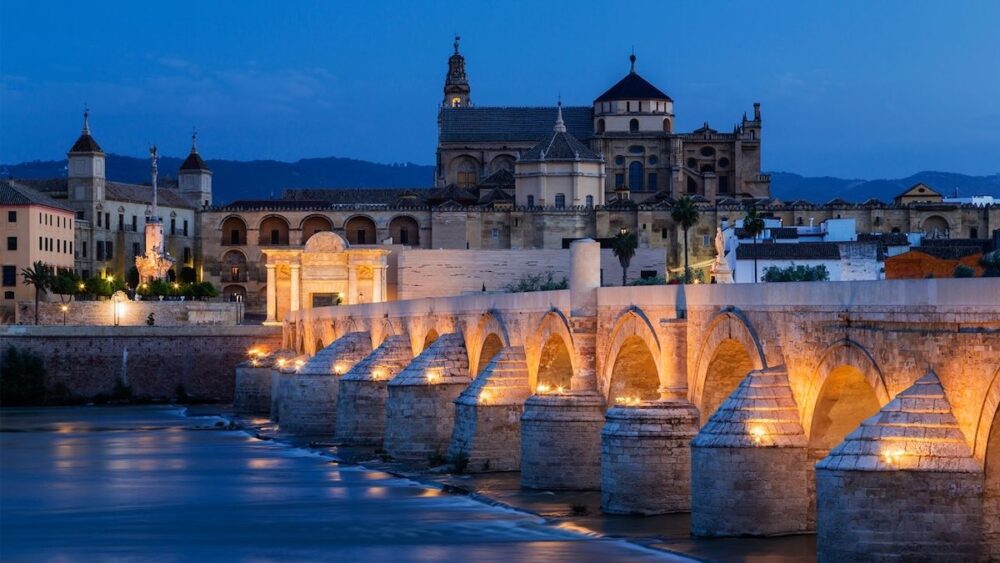
<p>First on the list was a stroll through Cordoba’s pretty cobbled streets to the Calahorra Tower. An impressive 1st century <strong>Roman bridge </strong>linking the centre of Cordoba to the Tower giving great views looking back across to the city, arguably the cities most photographed spot.</p>
<p>Next up was the UNESCO World Heritage <strong>Mezquita Mosque-Cathedral</strong>. Now, you might think this is an unusual name, and you are right. The reason for the name is that the building began as a mosque in the 8th century, but them came along Christian order, and in the 16th century a cathedral inside the mosque! Wouldn’t it have been nice if the two could have lived in harmony side-by-side. </p>
<p>Other attractions in Cordoba include the <strong>Alcazar de los Reyes</strong>, a fort/palace with serene gardens, the old Jewish Quarter of the <strong>Judería Barrio</strong> with its winding cobbled alleyways lined with impressive old doorways, and the botanical gardens. </p>
<h3><strong>Onwards to Seville - our favourite </strong></h3>
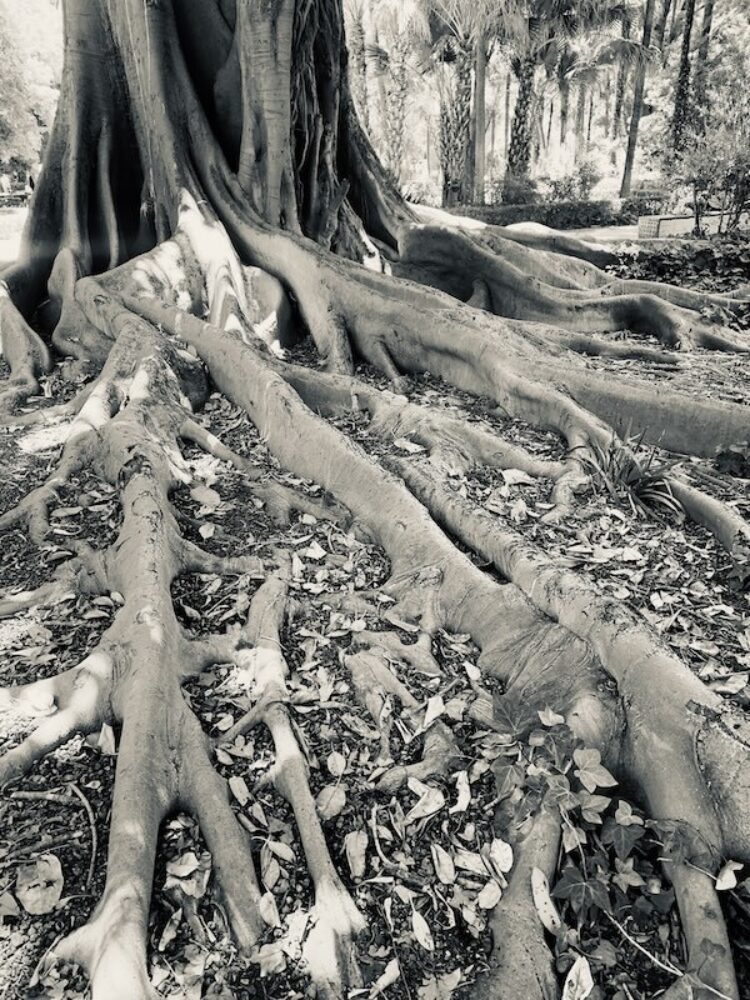
<p>It is not often I take a picture of a busy road; driving into Seville was an exception. Before arriving in Seville I had not heard of the beautiful <strong>Jacaranda trees</strong>, which lined the roads and filled the parks flaunting their stunning purple foliage - most of our time in Seville was spent walking though the citie's several <strong>beautiful parks</strong>, most noticeably with its water features. </p>
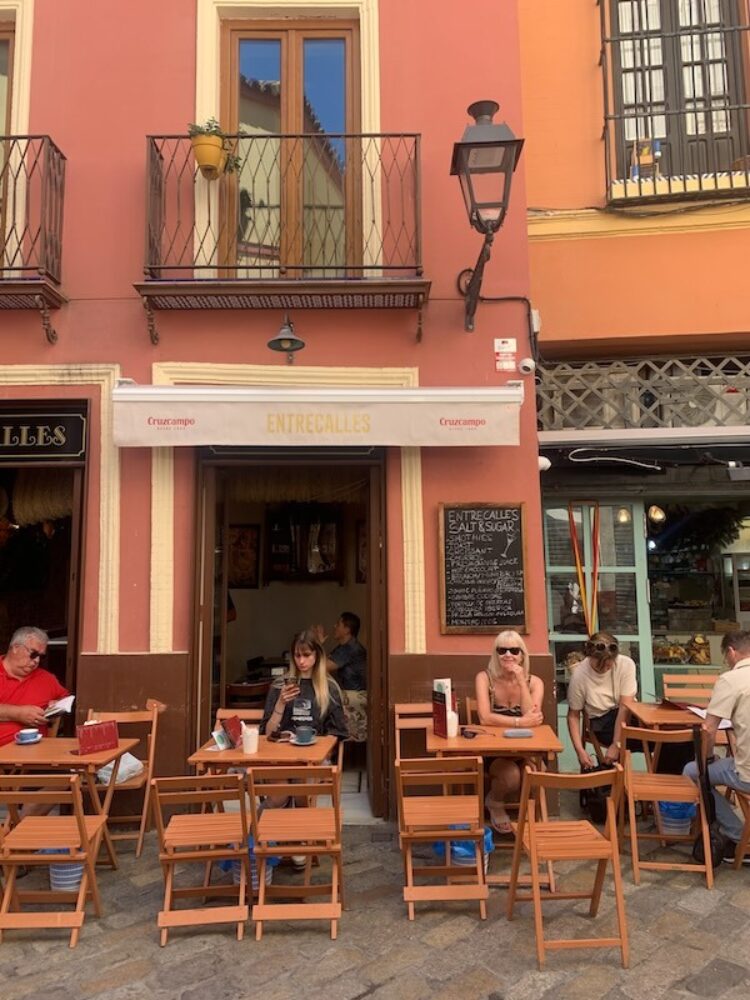
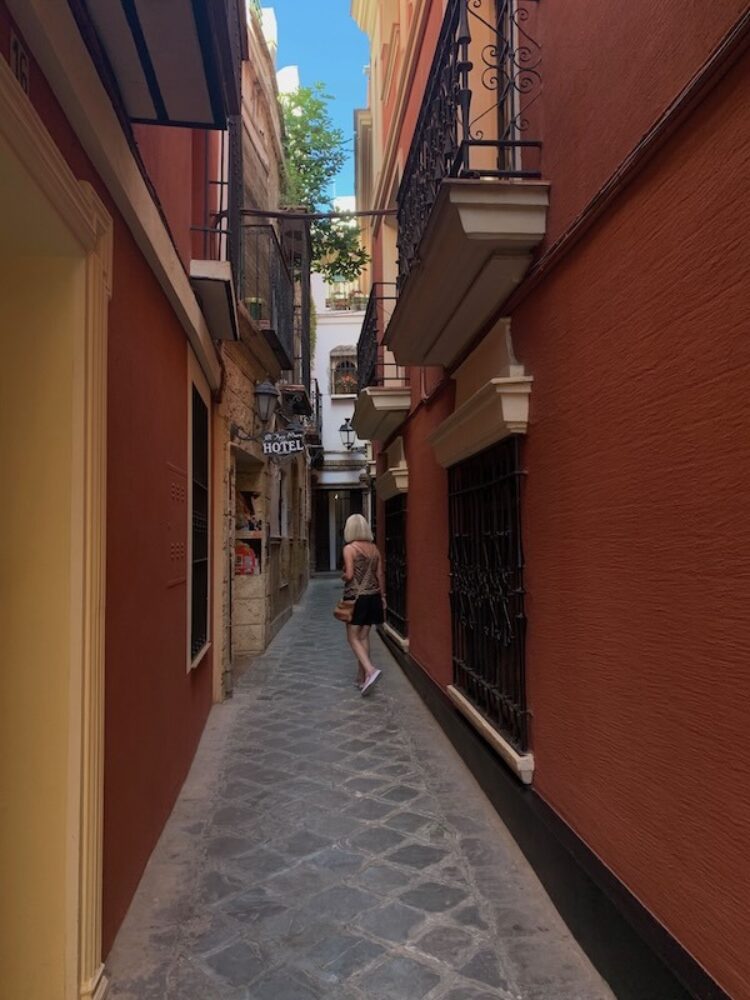
<p>The <strong>Casco Antiguo, Seville’s old town</strong>, lies on the east bank of the Guadalquivir river, and gives ample opportunity to wander and get lost in its many charming narrow alleyways where there are plenty of tapas bars and places to shop (remember I am still 100 euros up as a result of the car). </p>
<p>One of the most popular destinations in Seville is the <strong>Alcázar Real de Sevilla</strong>, a complex of palaces, gardens, and courtyards. Given that the palace is still used buy the Spanish King, the number of visitors is limited and so buy your tickets in advance. </p>
<p>Another one on your list should be the <strong>Catedral de Sevilla,</strong> an astonishing work of Gothic architecture , next to which is the in the famous Jewish Quarter of Santa Cruz. Right next to it is the iconic bell tower of <strong>La Giralda</strong>, affording great views over the city.<br></p>
<p>Barcelona, one of the most overrated cities in Europe (in our view) is not a patch on Seville.</p>
<h3><strong>The Seatas de Seville</strong></h3>
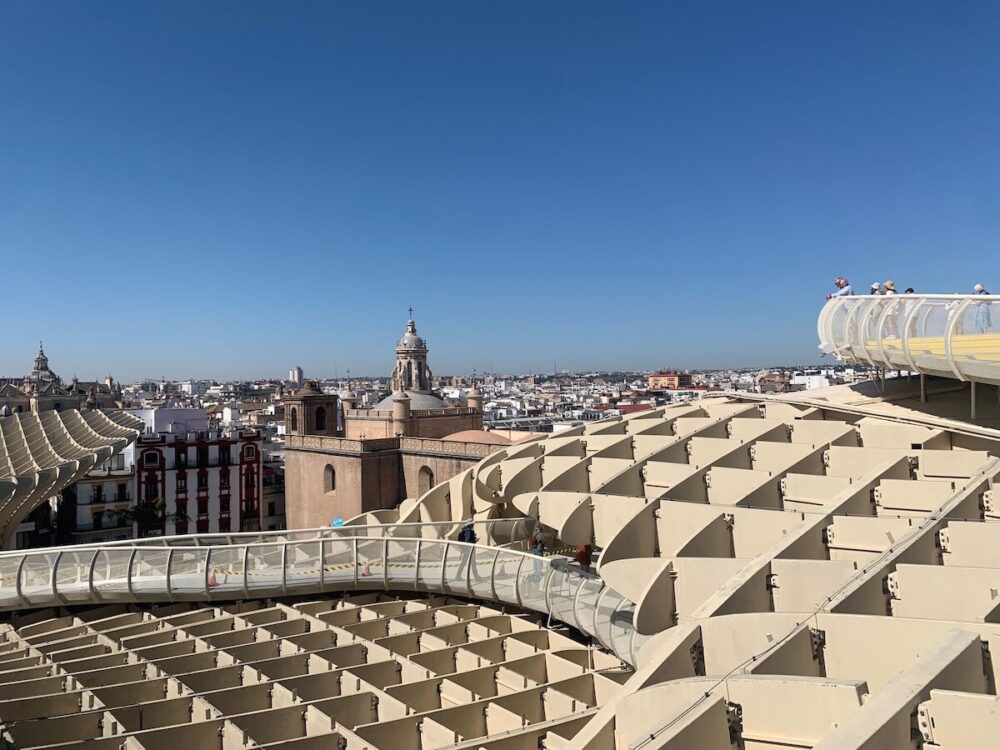
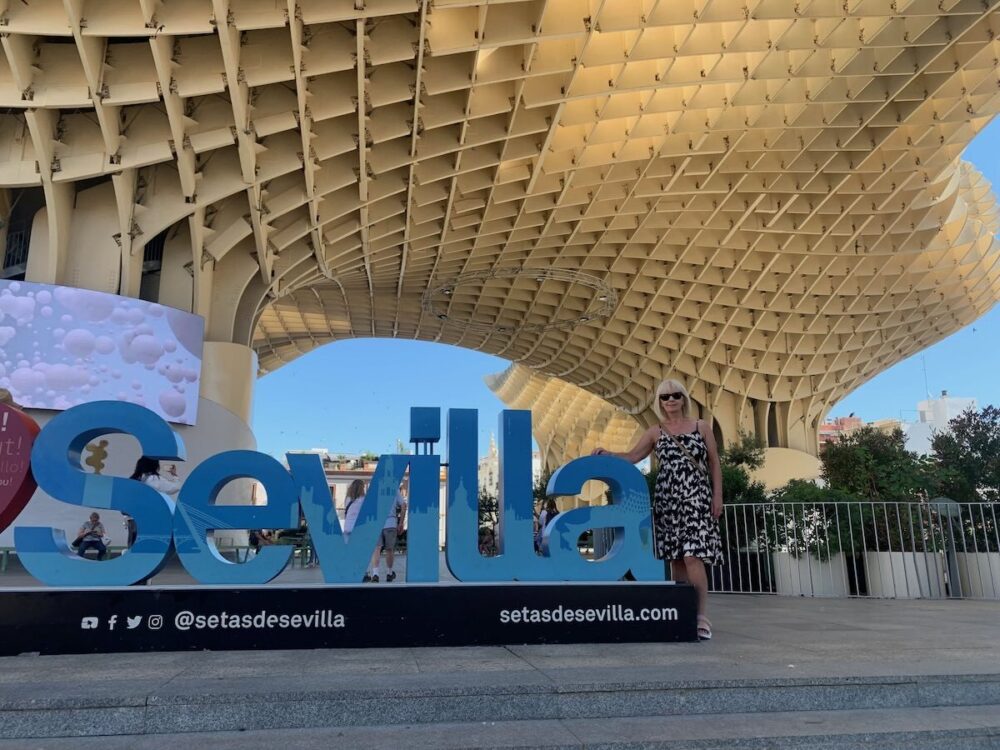
<p>For something completely different we headed for the <strong>Seatas de Seville</strong>. Designed by the Berlin architect Jürgen Mayer, this structure consists of six giant mushroom-shaped parasols, whose design was inspired by the vaults of the cathedral of Seville and the ficus trees of the nearby Plaza del Cristo de Burgos. On the top of the Seatas de Seville are winding walkways, and at the base are Roman archaeological remains, found by chance. The structure lights up 30-45 mins before sunset.</p>
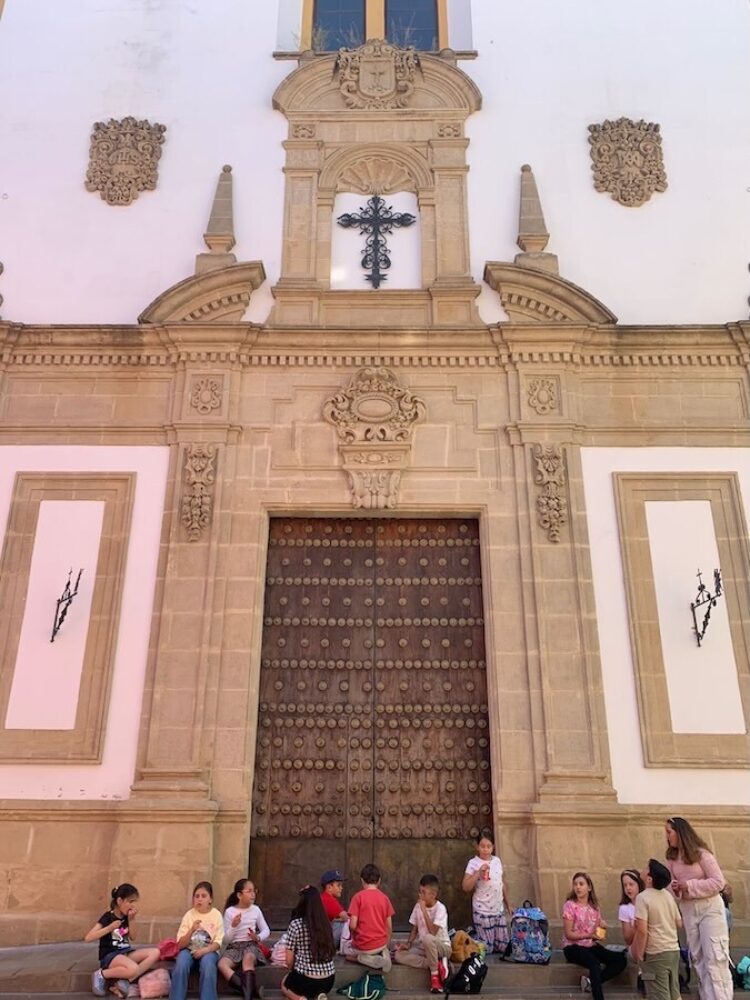
<p>Other places worth visiting include <strong>Casa de Pilatos (Pilate’s House)</strong>, an Andalusian mansion with more than 150 different types of Spanish-glazed tiles, and <strong>Plaza de España</strong>, an expansive semi-circular square combines Renaissance and Moorish Revival architectural styles. <br></p>
<h3><strong>Horses and bulls - modern slavery and execution </strong></h3>
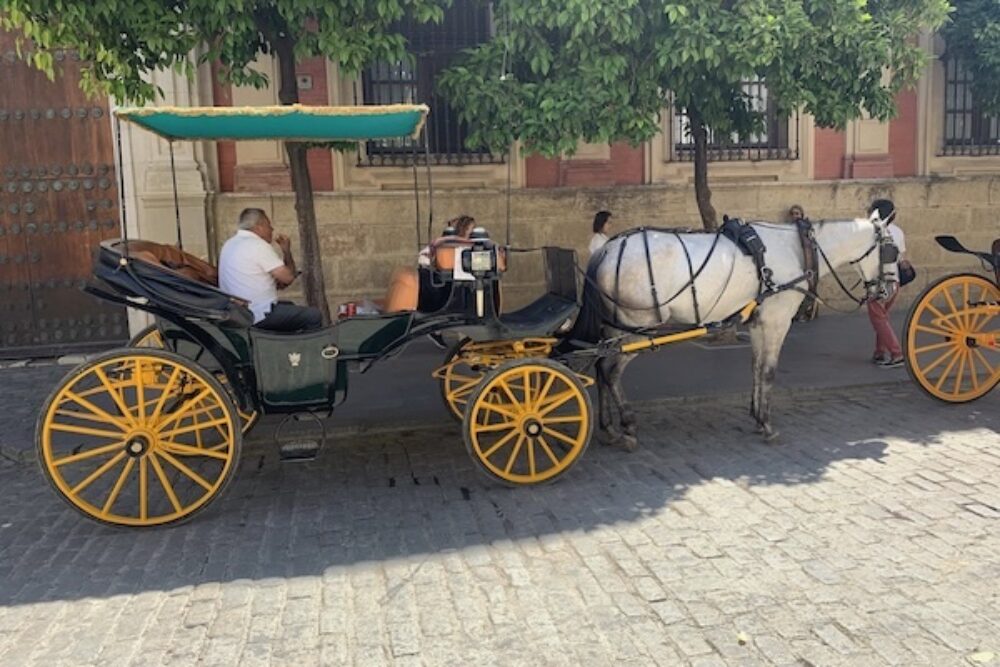
<p>Although we walked everywhere, the town has a good tram and metro service, and is a great place to hire an <strong>e-scooter. </strong>Two things we encourage you <strong>NOT to partake in are a horse and carraige ride and a visit to the bull ring.</strong></p>
<p><strong>Every year, at least 7,000 bulls are slaughtered</strong> in official bullfights in Spain’s bullrings. The animals are pushed to extreme mental and physical exhaustion before being stabbed to death. Bullfighting is never a fair fight but rather a ritualistic slaughter of a helpless animal. Spain isn’t the only country perpetuating this kind of violence towards bulls. While the methods of torture and execution vary globally, bullfighting takes place in countries including Portugal, France, Mexico, Ecuador, Colombia, Venezuela, Peru, and parts of the United States.<strong><br><br>In terms of this horses</strong>, something which the Spanish government is trying to get banned, the horses spend hours every day in the punishing heat before having an 8km walk back to the stables, not once in 5 days did we see a horse given food or water.<br></p>

<h3><strong>Gibralter - exceeding expectations</strong></h3>
<p>The six square kilometres of the <strong>Rock of Gibraltar </strong>are steeped in history, from the very beginning around 100,000 years ago when primitive humans and Neanderthals inhabited the limestone caves, to visiting Phoenician and later Roman seafarers. It was the Moors of Tarek ibn Ziyad however that first settled the Rock in 711AD, and since then, this much-prized site and its people have witnessed many sieges and battles over the centuries. <br>
<br>
Gibraltar was captured by the British Fleet in 1704 during the war of the Spanish Succession. On 4th August 1704, an Anglo-Dutch fleet under the command of Admiral George Rooke took Gibraltar from the Spanish. In 1713 Spain ceded Gibraltar to Britain under the Treaty of Utrecht.</p>
<p>Gibraltar’s unique position proved invaluable during <a href="https://www.historic-uk.com/HistoryUK/HistoryofBritain/World-War-2-Chronology/">World War II</a>. With the old superstition that if the Apes leave the Rock; the British will go as well, Sir Winston Churchill made sure during World War II that the number of Apes was kept up. He even had some Apes, so it is rumoured, brought out from Africa to maintain their numbers.<br>
<br>
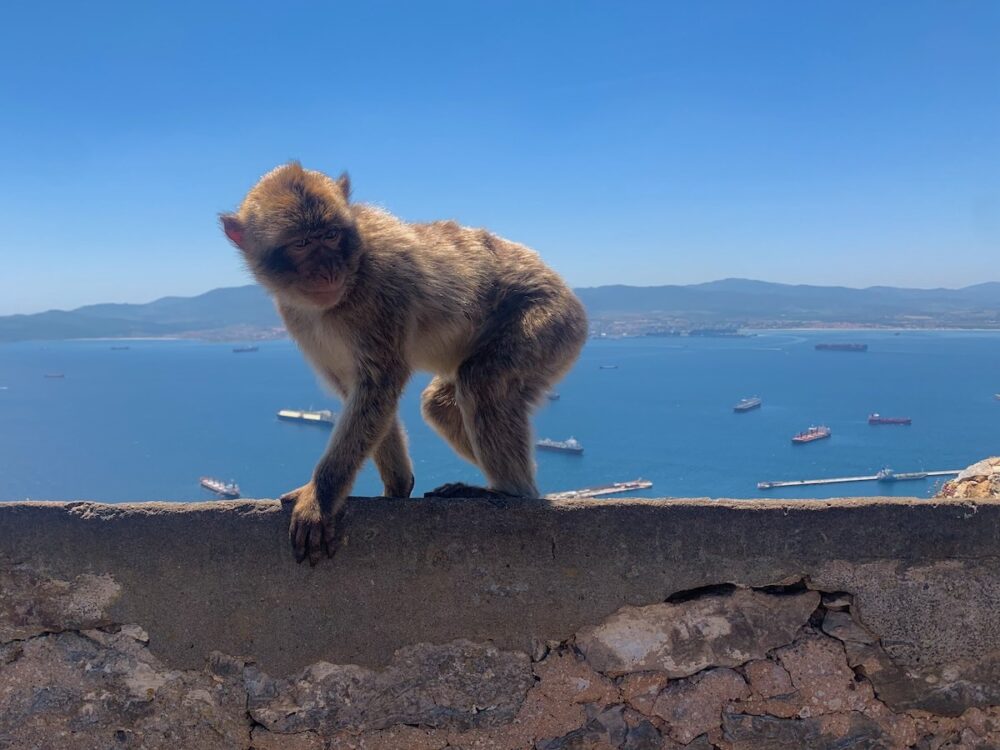
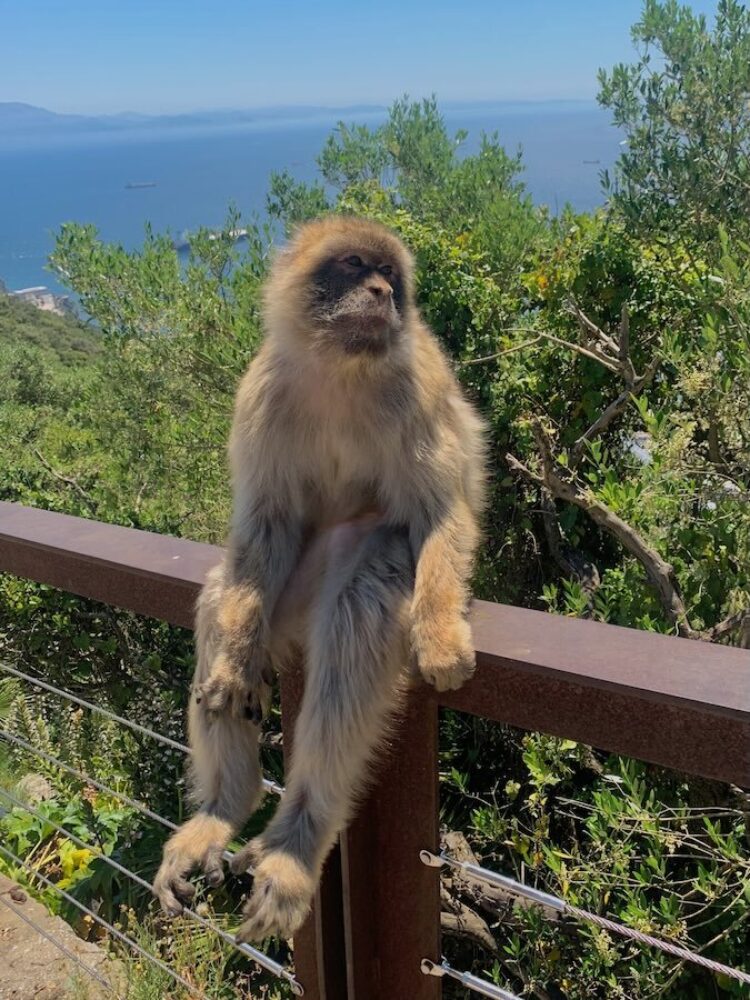
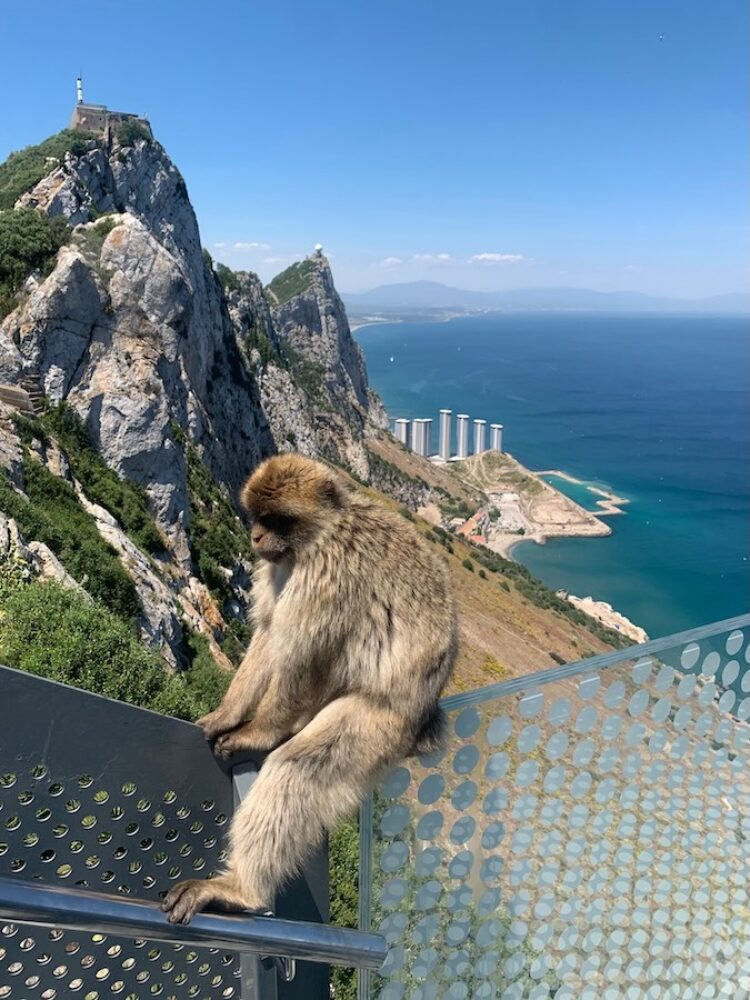
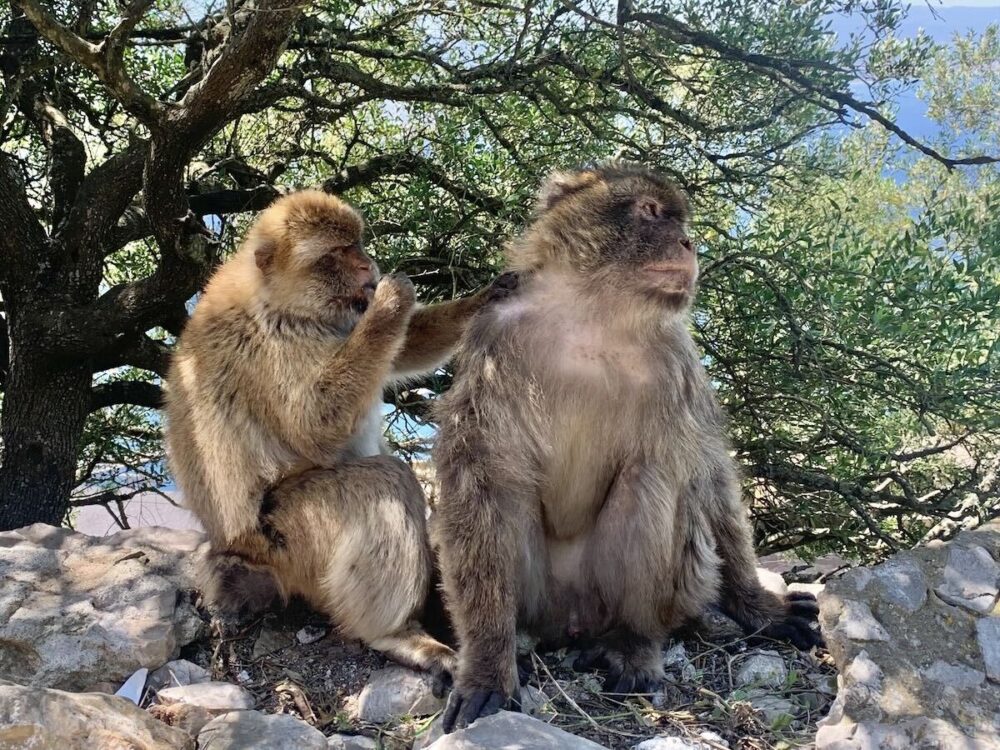
For most tourists the main reason to visit Gibraltar is the <strong>‘’Rock’’ and to see the Barbary Macaque, a type of tailless monkeys</strong>. While it is possible to park close to the bottom of the cable car that takes you up the rock, we parked at the Oceanview car park, we had read that during busy times it is not possible to park on Gibraltar; several car parks can be found just over the Spanish border. <br>
<br>
Getting to the cable car from the Oceanview area involves a stroll up the <strong>main street</strong> of Gibraltar with its Post Office, red phone boxes, and array of fish and chip shops. Expect a wait for the cable car, other options include walking up the rock or being taxied up, there were plenty of companies offering the latter service. <br>
<br>
While you have a good view from the top and will probably see the occasional monkey, we recommend paying the extra for the <strong>‘’nature reserve’’</strong>, granting access to a much larger area affording fabulous views and many encounters with a healthy population of wild monkeys. The same ticket enables access to St Michael’s Cave, the Windsor Suspension Bridge, and tunnels of WWII and the Great Siege. <br>
<br>
While in Gibraltar another popular expedition is a <strong>dolphin cruise,</strong> if you are lucky you may see the occasional whale, as with all such tours please try and choose ethically. </p>
<h3><strong>Rhonda</strong></h3>
<p>Rather than choosing to stay in Gibraltar, we headed for an overnight stay in the picturesque town of <strong>Rhonda. </strong><br>
<br>
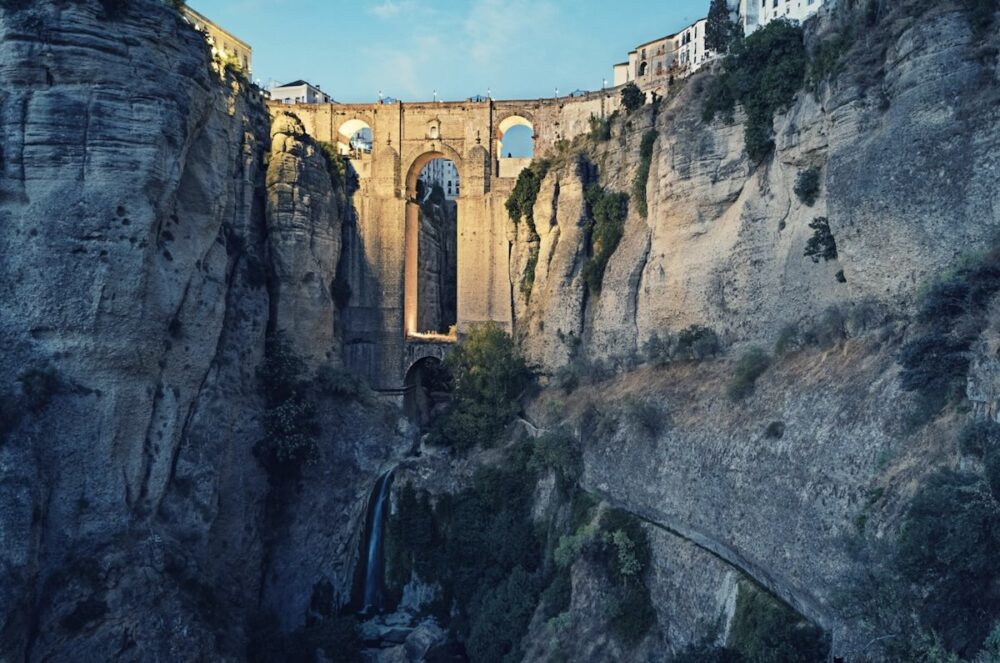
One of Ronda’s most iconic landmarks is the <strong>Puente Nuevo, or “New Bridge,” </strong>which spans the 120-meter-deep canyon hat carries the Guadalevin River, and connects the old Arab Medina with the Mercadillo neighbourhood. This stunning bridge offers incredible views of the surrounding countryside. A walk created in 2024 enables visitors to <strong>walk down into the gorge</strong> towards the base of the Puente Nuevo. For even better views head further down to Mirador del Viento and then continue on the path until you reach <strong>Mirador La Hoya del Tajo at the bottom of the gorge</strong>. Then be prepared, its a steep climb back up.<br></p>
<h3><strong>Other things to do in Rhonda</strong></h3>
<p>Stroll though the old town including a stop at Plaza Duquesa de Parcent where you’ll find <strong>Iglesia de Santa Maria la Mayor</strong>, a church with a viewing deck</p>
<p>In Plaza de Maria Auxiliadora you’ll find Palacio Mondragón (Mondragón Palace), a 14<sup>th</sup> century building renowned for its Moorish courtyards and gardens, as well as its views over the Sierra de Grazalema. .</p>
<p>Soak up the history at the <strong>Baños Arabes (Arab Baths)</strong>. Dating from the 13<sup>th</sup> century, the Arab Baths are exceptionally well preserved. From the entrance, you’ll find yourself overlooking the roof of the baths and, once inside, you’ll be able to see how the star shaped vents in the roof create patterns of light on the floor and walls.</p>
<p>What remains of the <strong>city walls</strong>, and the impressive Puerta de Almocabar, are on the opposite side of town to the main tourist sites so are often overlooked by day trippers. You’ll also find the ruins of the Alcazaba here next to the walls.<br></p>